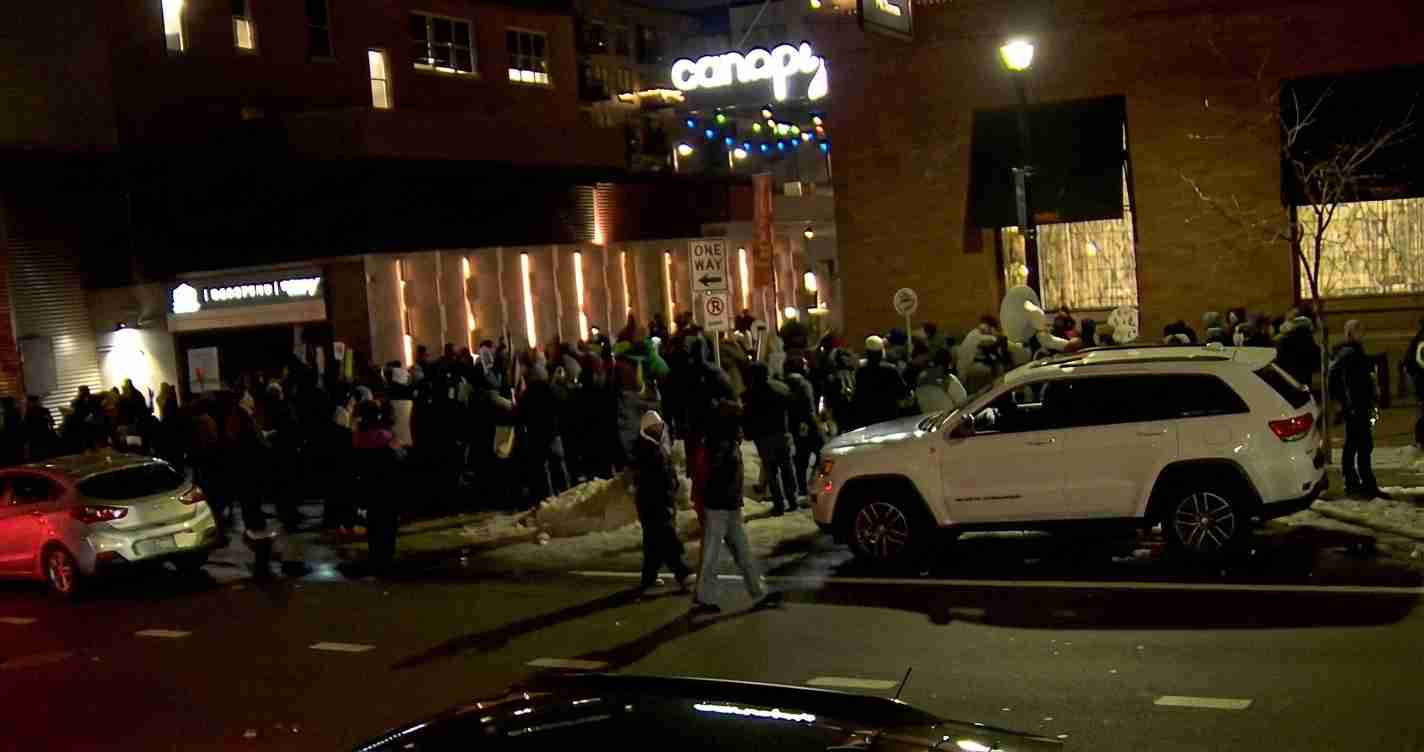
Protesters swarm Minneapolis hotel amid fallout from Renee Nicole Good ICE shooting; hotel reports remain unconfirmed
Renee Nicole Good, 37, was killed by an ICE agent in south Minneapolis on Jan. 7, 2026, prompting large protests and vigils; the FBI now leads the criminal probe while questions persist about alleged hotel confrontations and transparency.
- Confirmed death: Renee Nicole Good was shot and killed by an ICE officer during a Jan. 7 enforcement action, as reported by Star Tribune.
- Video released: Department of Homeland Security released an agent POV video (and a separate agent POV video) widely circulated online.
- Protests and vigils: Large demonstrations followed the shooting and at least one assembly was declared unlawful by authorities, per Star Tribune coverage.
- Investigative lead: The FBI is leading the criminal review while the BCA says it has not been given evidence it would normally review.
What happened: the fatal shooting
On Jan. 7, federal immigration enforcement officers conducted an operation in south Minneapolis that ended with the death of 37-year-old Renee Nicole Good. Local reporting and statements from the family identify Good as a mother and long-time community member who lived near the scene. Her family has rejected characterizations that she posed an imminent threat and emphasized her role as a caregiver, according to Star Tribune and MPR News.
“She was an amazing human being,” family members and community speakers have said at vigils and statements reported in local coverage.
The Department of Homeland Security released cellphone video from an ICE agent’s point of view showing roughly 40 seconds of the encounter before an officer fired. The videos — identified in national coverage as involving agent Jonathan Ross — have been widely shared across broadcast and social platforms (agent POV video, agent POV video).
Public reaction: large protests and vigils
The video release and the death prompted hundreds of people to gather for vigils and street demonstrations in the neighborhood where Good was killed. Crowds gathered along Portland Avenue and nearby streets to mourn, chant, and denounce ICE and DHS; at least one gathering was formally declared an unlawful assembly, according to Star Tribune.
Speakers and advocates at rallies rejected federal characterizations of Good as a “domestic terrorist” and called for accountability and transparency. Legal analysts and advocacy organizations have begun evaluating civil claims against ICE and federal officials; see analysis from the American Immigration Council.
What is confirmed about hotel incidents — and what is not
In the days after the shooting, social posts and on-the-ground accounts described protesters converging on a Hilton-branded hotel downtown and on a Hampton Inn in the Lakeview neighborhood allegedly canceling reservations for federal agents. Those accounts said guests watched crowds chant in lobbies and that agents were forced to relocate.
Important: major local and national outlets have focused on street demonstrations and vigils, not verified hotel confrontations. Review of reporting from Star Tribune, MPR News, and the BCA statement found no independently verified account of demonstrators surrounding a Canopy by Hilton or of federal agents being evicted from a Lakeview Hampton Inn.
That absence of mainstream confirmation does not prove those events did not occur. Early reports frequently originate with hotel staff, guests, or protesters posting on social platforms; such leads require corroboration via hotel manager statements, guest incident reports, security footage, or police logs before being treated as established fact.
FBI, BCA and questions about transparency
The criminal probe into the shooting has been assigned to the FBI. The Minnesota Bureau of Criminal Apprehension issued a public statement saying the FBI took the lead and that the BCA had not been provided with the evidence it would normally review. That division of authority has generated public criticism from local officials who say it constrains state oversight (BCA statement).
Legal experts note that federal investigations of federal officers raise complex questions about evidence sharing, transparency, and potential civil remedies. Advocates for Good’s family are exploring legal avenues, though suits against federal agencies face hurdles including immunity doctrines and procedural limits (see analysis from the American Immigration Council).
Sourcing and verification
This article draws on reporting and public records from multiple outlets and institutions. Primary sources used:
- Star Tribune
- MPR News
- Minnesota BCA statement
- DHS / agent POV video and DHS / agent POV video
- American Immigration Council legal analysis
Implications for California
Although the incident occurred in Minneapolis, its ripple effects may reach California across several domains:
- Economic: Hotels in California that host federal employees or contractors may reassess booking policies and cancellation terms, balancing financial risk and reputational concerns.
- Political: State officials and lawmakers may press for clearer federal-state protocols and oversight when federal officers are involved in use-of-force incidents.
- Social: Large, rapid community mobilization seen in Minneapolis could occur in California’s diverse cities, prompting planning for crowd management and de-escalation while protecting protest rights.
- Practical: Hotels and local emergency managers may review contracts, emergency plans, guest communications, and staff training for handling protests and protecting guest privacy and safety.
Reporting next steps
Journalists and officials say confirming hotel incidents will require direct statements from hotel managers, guest incident reports, security footage, and police logs. The FBI, BCA, and local law enforcement remain the primary sources for independently verifiable facts. Families, witnesses, and advocates may provide documentation, but mainstream outlets will seek corroboration before treating hotel confrontations and lodging cancellations as established fact.
For verification purposes, key original sources are linked above.