Alleged anti-ICE agitators disrupt St. Paul church service; incident unverified as protests, federal ICE operations intensify after Renee Good killing
The killing of Renee Good on January 7, 2026, has triggered widespread anti‑ICE demonstrations in the Twin Cities, and videos alleging a disruption at Cities Church in St. Paul remain unverified while federal ICE activity increases.
- Videos circulating online show demonstrators chanting inside Cities Church, but local reporting and officials have not independently verified the incident.
- Protesters allege a pastor at Cities Church is affiliated with ICE; that claim has not been confirmed by mainstream outlets or law enforcement.
- Federal immigration authorities have publicly signaled escalated operations in the Twin Cities following Good’s death, heightening tensions and protests.
- Readers are urged to treat the church disruption as alleged until credible verification (police, church or local news) is available.
What the videos show — and what remains unverified
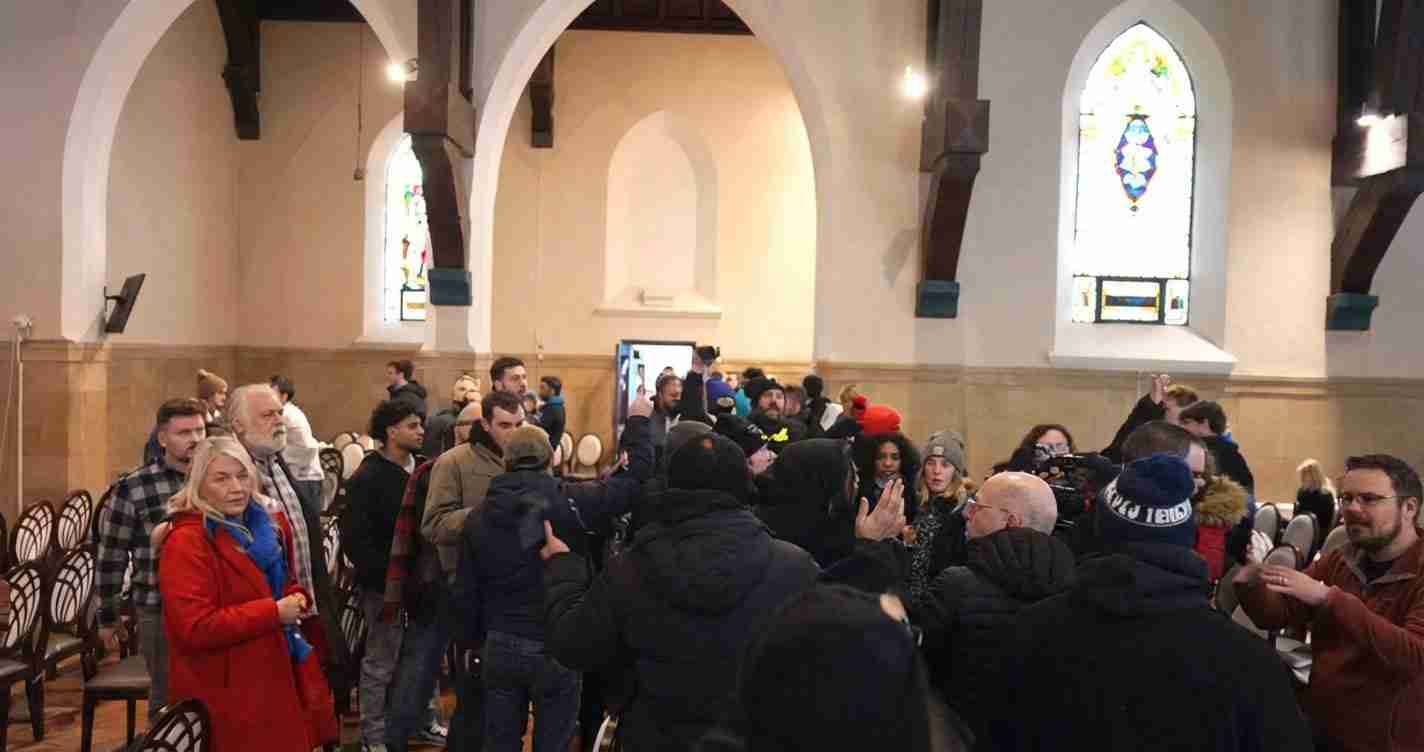
Multiple short clips circulating on social platforms depict a group entering a church sanctuary and chanting slogans related to the killing of Renee Good. In the footage, demonstrators call for “Justice for Renee Good” and at times chant, “Who needs justice, we need justice.”
One person filming narrates that the group had learned a pastor at the church was “connected to ICE” and described the entry as a “clandestine mission.” Those assertions originate with demonstrators in the footage and have not been independently corroborated by local reporters or law enforcement.
“The specific claim that a pastor at Cities Church is affiliated with Immigration and Customs Enforcement (ICE) is being asserted by the demonstrators in video, but this affiliation has not been independently verified.”
Times Media Service searched local reporting and public records and found extensive coverage of the killing of Renee Good and the wave of anti‑ICE demonstrations, as well as reporting on increased ICE activity — but no verified, on‑the‑record accounts confirming a coordinated “storming” of Cities Church, identification of participants, organizers, or arrests tied to the alleged disruption.
Readers and editors can view current search results here:
- Search for the alleged church disruption
- Search for reporting on Renee Good killing
- Search for Twin Cities ICE operations and protests
Wider context: protests and federal response
The killing of Renee Good on January 7, 2026, prompted deep public anger and a spike in anti‑ICE demonstrations across Minneapolis and St. Paul. Local residents, activists and relatives of the deceased called for accountability and changes to federal immigration enforcement. In the days after Good’s death, federal immigration authorities publicly signaled increased enforcement activity in the region, according to multiple reports.
Available reporting indicates:
- The Good killing inspired protests focused on ICE activity in the Twin Cities and broader discussions about immigration enforcement policies.
- Federal authorities announced escalated operations in the aftermath, heightening concerns among immigrant communities and amplifying public demonstrations.
What remains unclear
- Identity and ICE affiliation of any alleged pastor at Cities Church — claim originates in protest video, not verified.
- Whether local law enforcement responded to the alleged sanctuary disruption and whether arrests or citations occurred.
- Whether Cities Church has issued an official statement acknowledging the incident, or planned security or legal steps.
- Who organized the action captured in the videos and whether it was coordinated with broader anti‑ICE groups.
Attempts to reach officials and the church
Times Media Service sought comment from the St. Paul Police Department and Cities Church. At the time of publication, no statements were issued or located online. Readers are encouraged to monitor official municipal and church channels for updates.
Legal and ethical context for protests at houses of worship
Footage showing demonstrators entering a sanctuary raises complex questions about protest rights, public safety and protections for houses of worship. Places of worship have legal protections and are often regarded as sanctuaries for worshippers; at the same time, public demonstrations are protected speech under the First Amendment.
Law enforcement and religious leaders nationwide have expressed concern about protests targeting houses of worship, citing safety risks and the need to protect congregants’ right to worship without disruption. Alleged actions that target clergy or congregations because of perceived ties to law enforcement agencies could invite criminal or civil scrutiny, depending on local statutes and facts.
Sources and documentation
Given the lack of independent reporting confirming the church incident, this article relies on:
- Video clips circulating on social media (attributed as “video circulating online”).
- Regional news coverage and search results documenting the killing of Renee Good and subsequent anti‑ICE demonstrations and federal activity: Search for reporting on Renee Good killing.
- Searches for reporting on ICE operations and protests in the Twin Cities: Search for Twin Cities ICE operations and protests.
- Search for the specific church incident for readers and editors to inspect: Search for the alleged church disruption.
Implications for California
Economic impact: Federal immigration enforcement operations in the Twin Cities and the national attention they attract can indirectly affect California’s economy by influencing migration, labor availability and federal funding priorities. California’s large immigrant workforce could experience ripple effects in labor markets and supply chains.
Political consequences: The controversy may shape political messaging in California. Moderately conservative audiences may emphasize law‑and‑order themes, while sanctuary policymakers could highlight immigrant protections — sharpening debates ahead of local elections and potential legislation governing cooperation with federal immigration authorities.
Social effects: If houses of worship are perceived as protest targets, faith communities across California may reassess security protocols. Congregations that support immigrants could face pressure to balance outreach with safety, and community leaders may increase coordination with local law enforcement.
Cultural relevance: California’s diverse religious landscape means incidents like the alleged St. Paul disruption resonate widely. Perceived attacks on clergy or sanctuaries can stoke fears and deepen cultural divides over immigration and enforcement policy.
Practical applications for residents
- Faith leaders in California may review emergency plans and clarify policies on responding to on‑site protests.
- Local law enforcement and houses of worship could consider joint training on de‑escalation and communications.
- Voters and community members may press municipal officials for clearer policies balancing free speech protection with safeguarding places of worship.
What readers should watch for next
- Official statements from Cities Church, the St. Paul Police Department or other local officials confirming facts depicted in circulating videos.
- Local news verification identifying participants, any arrests or legal actions, and whether the alleged pastor‑ICE affiliation is factual.
- Broader reporting on how federal ICE operations are being implemented in the Twin Cities and whether activity expands to other metropolitan areas.
Reporting note: This article focuses on video and claims circulating online. Times Media Service has documented substantial coverage of the killing of Renee Good and subsequent anti‑ICE protests; however, the specific church disruption described in these clips had not been independently verified by mainstream reporting or official statements at the time of publication. Readers should treat the incident as alleged until confirmation by credible local authorities or news outlets.