Pacemaker data helps shape timeline in disappearance of Savannah Guthrie’s mother, but devices can’t give investigators a location
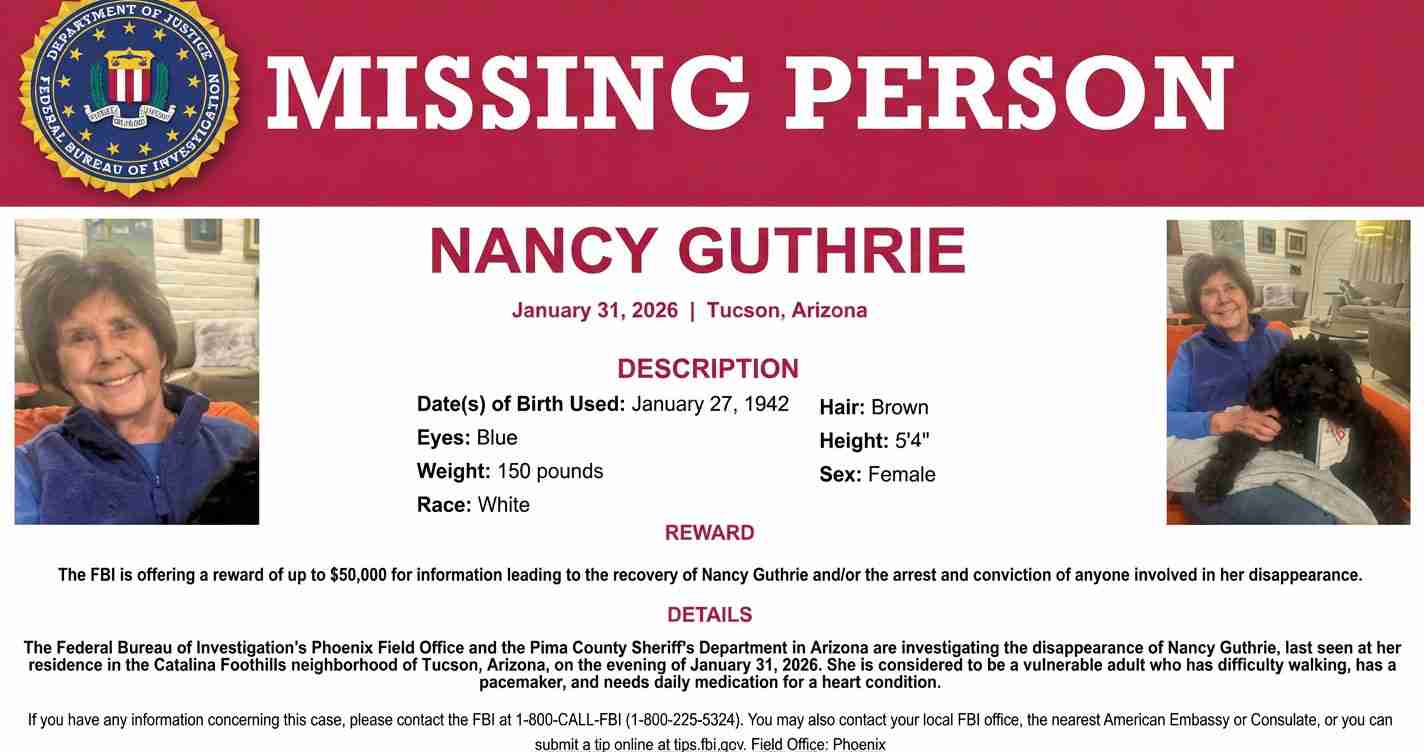
Nancy Guthrie, 84, vanished from her Tucson home Feb. 1, 2026. Investigators are using pacemaker telemetry, doorbell-camera footage and ransom notes to build a narrow timeline as the FBI now pursues leads to locate her.
- Pacemaker link lost: The pacemaker app disconnected from Guthrie’s phone at 2:28 a.m. in the timeline released by authorities (Pima County timeline).
- Critical 41-minute window: A doorbell camera went offline at 1:47 a.m. and motion was logged at 2:12 a.m., creating a narrow period for investigators (KATV report; YouTube video).
- Data limits: Pacemakers record cardiac events and pings but do not provide GPS location; Bluetooth range and home monitors complicate interpretation (device-expert briefing).
Pacemaker data in the Guthrie investigation
Pima County investigators say the pacemaker app disconnected at 2:28 a.m., following the doorbell-camera outage at 1:47 a.m. and motion detections at 2:12 a.m.. That sequence narrows when something inside the home changed, but it does not answer what occurred during those minutes (Pima County timeline).
Investigators note the pacemaker’s last successful ping may include heart-rate values — normal, elevated, low or irregular — that could suggest stress, physical struggle or a medical event. Officials have not released Guthrie’s specific heart-rate readings; cybersecurity expert Morgan Wright has urged close analysis of pre-disconnection logs to help narrow when any cardiac events occurred (YouTube briefing).
How pacemakers work — and what they can’t do
Pacemakers are implanted, battery-powered devices that deliver electrical pulses when the heart beats too slowly. Many devices transmit data to clinics via a home monitor or phone app. As long as the link remains active, clinics can be alerted to major cardiac events — including a pause or cessation of heartbeat — according to Amy Kleinhans, lead nurse practitioner for an electrophysiology device clinic that monitors thousands of devices (KATV report).
Important limitation: Pacemakers do not include GPS or built-in location tracking. They log rhythms, pauses and other cardiac metrics, but cannot identify where a person was when those events happened. Bluetooth links typically reach roughly 100 feet, so a lost connection can mean the phone moved out of range, the monitor was unplugged, or communications were interrupted — not necessarily that the implanted device itself stopped functioning (expert video).
Why the disconnection matters to investigators
Law enforcement says the pacemaker stayed powered after the app disconnected, but the loss halted remote monitoring. That interruption matters because it both defines when external telemetry stopped and eliminated an automated alert that might have signaled a life-threatening event. Investigators emphasize that the app disconnection, coming after doorbell footage and interior motion, creates a focused window for forensic work inside the residence (KATV timeline).
Timeline of events released by authorities
- Jan. 31 evening: Nancy Guthrie dined with her daughter Annie, returned home around 9:45 p.m.; garage closed at 9:50 p.m. (Pima County timeline).
- 1:47 a.m. Feb. 1: Home doorbell camera disconnected (KATV).
- 2:12 a.m.: Software detected movement inside the home, flagged as a person (video explanation).
- 2:28 a.m.: Pacemaker app disconnected from Guthrie’s phone (timeline).
- 12:03 p.m. Feb. 1: Family called 911 after Guthrie missed a virtual church service; blood was found on the porch and later confirmed to be Guthrie’s (KATV report).
Other evidence and the broader probe
Investigators are also reviewing doorbell footage that identified a person of interest near the home and ransom notes demanding millions in Bitcoin. The family reportedly offered to pay and the FBI has posted a $50,000 reward. Records show a small Bitcoin transfer of about $152 to the ransom wallet; authorities say its connection to the case is unclear. Multiple people of interest have been interviewed and locations searched, including a traffic stop and detention near Rio Rico; one man, Carlos Palazuelos, was detained briefly while a vehicle and home were searched. The investigation remains active with hundreds of leads (KATV summary).
Expert perspective on what to look for next
Forensic experts emphasize pacemaker logs are most valuable when combined with physical evidence. Officials cite blood on the porch; analysts point to blood-spatter analysis, signs of a struggle, bedroom disturbance and recovery of nearby electronic signals as ways to fill gaps. Cybersecurity and device experts warn remote telemetry can be interrupted or altered by routine factors like power loss, battery-saving modes, or a phone being left in another room — reinforcing the need to corroborate pacemaker logs with independent evidence (device security briefing).
“Pacemaker data can narrow a timeline and flag cardiac events, but it cannot tell you where the patient was when those events occurred,” experts told reporters.
Implications for California
Economic: Remote medical monitoring plays a role in senior care funding and response workflows. The Guthrie case may prompt counties and health systems to review contracts, notification protocols and integration between device monitoring and public-safety partners (KATV context).
Political: California policymakers face competing priorities around privacy and law enforcement access to medical-device data; the case may drive debate over warrants, data-sharing and coordination between hospitals, manufacturers and police (expert commentary).
Social: The case highlights risks for seniors living alone and may spur more community check-ins, faith-group outreach and enrollment in emergency-response services. Families are advised to ensure devices, monitors and emergency contacts are current and that phones remain charged and nearby to reduce accidental disconnections (guidance video).
Practical applications for residents
- Verify home monitors and health apps are set up and tested regularly.
- Keep emergency contacts updated and consider redundant monitoring or daily check-ins for at-risk seniors.
- Ensure phones are charged and kept near monitors to reduce the chance of unintended Bluetooth or app disconnections.
Reporting and sources
This article is based on the timeline and statements released by the Pima County Sheriff’s Department and reporting by Times Media Service. Primary public documents and footage are available at the KATV case page and a related YouTube briefing.
Reporting from Tucson, Arizona; Times Media Service.