Ilia Malinin’s Olympic Upset: Favorite Falters in Free Skate, Finishes Eighth at Milano Cortina 2026
Ilia Malinin, the two-time world champion and pre-event favorite, crashed out of the Milano Cortina 2026 men’s free skate, finishing eighth overall with 264.49 after a troubled free skate that erased his commanding short-program lead.
- Short-program leader: Malinin topped the short program with 108.16 but could not sustain momentum.
- Free skate collapse: Errors produced a free-skate score of 156.33, dropping him to eighth (total 264.49).
- Podium and personal bests: Mikhail Shaidorov won gold (291.58 PB), Yuma Kagiyama silver, Shun Sato bronze.
- Broader implications: The result spotlights pressure, strategy on quads, and athlete mental-health needs.
Short program advantage
Malinin arrived at Friday’s free skate with momentum. The 21-year-old American—nicknamed the “Quad God” for his ability to land multiple quadruple jumps—produced a commanding short program, scoring 108.16 and leading his nearest rivals by more than five points. That edge, plus a string of recent victories, made him the prohibitive favorite for gold. US Figure Skating
The free skate collapse
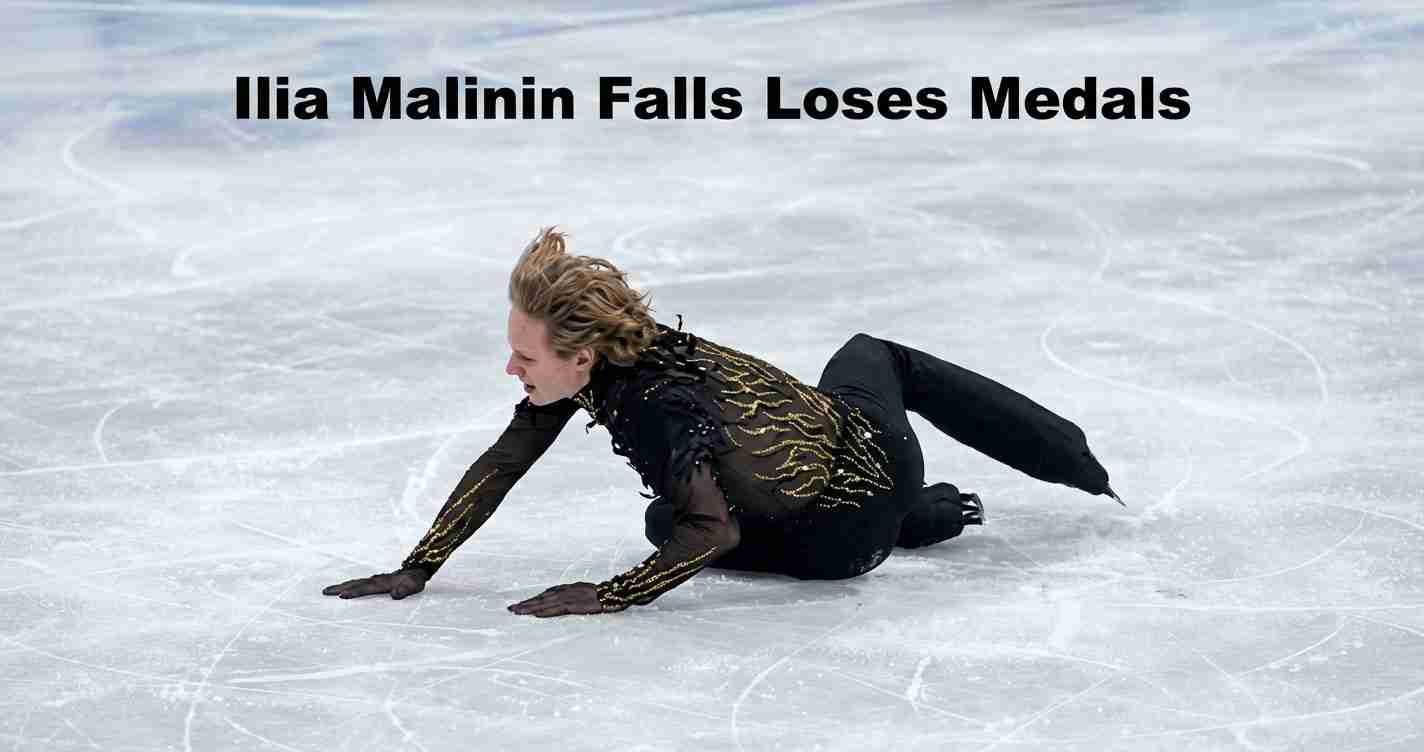
What followed was a sharp reversal. Malinin opened with a solid quad flip, but errors accumulated: he popped an attempted quad Axel into a single Axel, performed a double loop instead of a planned quad loop, fell on a quad Lutz attempt and fell again later. The free skate score of 156.33 placed him 15th in that segment and far below the world-record mark he set last December. US Figure Skating
Coach, technique and execution
Technical risk left little margin for error. Malinin’s program typically depends on multiple quadruple jumps; when an early jump is altered or fails, the technical base value plunges and second-half bonuses can be lost. That cascading scoring effect contributed to his ninth- through 15th-place technical standing in the free skate and erased his short-program cushion. (Analysis based on scoring and jump sequencing detailed by US Figure Skating.)
Pressure and reaction
Malinin cited pressure as central. “I think all the pressure, all of the media and being the Olympic gold hopeful was too much to handle,” he said, adding that memories and thoughts “just rush in” before he skated. The 21-year-old acknowledged he didn’t know how to handle that moment, describing an overwhelming sense that affected his execution. His remarks highlight the psychological demands of elite sport. US Figure Skating
Medal winners and Olympic results
Mikhail Shaidorov of Kazakhstan seized the moment, delivering a personal-best total of 291.58 to claim gold. His free skate was a career-high 198.94, which propelled him past a field that had expected Malinin to dominate. Japan’s Yuma Kagiyama took silver and teammate Shun Sato earned bronze—underscoring the growing global depth in men’s figure skating. US Figure Skating
Context: Malinin’s prior dominance
To grasp the magnitude of this upset, consider Malinin’s record. He had set a world-record free skate score of 238.24 in December, regularly posts totals in the 300s, and holds a personal best total of 333.81. He won 14 consecutive individual events since 2023 and helped Team USA to gold in the team event just days earlier—yet past victories offered no guarantee under peak expectation and scrutiny. US Figure Skating
Investigating what went wrong
Experts will examine mental preparation, strategic choices to attempt multiple high-risk quadruple elements, and timing of peak readiness during a packed Olympic schedule. The decision to attempt a quad Axel under pressure is especially significant; the jump is among the most difficult in the sport and leaves little margin if confidence falters. Malinin emphasizes the mental side, but technical, training and scheduling factors will also be reviewed. US Figure Skating
Implications for California
Economic impact: California hosts many clubs, rinks and coaches who invested in rising stars like Malinin. His profile helped ticket sales, sponsorships and program enrollments. While an Olympic upset may temper national media attention short-term, it can spur renewed local interest in athlete development and sport-psychology resources.
Political and policy consequences: Policymakers may emphasize athlete well-being alongside elite performance—favoring cost-effective public-private partnerships, targeted grants, or incentives to expand sports-psychology services at state-supported institutions and community centers.
Social effects: For California families involved in high-pressure youth sports, Malinin’s experience is a cautionary tale. It underscores the need for coaching that pairs technical skill with mental resilience and for normalizing conversations about performance anxiety.
Cultural relevance: California’s competitive skating ecosystem values excellence and personal development. Malinin’s setback may prompt local clubs to adopt new mental-training protocols and technology-driven monitoring in preparation for high-stakes events.
Practical applications: Clubs and coaches may hold more workshops on pressure management, simulate high-stakes environments, and integrate sport psychologists into regular training. Parents should seek coaches who emphasize mental skills alongside jumps and spins.
Source attribution and further reading
This report is based on competition results and athlete comments provided by US Figure Skating.
“I think all the pressure, all of the media and being the Olympic gold hopeful was too much to handle,” — Ilia Malinin