Google $40 Billion Texas Investment to Build Three New AI Data Centers, Deepens Race for Cloud Infrastructure
Google is committing $40 billion to build three new AI data centers and expand cloud infrastructure across Texas by 2027, promising job creation, major energy deals and renewable integration while deepening the U.S. race for AI compute.
Key takeaways
- Massive commitment: Google announced a $40 billion investment in Texas through 2027 to build cloud and AI infrastructure, including three new AI data centers (Times of India, Fox4News, Governor’s Office of Texas).
- Sites named: New campuses planned in Armstrong County and Haskell County, expanding Google’s Midlothian footprint (Times of India, Fox4News).
- Energy deals and funds: Google secured more than 6,200 MW of generation capacity via power-purchase agreements and created a $30 million Energy Impact Fund for community projects (Times of India).
Investment details and scale
Scope: The $40 billion pledge covers construction, equipment, land, energy deals and local projects, and Google framed the announcement as one of its largest U.S. infrastructure commitments. CEO Sundar Pichai said Google has “proudly called Texas home for 15 years,” signaling a long-term strategy to scale Google Cloud and AI workloads (Times of India).
“We’ve proudly called Texas home for 15 years,” — Sundar Pichai, Google CEO.
Why it matters: At this scale, Google is not merely adding servers; it is building the power, networks and supply chains AI training requires, positioning Texas at the center of a broader U.S. contest to host heavy compute.
Data center locations and infrastructure
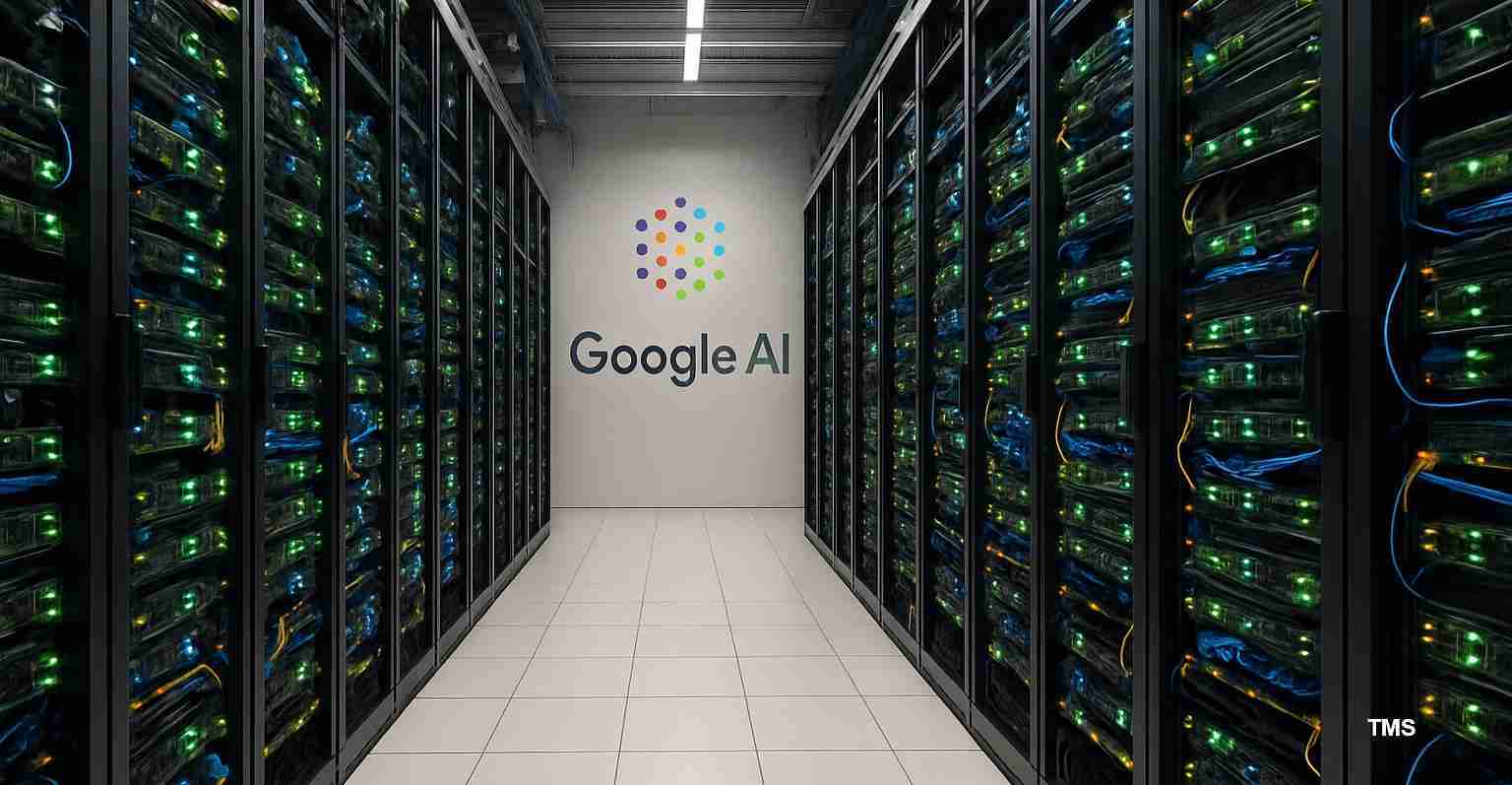
Google confirmed plans for three new AI data centers in Texas, expanding its existing Midlothian campus footprint. Two counties were named: Armstrong County and Haskell County. At least one Haskell site will include an adjacent solar and battery storage plant, demonstrating a strategy to co-locate generation and storage with compute (Times of India, Fox4News).
Unknowns: Google did not disclose site-by-site sizes or detailed timelines beyond the 2027 horizon, nor did it include full details on local permits, tax arrangements or exact spend breakdowns for the $40 billion commitment.
Energy and grid support
Energy was central to Google’s announcement. The company said it secured more than 6,200 megawatts of new generation and capacity through power-purchase agreements and established a $30 million Energy Impact Fund to scale community energy-efficiency projects in Texas (Times of India).
Those moves come as Texas faces rising peak demand: ERCOT projections cited suggest peak demand could more than double by 2031. State policy changes like Senate Bill 6 now allow ERCOT to curtail large users during emergencies — a tool intended to protect grid stability but one that raises operational reliability questions for 24/7 data center operations (Fox4News).
Workforce development
Google plans to invest in workforce training through a partnership with the electrical training ALLIANCE, targeting more than 1,700 apprentices by 2030. Google says this will more than double the expected pipeline of new electricians in Texas and help provide skilled labor for large data center projects (Times of India).
Strategic context
Industry observers view the investment as part of a larger tech push to build capacity for advanced AI and generative models. The $40 billion commitment highlights competition among states to host the compute backbone for machine learning research, cloud services and AI training, and it positions Texas as a major national hub for AI data centers (Times of India).
Questions that remain
The announcement leaves open practical details: a full timeline for each campus, a granular breakdown of the $40 billion across construction, land and operations, specifics on local tax and incentive packages, and clarity on how much of the 6,200 MW is newly built versus contracted capacity. State regulators, local officials and communities will likely press for these details in coming months.
Implications for California
Economic: California’s tech economy will watch the Texas buildout closely. The investment could shift some large-scale data center and AI workloads away from California over time, affecting construction, energy and procurement opportunities for in-state firms.
Political & social: The deal highlights trade-offs between regulatory and environmental standards and economic competitiveness. It may intensify debates in California over incentives, permitting and how to retain large infrastructure projects. Job growth for trades may accelerate in Texas while some construction and related work could decline in California.
Practical: Businesses dependent on Google Cloud should anticipate expanded capacity and evolving service dynamics. Workforce trainers and trade schools may consider adapting curricula to shifting demand for electricians and data center technicians.
Sources and further reading
- Times of India: “We’ve proudly called Texas home for 15 years,” Says Google CEO Sundar Pichai announcing $40 billion investment in Texas
- Fox4News: Google announces new AI data centers in Texas
- Office of the Governor of Texas: Governor Abbott, Google announce $40 billion investment in Texas
Reporting note: Announcement made by Google CEO Sundar Pichai on Nov. 14, 2025, at the Midlothian data center campus, per company and state sources (Times of India; Fox4News; Governor’s Office of Texas).