White House gate crash: driver arrested after vehicle rams security gate near White House
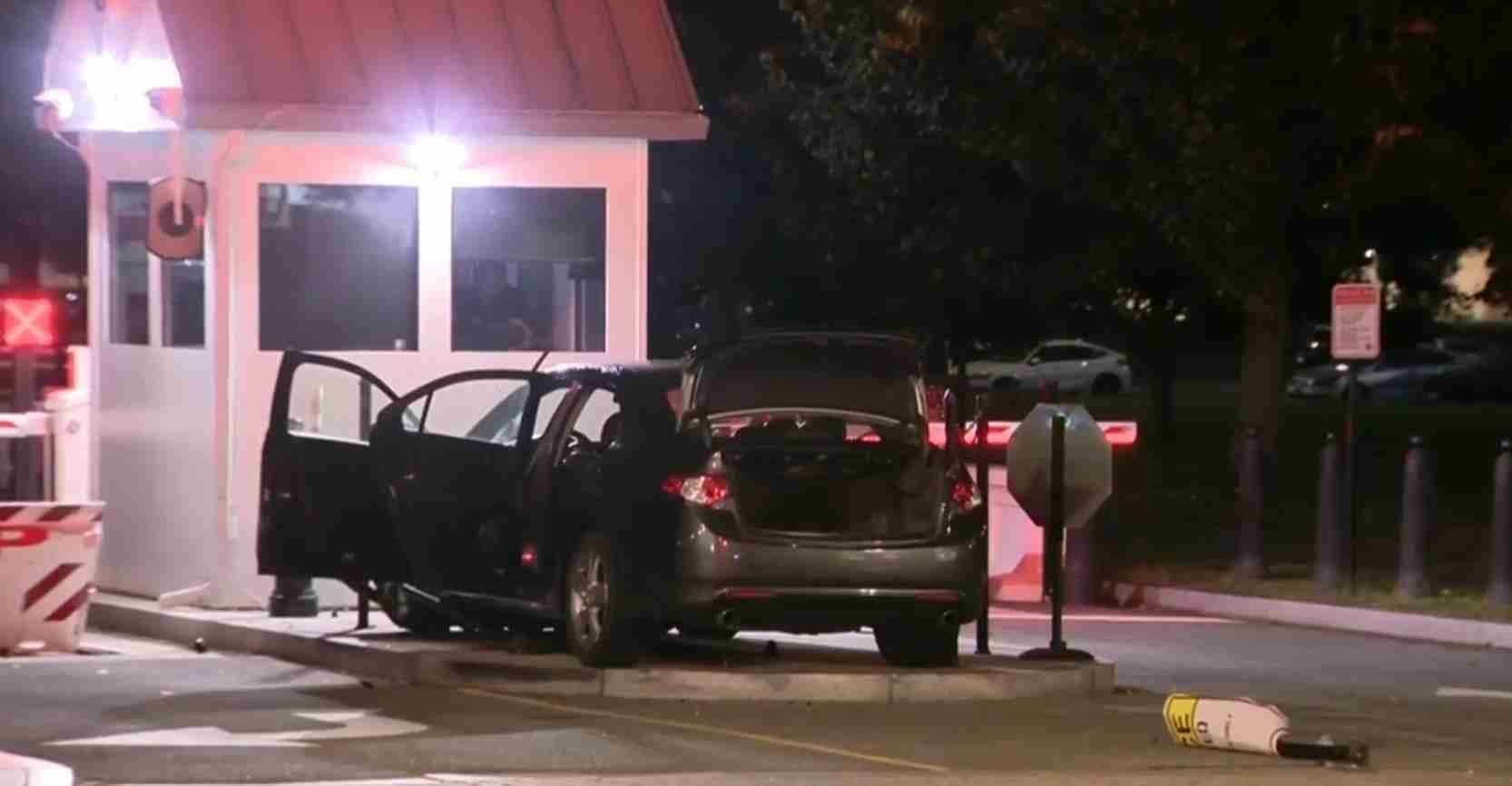
A driver was arrested late Tuesday after ramming an older-model Cadillac Escalade into a perimeter security gate near the White House in Washington, D.C. Secret Service and DC Fire and EMS responded; officials say there is no ongoing threat.
Key takeaways
- Driver arrested: Authorities say the driver was taken into custody at the scene.
- Vehicle and location: Reports identify an older-model Cadillac Escalade with Virginia plates near the White House perimeter (corner of 17th & E Streets or 15th St. & Pennsylvania Ave.).
- Multiagency response: Secret Service, DC Fire and EMS and local police secured the scene and inspected the vehicle; officials found no ongoing threat.
- Investigation: The Washington Metropolitan Police Department’s Major Crash Investigations Unit is leading what officials are treating as a traffic incident while motive and circumstances are determined.
The crash and immediate response
Late Tuesday night, a vehicle struck a fixed security gate along the White House perimeter and came to rest near the barrier. Multiple outlets reported the collision and the swift arrival of law-enforcement and emergency crews, including UPI and The Independent.
Secret Service officers implemented established security protocols, rendered aid and secured the immediate area while DC Fire and EMS assisted on scene. Officials inspected the vehicle and reported it safe after the collision, rejecting immediate concerns about explosives or secondary devices. No shots were fired during or after the incident, according to official briefings.
Officials: “There is no ongoing threat to the White House complex,” law-enforcement sources said after securing the scene.
Arrest, conflicting reports and the investigation’s scope
Multiple reports indicate the driver was arrested at the scene, consistent with local and federal descriptions of a contained law-enforcement action (WJLA; Axios).
Conflicting accounts surfaced in the broader news cycle: some coverage described a separate incident involving a fatality after a gate collision. The event described here—late Tuesday’s crash—was predominantly reported as resulting in an arrest rather than a death; authorities note discrepancies may reflect separate events or evolving information reported by different outlets (see ABC7NY and ABC News).
Investigation lead: The Washington Metropolitan Police Department’s Major Crash Investigations Unit is leading the probe and is treating the matter primarily as a traffic incident while examining intent, vehicle condition, speed, impairment and mechanical factors.
Public safety and operations impact
Police temporarily closed portions of 15th Street during initial response and evidence collection; streets were later reopened after early investigative work concluded. The damaged vehicle remained on site while investigators completed inspections.
Security assessment: Officials emphasized that existing security measures functioned as designed. The Secret Service’s rapid containment and coordination with DC Fire and EMS helped limit risk and allowed methodical evaluation of the scene (Axios; WJLA).
Why this matters
Vehicle-ramming incidents at high-profile sites are especially concerning because they can occur suddenly and are difficult to anticipate. The primary objectives after such events are to protect people and critical infrastructure, determine whether the event was criminal or accidental, and restore confidence through rapid, transparent response.
Quick multiagency coordination in this incident limited disruption to the White House complex and reassured officials that no ongoing threat remained.
Implications for California
Economic impact
Tourism and travel: Californians traveling to Washington, D.C., may face heightened security checks at federal sites after high-profile incidents, potentially causing short-term delays and rerouted tours near the White House (WJLA).
Cost considerations: State and local agencies periodically reassess spending on barriers and security for public buildings; California jurisdictions could review budgets and barrier placement to address vulnerabilities revealed by such incidents.
Political consequences
Law-and-order focus: For some voters, the episode reinforces the need for robust security protocols and continued support for first responders. Policy reviews and interagency coordination discussions may follow at both federal and state levels.
Social effects and cultural relevance
Public confidence: Rapid containment and assurances of no ongoing threat help preserve trust in federal security institutions. However, repeated incidents can erode comfort with civic spaces and affect attendance at public events.
Civic access vs. security: The incident underscores the tension between keeping public spaces accessible and protecting them from vehicle-based threats, an issue relevant for the California State Capitol and other landmarks.
Practical applications for residents and officials
- Review local security: City and county leaders might assess perimeter protections outside key public buildings and update emergency-response plans with fire and sheriff’s departments.
- Travel advice: Visitors to Washington should expect possible short-term security measures near the White House and monitor official advisories for brief delays.
- Support for first responders: The incident highlights the value of funding, training and interagency drills that California policymakers may cite when allocating resources.
Ongoing questions
Investigators continue to determine whether the crash was intentional, accidental, or related to impairment or mechanical failure. The Major Crash Investigations Unit leads the probe while the Secret Service maintains perimeter security. Officials and the public await additional details as the investigation proceeds (ABC7NY; ABC News).