Heatwave, Dry Spell Threaten California Superbloom 2026 as Early Rains Spark Patchy Blooms
After early heavy rains raised hopes, a recent heatwave and dry spell threaten California’s superbloom prospects for 2026, producing patchy early blooms mostly in desert and inland pockets while experts warn statewide displays are less likely.
- State identity and blooms: The California poppy’s bright displays reinforce the state’s image — see the California superbloom 2026 prediction.
- Timing is everything: Superblooms need a precise sequence of rain and cool weather; recent warmth could derail a statewide event — experts discussed this in the Los Angeles Times analysis and forecasting on regional prediction pages.
- Patchy blooms ongoing: Early 2026 sightings are reported in desert and inland spots — see the Desert USA wildflower reports and regional predictions on local aggregators.
Why the nickname and why the poppy matter
Historical note: Most historians trace California’s “Golden State” name to the 1849 Gold Rush. Still, the California poppy (Eschscholzia californica) — a small, yellow-orange flower that dots hills from Arcata to San Diego each spring — reinforces the golden image and remains a core part of the state’s visual identity. For context, see the California superbloom 2026 prediction coverage.
What creates a superbloom
A superbloom is more than simply heavy rain. Key factors include:
- Seed biology: Many annual wildflower seeds carry a dormancy-inducing chemical that must be washed away by heavy autumn or winter rain.
- Follow-up rainfall: After dormancy is broken, seedlings need additional, regular rains — roughly monthly — to survive and grow.
- Cool window: About six weeks of cool weather typically helps plants green up before flowering; early spikes in temperature can force premature blooms that subsequently fail.
For a deeper primer on the sequence and regional expectations, refer to the California superbloom 2026 prediction and the Los Angeles Times analysis.
2026 outlook: hopes tempered by heat and dry spells
Early season rains — including one of Los Angeles’ wettest stretches through January — removed seed dormancy chemicals and allowed many annuals to sprout. That moisture initially raised hopes for a strong 2026 season (LA Times).
However, record-warm temperatures in November through January followed by a recent dry, hot spell have put seedlings at risk. Heat can force early blooming and then rapid die-off, lowering the odds of a statewide superbloom — especially in Southern California. Experts stress that all required factors must align for a classic “carpeted” display.
“A short period of milder temperatures and even small amounts of rain could still improve conditions, but it would take several weeks of favorable weather to produce the carpeted poppy fields,” experts told reporters in mid-January.
See more context in the Los Angeles Times and regional prediction summaries at California superbloom 2026 prediction.
Where flowers are showing up now
Even with a wobbly statewide outlook, several hotspots are showing early or promising displays:
- Anza-Borrego Desert State Park: Early blooms are visible after fall rains; desert peak season is often March–April, but desert blooms can respond quickly to localized rainfall (prediction page; LA Times).
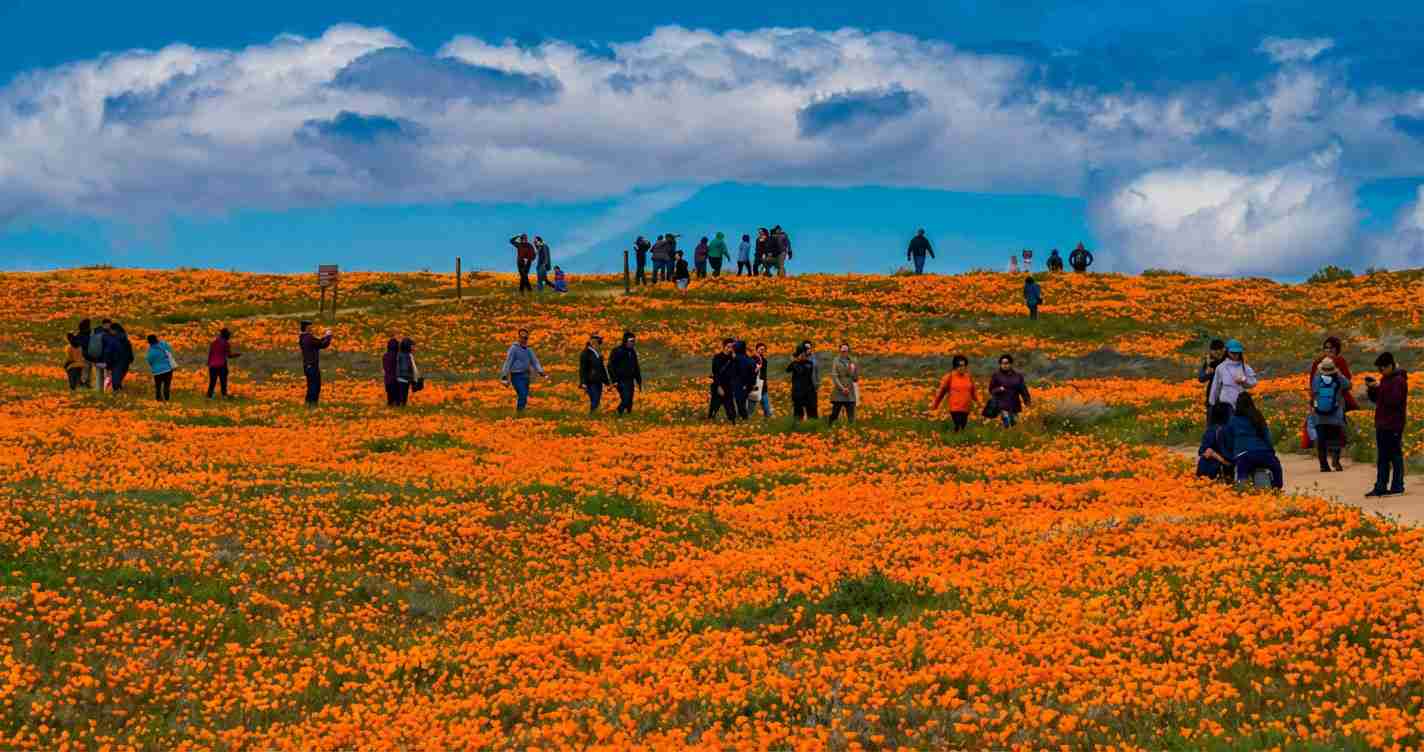
- Antelope Valley California Poppy Reserve: Interior valleys and foothills saw above-normal rainfall, improving prospects; peak usually mid-March through May (regional prediction; Desert USA reports).
- Southern California inland pockets (including Walker Canyon): Patchy, vibrant displays are possible where rain pooled; Walker Canyon can produce dramatic but fast bloom-and-fade cycles (Desert USA).
- Other sites on watch: Carrizo Plain National Monument and Chino Hills State Park may show strong displays where conditions allow (prediction page).
- Northern California and Bay Area: Sunol Wilderness, Mount Diablo, Tilden Regional Park, Mori Point and Edgewood Park are typically more reliable and may produce attractive fields even if Southern California underperforms (regional prediction).
Early January sightings: observers reported desert sand verbena, evening primrose and desert lily near I-8/Grays Wells Road; blue phacelias, poppies and coreopsis in the eastern Sierra; and a first desert candle near California City (Desert USA early reports).
Past patterns and what they suggest for 2026
Large superblooms in 2017, 2019 and 2023 followed relatively wet seasons, showing how rainfall can set the stage. Yet past seasons also demonstrate that warmth or drought can shut down a budding superbloom quickly. Analysts and botanists point to this variability in recent coverage (LA Times).
Fire-following species: After wildfire clears scrub, some species — snapdragons, lupine, whispering bells and Plummer’s mariposa lily — can appear strongly on burn scars, providing localized color even if a statewide superbloom does not materialize (LA Times).
How to track the season
Because peak times shift with rain, altitude and temperature, plan visits with up-to-date reports. Reliable resources include:
- Theodore Payne Foundation Wild Flower Hotline: begins regular updates on March 1 and is a long-running resource.
- Local park websites and county rangers: post timely closures and conditions.
- Community and regional reports: Desert USA maintains ongoing wildflower observations (Desert USA), and aggregation sites summarize regional predictions (California superbloom 2026 prediction).
Implications for California
Superblooms affect economic, management, social, and cultural aspects of life across the state:
Economic impact
Superbloom years generate tourism spikes that boost fuel, food, lodging and guided-tour revenues in small towns near reserves. If Southern California underperforms, those communities may see below-expectation receipts; localized blooms can still concentrate visitors and provide economic relief (regional prediction; Desert USA).
Political and public-management effects
Large visitor flows require planning: park closures, parking limits, temporary traffic controls and law enforcement presence cost money and staff time. Officials must balance public access, conservation and fiscal prudence while ensuring public safety and stewardship.
Social and community effects
Superbloom tourism brings people outdoors and can boost local pride, but also raises safety and environmental concerns when crowds trample habitat. Education campaigns and clear rules help reduce conflicts and protect wildflower areas for future seasons.
Cultural relevance
The poppy and other wildflowers form part of California’s identity. Even without a statewide superbloom, local displays sustain traditions of spring outings, photography and outdoor recreation. Fire-following blooms can signal renewal in burned communities.
Practical tips for residents and visitors
- Check current conditions before traveling — use official park pages, the Theodore Payne Foundation hotline, and local wildflower reports (LA Times guidance; Desert USA).
- Respect posted closures and stay on trails to protect fragile habitat.
- Be prepared for heavy traffic near popular reserves and consider quieter, less-known sites.
Reporting notes and sources
This report draws on regional wildflower updates and expert coverage, including local forecasts and analysis of how temperature and rainfall patterns affect blooms. Primary sources and ongoing updates include:
- California superbloom 2026 prediction
- Desert USA: Southern California wildflower reports
- Los Angeles Times: analysis of warm, dry threats to the 2026 superbloom
For updates: check those sites, park notices and the Theodore Payne Foundation wildflower hotline beginning March 1.