Leaving California Often Pays Off: Movers Save $672 a Month and Boost Homeownership, UC Berkeley Analysis Finds
A UC Berkeley California Policy Lab analysis finds thousands of Californians who moved out of state from 2016–2025 saved an average $672 per month on housing and were 48% more likely to be homeowners within seven years.
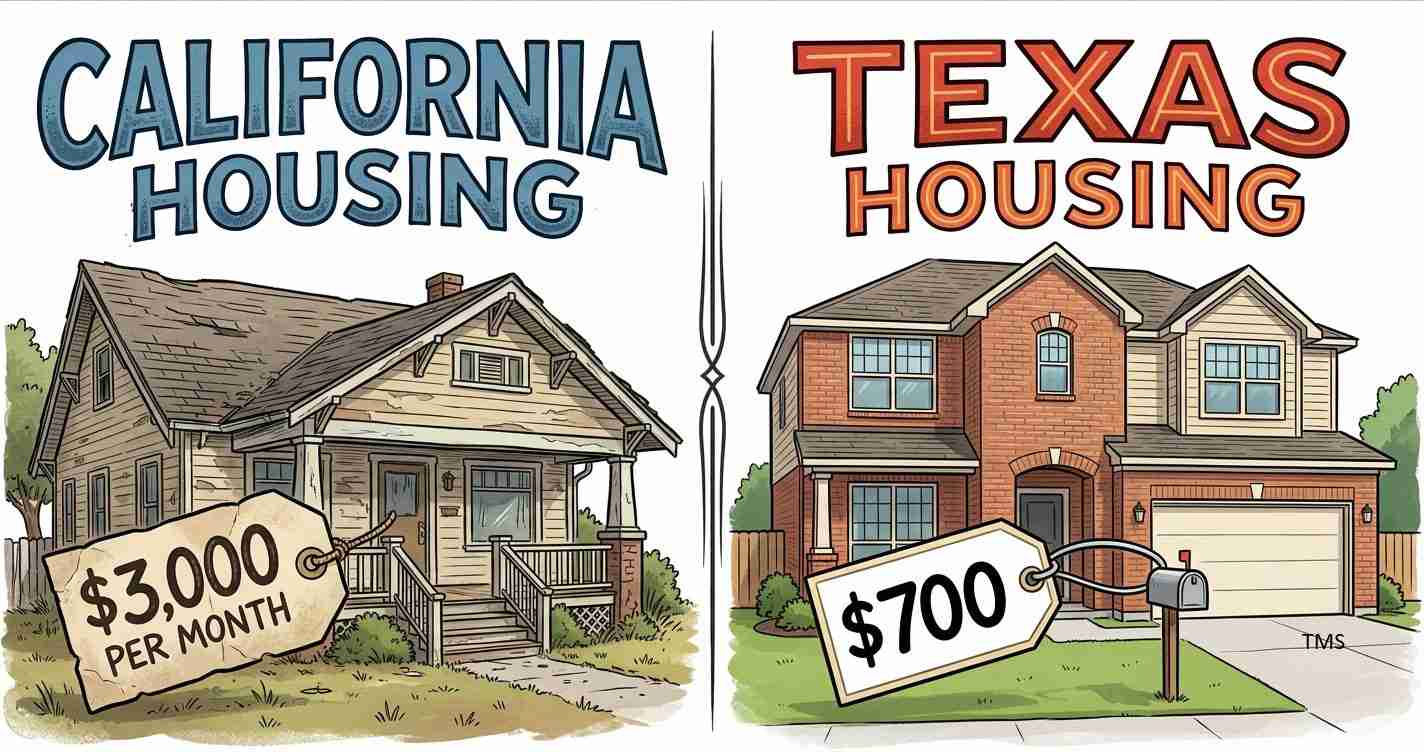
- Average savings: Movers saved $672 monthly on housing compared with their California neighborhoods, per the Fox Business / Realtor.com summary of the California Policy Lab findings.
- Renters and homeowners: Renters saved about $631 per month (≈30%); homeowners found median prices ~$396,000 lower (≈48% reduction).
- Homeownership gains: Destination neighborhoods saw ownership rise to 60% from 53%, an 11-point (48%) increase in seven years for out‑migrants.
Study details and core findings
The California Policy Lab (CPL) used anonymized household-level data that follows the same households from 2016 through 2025. Monthly housing costs measured by the study include mortgage or rent payments, utilities, property taxes and insurance. The CPL report, “Priced Out: Relocation Amidst California’s Affordability Crisis,” documents a clear pattern: many Californians who move out of state land in neighborhoods with substantially lower housing costs, which translates into higher homeownership rates over time (Fox Business, Realtor.com, and the CPL presentation).
Key measures reported: average monthly housing costs in California neighborhoods before moving were $2,376, compared with $1,705 in destination neighborhoods out of state — an average savings of $672 per month (Fox Business, Realtor.com).
“The destination neighborhoods are half as expensive,” CPL Executive Director Evan White said, noting lower prices accelerate opportunities to buy.
Renters and homeowners
Renters who left California achieved the largest absolute monthly savings — roughly $631 less per month, about a 30% decline from their prior rents. Homeowners who relocated saw destination neighborhoods with median home prices about $396,000 lower than their California neighborhoods (a 48% drop). Those price differences help explain why ownership rates climbed after moving (Fox Business, Realtor.com, CPL presentation).
Comparisons: staying, leaving, and moving in
Not all moves produce savings. People who moved within California saw slightly higher housing costs (from $2,263 to $2,277 monthly). By contrast, people moving into California from other states typically faced sharp cost increases — from $1,754 at their prior out‑of‑state home to $2,418 after moving (Fox Business, Realtor.com).
After seven years, homeownership gains diverge: those who left California were 48% more likely to own (an 11 percentage-point rise, to 60% ownership in destination neighborhoods versus 53% in their former California neighborhoods). By contrast, people who moved into California saw a smaller 27% increase (about a six-point rise) after seven years (CPL presentation).
Migration patterns: where Californians move
The CPL analysis mapped net migration flows. Nevada saw the largest net inflow — gaining about 81 people per 10,000 annually from California (2016–2025). Idaho, Oregon and Arizona followed with net inflows of 64, 37 and 36 per 10,000, respectively. Other popular destinations such as Texas, Tennessee and Florida registered smaller net gains (Texas 11, Tennessee 13, Florida 4 per 10,000). Most departing residents go to nearby, lower‑cost states rather than distant ones (Fox Business).
Broader cost context
The analysis notes California’s cost of living is higher across many categories that affect household budgets — groceries, gas and utilities tend to be above national averages. For many households the combined effect of higher everyday costs and steep housing prices pushes the calculus toward relocation where costs are lower (Fox Business).
Policy discussion raised by the findings
CPL researchers and housing experts point to policy choices that could address California’s affordability crisis. Recommended steps include:
- Increase housing production through sensible zoning reforms and targeted development.
- Loosen local regulations that add time and cost to development.
- Encourage innovative construction techniques to reduce per‑unit costs.
- Provide targeted funding for affordable homebuilding and infrastructure where housing is planned.
Analysts including Evan White argue these changes could help more Californians access homeownership without leaving the state (Fox Business, CPL presentation).
Implications for California
Economic and fiscal impact: Large outflows reduce demand for high‑priced housing and remove spending, tax dollars and labor from California jurisdictions, tightening local tax bases — a concern for fiscally minded readers focused on sustaining services and budgets. The CPL presentation highlighted counties such as Sacramento experiencing sizable net outflows (CPL presentation).
Labor and business: Employers may face higher turnover and recruiting challenges when workers can find cheaper housing and faster routes to homeownership elsewhere, particularly in sectors that pay moderate wages.
Political and social effects: Sustained relocation can reshape neighborhood composition, voting patterns and community ties. While leaving often yields financial gains — faster homeownership and greater housing stability — it can separate families and alter long‑term community relationships.
Practical implications for residents
Californians weighing a move should consider the full cost picture. The study shows many who leave save roughly $672 a month on housing and may access homeownership sooner. For pragmatic, fiscally minded readers, the findings underscore the trade‑offs between high‑earning but high‑cost California life and lower‑cost alternatives that favor saving and building equity.
Policy takeaways for pragmatic reform
The findings offer a roadmap for policymakers who want to keep California economically competitive. Practical measures highlighted by analysts include:
- Expanding housing supply through targeted zoning and permitting reforms.
- Incentivizing faster, cheaper construction methods and modular building.
- Investing in infrastructure where additional housing is planned to unlock development potential.
Those steps aim to preserve California’s job opportunities and quality of life while reducing the financial push factors driving residents to other states (Fox Business, CPL presentation).
Reporting and sources
This article draws on the California Policy Lab analysis summarized in recent coverage by Fox Business and Realtor.com, and on a public presentation by CPL Executive Director Evan White (video).