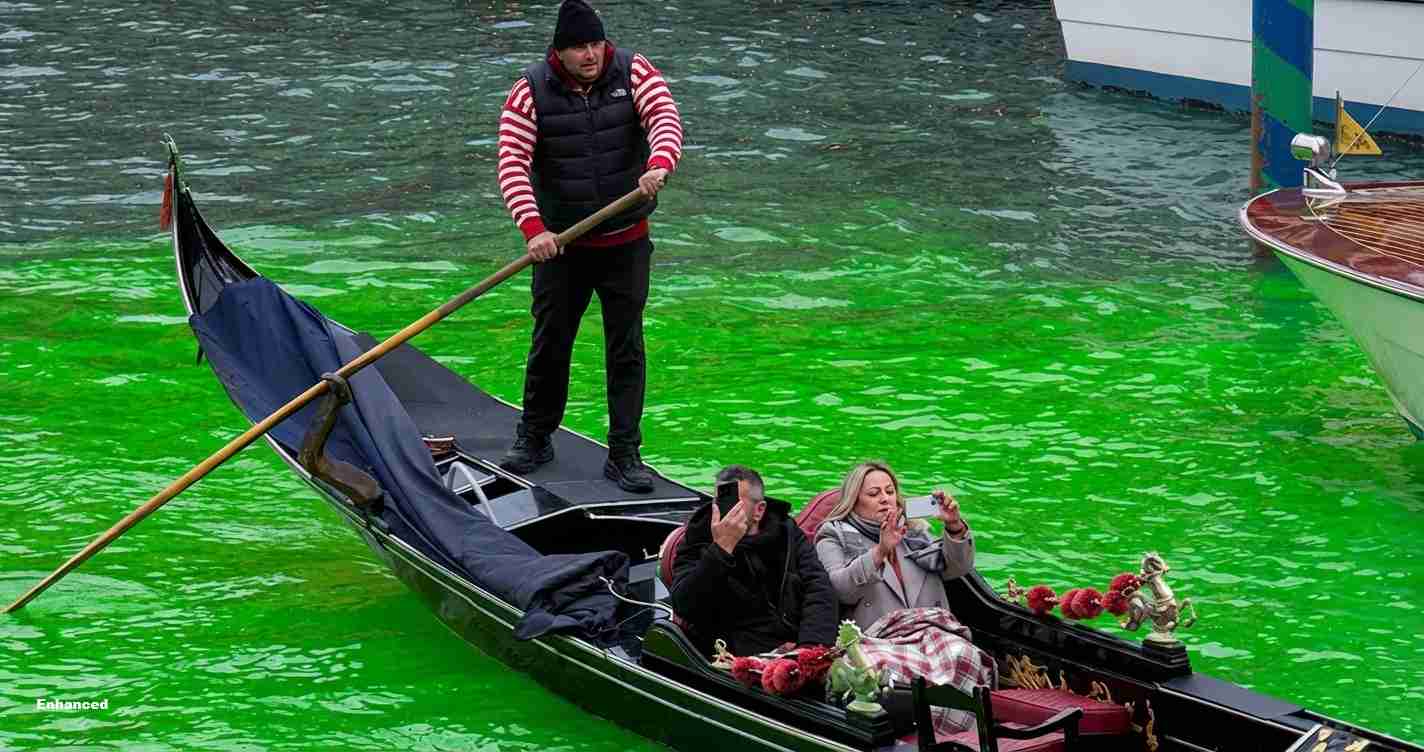
Greta Thunberg fined and temporarily banned after Extinction Rebellion dyes Venice’s Grand Canal green
Greta Thunberg and roughly 35 other activists were fined €150 and barred from Venice for 48 hours after an Extinction Rebellion action dyed the Grand Canal bright green as part of a “Stop Ecocide” protest timed with the close of COP30. The Independent
- Quick facts: Greta Thunberg and about 35 demonstrators received administrative fines of €150 and 48-hour bans after a green-dye protest on the Grand Canal. The Independent
- Nationwide stunt: The Venice event was part of Extinction Rebellion’s coordinated “Stop Ecocide” actions across at least ten Italian cities timed with the end of COP30. Fox News · Illuminem
- Contested safety claim: Activists said the fluorescent tracer dye was non-toxic and used in scientific studies; officials warned of disrespect and possible environmental risk. RFI · Independent (video)
What happened in Venice
On the day COP30 concluded in Brazil, Extinction Rebellion staged a high-visibility action in Venice. Protesters unfurled a “Stop Ecocide” banner from the Rialto Bridge while a masked flash‑mob in red veils moved silently through crowds. Simultaneously, a group released a bright green tracer into the Grand Canal, briefly changing the water’s color and drawing immediate attention from tourists and local media. The Independent
Who was involved
Greta Thunberg — a prominent climate campaigner — joined Extinction Rebellion organisers and about 35 other demonstrators. Police detained some participants on site; authorities later issued administrative fines of €150 each and enforced 48‑hour bans on entering Venice, measures officials described as necessary to preserve public order and the city’s fragile environment. The Telegraph · The Independent
The dye and the activists’ claim
Extinction Rebellion said the substance used was a fluorescent, non‑toxic tracer commonly employed in scientific studies and municipal testing, arguing it posed no environmental threat to wildlife or Venice’s architecture. Activists framed the stunt as a visual metaphor for rising waters and a critique of slow governmental action on climate. Local officials, however, labeled the act disrespectful and warned about potential risks. Fox News · The Independent
Local and regional reaction
Veneto Governor Luca Zaia strongly condemned the action, calling it disrespectful to Venice’s history and fragile environment and warning it risked environmental consequences. Commentators and officials criticized the timing and method, citing Venice’s dependence on tourism and the need to protect its centuries‑old heritage. At the same time, some tourists and bystanders said the protest effectively drew attention to climate issues, producing a split public reaction captured in videos and witness accounts. The Independent · The Telegraph
“Disrespectful to Venice’s history and fragile environment,” said Veneto Governor Luca Zaia, criticizing the stunt and its potential risks.
COP30 context and activist grievances
The Venice action was timed with the close of COP30 in Brazil, where many activists and some delegations expressed disappointment in the final text. Campaigners wanted a binding commitment to phase out fossil fuels; negotiators instead left the creation of a fossil‑fuel transition roadmap to a separate process. Extinction Rebellion described the Venice stunt as a direct response to what it called inadequate government action. The Independent · Illuminem
Actions across Italy
Venice was one node in a countrywide series of demonstrations in at least ten cities. Activists dyed fountains in Genoa and Padova and rivers in Turin, Bologna, and Taranto, seeking a national visual moment to pressure Italy’s leaders for stronger climate measures. Police in various cities responded with fines and dispersals, citing public‑order rules and environmental protection. Fox News · The Independent (bulletin)
Legal and policy angle
Authorities in Venice issued administrative penalties rather than criminal charges: modest €150 fines and 48‑hour bans intended as swift deterrents for disruptive actions in a city with strict preservation rules. Officials have said they will monitor the situation for any demonstrable damages that could prompt broader legal action. Legal experts note civil disobedience often tests the bounds between lawful protest and enforceable local regulation in the name of public safety and heritage protection. The Independent · The Telegraph
Public reaction and media coverage
Coverage ranged from sympathetic to critical. Supporters said the stunt forced climate issues back into public debate; critics argued it risked alienating citizens and harming Venice’s fragile environment and economy. Social‑media clips showed both applause and anger, reflecting a deeply split reaction among residents and visitors. Independent (video) · AOL
Implications for California
California faces similar climate risks — sea‑level rise, coastal flooding, and tourism impacts — making Venice’s incident a potential case study. Key lessons include:
- Environmental message vs. method: Dramatic stunts can raise awareness but risk alienating moderate voters and harming local economies; policymakers must balance urgency with measured advocacy. The Independent
- Tourism and heritage cities: Cities like San Francisco and San Diego might emulate Venice’s quick legal responses to protect historic waterfronts and tourism revenue. The Telegraph
- Legal precedent and enforcement: Administrative fines and short bans are tools local governments may deploy to discourage disruptive tactics while avoiding lengthy criminal prosecutions. The Independent
- Politics and policy framing: The episode may harden debate: activists will press for faster transitions, while moderates emphasize pragmatic, job‑protecting policies. Illuminem
Reporting and sources
This article draws on local and international reporting of the Venice action and related demonstrations, including coverage by:
- The Independent
- Fox News
- The Telegraph
- RFI
- Illuminem
- The Independent (video)
- The Independent (bulletin)
- AOL
Bottom line: Authorities in Venice framed their response as a protective step for a fragile city and economy; activists maintain the visual protest was necessary to dramatise a slow‑moving global crisis. The clash between urgency and preservation is likely to persist in Italy and in coastal regions such as California. The Independent