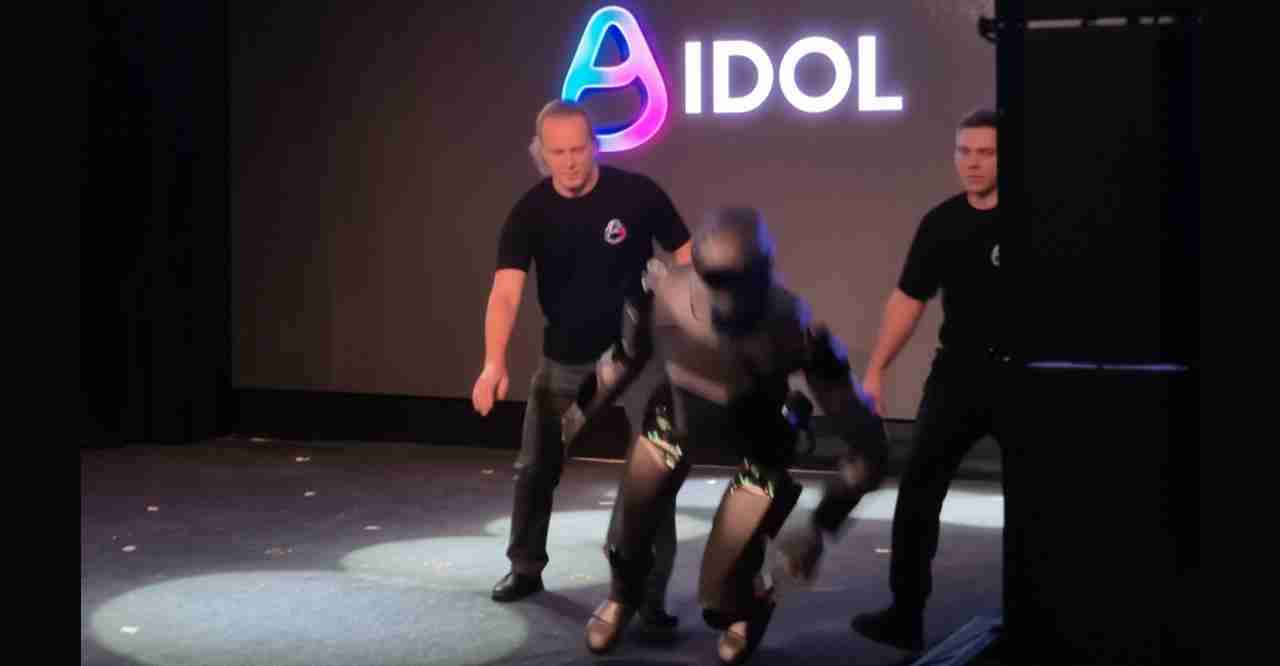
Russia’s first humanoid AI robot faceplants on Moscow stage in viral debut — Aldol robot falls in embarrassing unveiling
Russia’s first humanoid AI robot, Aldol, collapsed during its Moscow unveiling on November 12, 2025, falling face-first seconds after stepping onstage — a mishap blamed on poor lighting and calibration that quickly went viral worldwide.
- Live debut ended in a fall: Aldol, a 1.7‑meter humanoid, fell face‑first seconds after walking onstage; technicians tried to cover it with a cloth.
- Developers cited technical causes: The team blamed bright/uneven stage lighting and balance/motion‑control calibration errors as the root causes.
- Viral optics matter: Video clips and the attempt to hide the robot amplified the story, drawing global attention to Russia’s robotics challenges.
- Wider implications: The incident highlights supply‑chain, talent, and testing hurdles that affect Russia’s ability to compete in humanoid robotics.
What happened on stage
Aldol, described as a 1.7‑meter humanoid robot, walked onto a Moscow stage to cheers while the “Rocky” theme played. It raised an arm in greeting and then, within seconds, lost its balance and fell forward onto its face. The moment was captured and rapidly circulated online; event footage and clips appeared within hours — Video.
Technicians rushed to the fallen machine and attempted to drape a cloth over it. The cloth reportedly became tangled, increasing the chaotic optics and fueling online commentary and jokes alongside international headlines — Video.
Official explanation from developers
Project leaders and the company behind Aldol said the incident was a technical failure rather than sabotage. They pointed to poor stage lighting that interfered with the robot’s stereo cameras and to calibration errors in balance and motion‑control systems. The developers characterized the mishap as a learning opportunity, quoting Aldol’s CEO:
“A good mistake becomes knowledge, and a bad mistake becomes experience.”
Developers also described the robot’s stereo camera system as sensitive to bright or uneven lighting and said the event hall was darker than planned, which may have disrupted environmental sensing during Aldol’s first live walk. The company promised a review and additional testing before repeating public demonstrations — Report, Video.
How the incident spread
Short clips and eyewitness posts were reshared widely within hours. The juxtaposition of the dramatic fall, the hurried attempt to conceal the robot, and the choice of soundtrack helped the footage become viral. Tech blogs and mainstream outlets amplified the story, combining engineering critique with commentary on optics and national image — Video, Report.
Technical challenges in humanoid robotics
Humanoid robots demand tight integration of sensors, actuators, and real‑time control. They must maintain balance, coordinate many joints, and react to unpredictable environments. The Aldol fall is a clear demonstration of how a momentary sensor or calibration issue can produce a visible and costly failure. Globally, developers continue to refine the hardware/software mix needed for reliable, humanlike mobility — Video.
Why this matters beyond embarrassment
The incident is more than public humiliation: it raises questions about recruitment, investor confidence, and foreign partnerships. Public failures can slow adoption and create doubts among buyers and international collaborators. For national leadership, the fall is a symbolic marker of broader issues — supply constraints, talent drain, and the rigor of testing required to close gaps with other advanced programs — Video.
Potential applications and the gap to deployment
Aldol was built for tasks like walking, object handling, human interaction, and deployment in factories, warehouses, hospitals, and entertainment. But moving from prototype to dependable field worker requires rigorous safety, reliability, and cost‑effectiveness testing. The fall underscores how fragile early systems remain and how much environmental testing is needed before wide deployment — Video.
Political and economic backdrop
Russia’s robotics ambitions are complicated by international sanctions, parts shortages, and a brain drain that has reduced available experienced engineers. Those constraints make development slower and more error‑prone, and they increase the symbolic weight of public missteps like Aldol’s fall — Video.
Reaction from peers and observers
Robotics experts noted that live demos carry risk and that careful staging, redundant sensors, and robust testing normally prevent falls. Some observers criticized presenting an unfinished system in suboptimal lighting; others urged restraint, noting that prototypes often fail in labs and improve through iteration. Still, the optics have become a talking point across international coverage — Report.
Implications for California
Economic and industrial impact
California, home to major robotics and AI companies, research labs, and venture capital, may use the episode to emphasize its own testing and safety standards. Investors could become more cautious about headline‑driven robotics funding, favoring firms that show rigorous hardware validation. For manufacturers and logistics firms, the incident reinforces the preference for proven automation over unproven humanoid systems — Video.
Political and regulatory considerations
California regulators and lawmakers tracking AI and robotics may take greater interest in safety and testing standards for public demonstrations and workplace robots. The event could prompt calls for clearer guidelines or incentives for certification before broad deployment.
Workforce and social effects
The Aldol incident underscores that humanoid robots are not yet ready to broadly replace human labor, which may reassure workers while highlighting the need for retraining programs in robotics maintenance and supervision. Community colleges and tech programs may emphasize practical testing and safety training.
Cultural and reputational angles
For Californians balancing innovation and fiscal prudence, the fall is a reminder that public demos do not equal readiness. Some stakeholders may argue for prioritizing measurable milestones and real‑world testing before allocating large public funds to high‑profile technologies.
Practical applications and partnerships
California universities and companies may pursue collaborations on sensor, control, and testing technologies. Given geopolitical constraints, direct partnerships with Russian projects are likely limited; instead, the episode may spur local efforts to shore up supply chains and manufacturing for critical robotics components — Video, Report.