
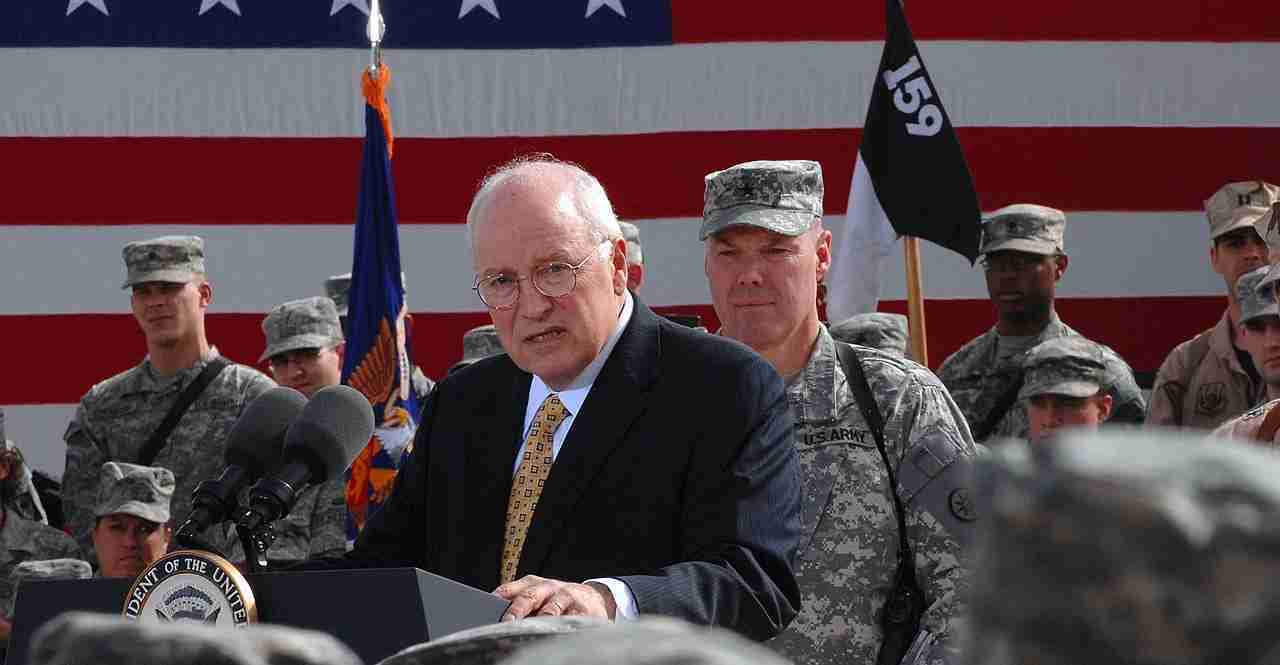
Dick Cheney, Architect of an Assertive Vice Presidency, Dies at 84 — A Career Built on the Accumulation and Use of Power
Dick Cheney, widely seen as the most powerful modern vice president, died Nov. 3, 2025, at 84. His career reshaped executive authority, national-security policy, and left a contentious legacy spanning the Persian Gulf to the Iraq War.
Key takeaways
- Death: Cheney died on Nov. 3, 2025 at age 84 from complications of pneumonia and cardiac and vascular disease.
- Career: He served as U.S. secretary of defense (1989–1993) and as vice president (2001–2009), transforming the office into an unusually powerful role.
- Legacy: Known for expanding executive power, a secretive management style, and central influence on post‑9/11 policy and the Iraq War, views of his impact remain sharply divided.
Main
Early life and rise
Born in Lincoln, Nebraska, in 1941, Cheney had a rocky youth. He left Yale without a degree, worked as a lineman in Wyoming and had two DUI convictions before earning college degrees and marrying his high-school sweetheart, Lynn Cheney. Those early struggles did not prevent his steady ascent through Republican ranks to become a major figure in conservative politics and national defense (Wikipedia).
Secretary of Defense: Persian Gulf War leadership
Appointed by President George H.W. Bush, Cheney rose to national prominence as secretary of defense, overseeing U.S. forces during the 1991 Persian Gulf War. The brief, focused campaign reinforced his reputation for decisive military leadership and a preference for clear objectives and strong force when U.S. security was at stake (Houston Chronicle).
The vice presidency transformed
When Cheney assumed the vice presidency in 2001 he rejected a ceremonial role. He assembled a powerful, multi-office operation, controlled communications tightly and used informal channels to shape policy — a deliberate project to restore and broaden executive authority after perceived post‑Watergate limits (legal scholarship; Wikipedia).
Cheney’s own words and the legal view
Cheney argued for “a restoration… of the power and authority of the president,” a formulation cited by scholars tracing how his office sought to expand executive reach. Legal analysts connect that approach to later debates over checks and balances and the proper limits of presidential power (SLU Law Scholarship).
9/11, surveillance and detention policies
After Sept. 11, 2001, Cheney supported aggressive counterterrorism measures: expanded surveillance, offshore detention of suspects and approval of so‑called enhanced interrogation techniques for some detainees. Supporters said these steps were aimed at preventing further attacks; critics argued they eroded civil liberties and U.S. moral standing (SLU Law Scholarship).
Cheney and the Iraq War
Cheney was a central advocate for the 2003 invasion of Iraq. He pressed colleagues with intelligence assessments alleging links between Saddam Hussein’s regime, weapons of mass destruction and terrorism. The failure to find those weapons and the long human and fiscal costs of the war remain focal points of criticism of his judgment and influence (The Independent; video).
Leadership style: secrecy and centralized control
Cheney’s management was characterized by secrecy: multiple offices, personal safes and unusual handling of documents and communications intended to shield activity from routine oversight. Defenders argued this served national security; critics said it created a culture of unaccountability and weakened oversight (Wikipedia).
Polarizing public legacy
Cheney leaves a sharply divided legacy. Supporters credit him with strengthening deterrence and national security posture. Opponents blame him for expanding executive power, endorsing controversial interrogation policies and championing the Iraq War — actions they say harmed U.S. credibility and security (Houston Chronicle).
Personal life and family statement
Cheney and Lynn Cheney raised two children. In a family statement after his death they highlighted values of courage and honor that they say guided him — a personal recollection that stands in contrast to fierce public debate over his political career (KUOW).
Implications for California
Economic Impact
- Defense spending and contractors: Cheney-era hawkish policies and post‑9/11 spending patterns benefited major defense and tech suppliers in California, shaping procurement priorities and employment in aerospace and defense sectors (Houston Chronicle).
- Energy and business ties: His ties to the energy industry and private-sector roles influenced federal energy debates; California companies monitored related regulatory and market shifts (The Independent).
Political consequences
- Federal power and state-federal relations: Cheney’s expansion of executive authority factors into California debates over surveillance, immigration enforcement and environmental regulation (legal scholarship).
- Voting and partisanship: Post‑9/11 policies and the Iraq War reshaped coalitions and voter attitudes that influenced congressional and statewide contests in California.
Social effects
- Veterans and military families: California communities continue to address long-term social and health needs arising from deployments and casualties tied to Cheney-era conflicts.
- Civil liberties debates: Surveillance and detention policies spurred privacy and immigrant-rights activism in state courts and advocacy groups across California.
Cultural relevance
California’s universities and think tanks have been hubs for research and criticism of Cheney’s approach to executive power. His death will likely prompt renewed study, public panels and split media reflections across the state’s diverse outlets.
Practical applications for everyday Californians
- Policy advocacy and legislation: State lawmakers may cite Cheney-era examples when crafting laws to limit perceived federal overreach or protect privacy and immigrant rights.
- Business planning: Companies in defense, energy and tech review his legacy when assessing how federal policy shifts might affect contracts, exports and regulation.
Conclusion
Cheney’s death renews attention on a vice presidency that intentionally broadened executive authority and shaped U.S. national-security policy for decades. His record — a blend of resolute security instincts, controversial choices and centralized control — will be studied and debated in courtrooms, campuses and newsrooms for years to come.



