
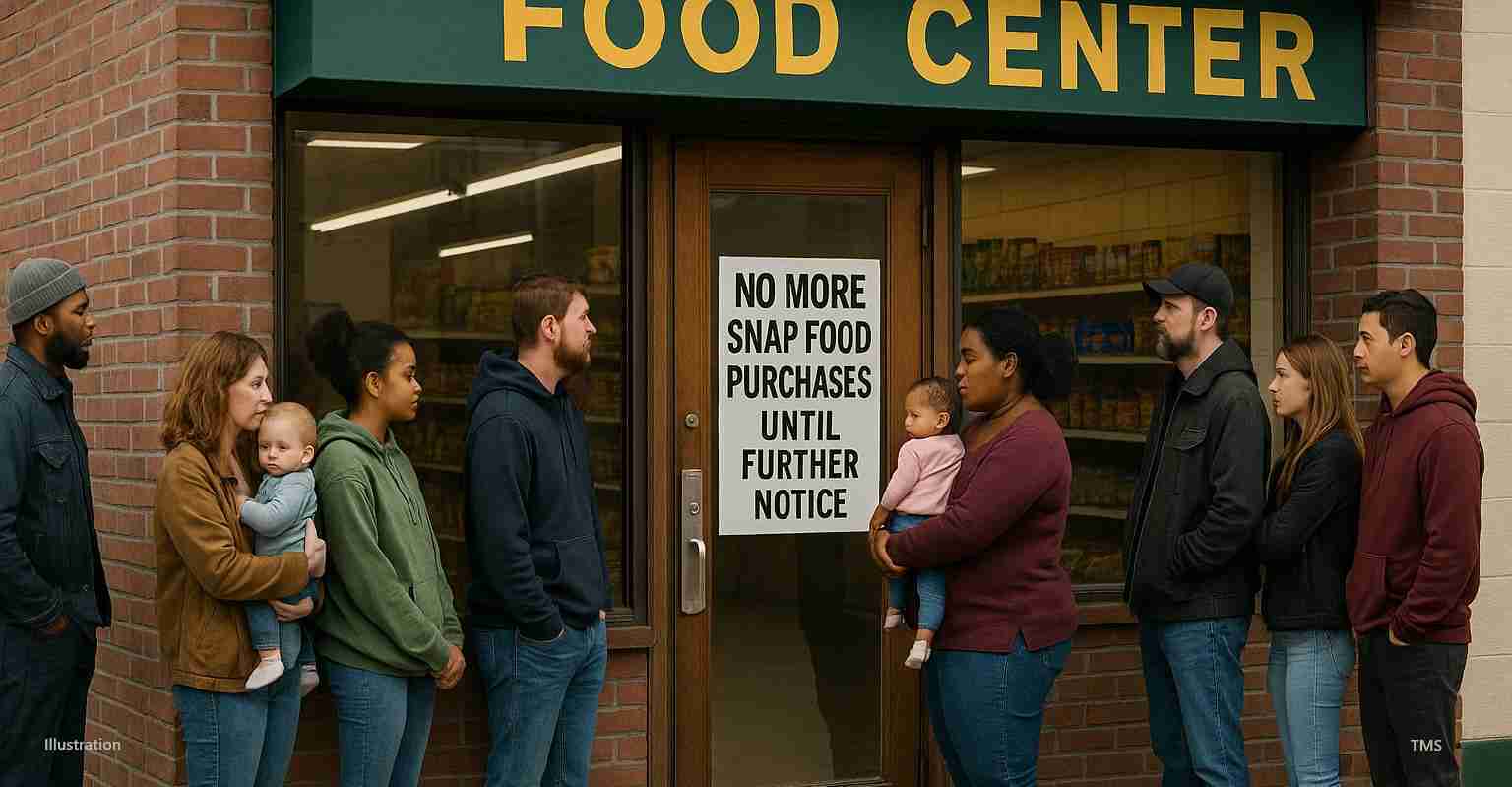
Democrats under fire as SNAP benefits suspended nationwide: 42 million Americans face food aid halt on Nov. 1
SNAP benefits will be suspended nationwide starting Nov. 1, 2025, amid a federal funding lapse, threatening aid for about 42 million Americans and prompting urgent warnings about EBT access and surges at food banks and local programs.
Key takeaways
- SNAP issuance for November 2025 is paused, with state agencies instructed to suspend payments and electronic issuance until funding is restored via Congress or a continuing resolution; see the Pennsylvania providers’ notice and Missouri federal-shutdown guidance.
- Approximately 42 million Americans who rely on SNAP face interruption; details and state response noted in a Virginia state release.
- EBT networks may be shut off, possibly preventing purchases even when card balances remain; recipients are urged to act immediately and contact local agencies or food banks.
Suspension of SNAP benefits: what federal notice says
The U.S. Department of Agriculture’s Food and Nutrition Service directed state agencies to pause issuance of November 2025 SNAP benefits. State administrators were advised to prepare for a pause in electronic issuance and to notify recipients of potential interruptions until Congress restores appropriations or passes a continuing resolution.
For official provider guidance, see the Pennsylvania providers’ notice and state advisories such as Missouri’s federal shutdown guidance.
Who will be affected: the scale and demographics
Roughly 42 million Americans who rely on SNAP — often called food stamps — could see benefits suspended starting Nov. 1. The affected population includes families with children, elderly adults on fixed incomes, and working households using SNAP to bridge gaps between paychecks and grocery costs.
State and local officials warn the pause will deepen food insecurity for vulnerable households and increase demand at community food programs; the scale of impact is underscored in a Virginia release.
EBT networks and access: immediate practical concerns
Beyond paused monthly benefits, Electronic Benefit Transfer (EBT) systems used at stores may be affected. Some guidance indicates EBT networks could be turned off, which would prevent purchases even if recipients have existing card balances after Oct. 31.
Practical note: Recipients are advised to use any remaining balances before the end of October and stay in close contact with state benefit offices for updates.
See provider advisories such as the Pennsylvania notice for technical and operational details.
State responses and community resources
Several states have posted guidance for residents about the shutdown’s effects on food assistance. Agencies say they will continue to accept SNAP applications, process renewals and certifications, and stand ready to restore benefits once federal funding resumes.
Meanwhile, food banks, pantries, faith-based groups and community organizations are preparing for surges in demand. These groups can often act faster than federal programs but lack SNAP’s capacity and guaranteed funding and may be quickly overwhelmed.
For local advisories and steps, review state pages such as Missouri’s guidance and the Pennsylvania providers’ notice.
Political deadlock and blame
The suspension stems from a budget impasse in Congress. Lawmakers remain deadlocked over appropriations, and political leaders are trading blame. Republican officials and some governors have criticized Congressional Democrats, arguing Democratic negotiators are responsible for the lapse in funding for safety-net programs.
For example, Virginia Governor Glenn Youngkin declared a State of Emergency and blamed Congressional Democrats for “blocking federal funding for the most needy,” as outlined in the Virginia state release. Democratic leaders, while not quoted in those state-issued materials, generally say they are resisting cuts or policy riders they view as harmful to broad assistance programs.
Local impact at grocery stores
Retailers that accept EBT are preparing for customer confusion. Store staff could face disputes at checkout if cards show a balance but the EBT network has been turned off for purchases.
Advocacy groups warn that store-level disruptions will disproportionately affect low-income neighborhoods where many households depend on SNAP as their main way to buy food. Supermarkets and smaller grocers are training staff and planning to post notices about the federal pause.
What recipients should do now
- Use any remaining EBT balance before October 31 if possible; provider guidance is available via the Pennsylvania notice.
- Contact your county assistance office or state Department of Social Services to confirm case status and learn whether applications or renewals are being processed — see Missouri’s federal-shutdown page for examples of state instructions.
- Locate local food banks, pantries and community programs now and reach out for assistance; expect longer lines and limited supplies as demand rises.
- Monitor official state and local agency updates — benefit issuance should resume promptly after federal funding is restored.
Implications for California
Economic impact: California, with the largest number of SNAP recipients by raw count, faces significant pressure on families and the state’s social safety net. Food banks and county services already near capacity may see sharp spikes in demand, straining nonprofit budgets.
Political consequences: Republican criticism of Democrats over federal funding may resonate differently across California’s electorate; state and local officials will be pressured to secure bridging resources while urging Congress to resolve the standoff.
Social and cultural effects: Families with children, seniors, working poor households, immigrant communities and multi-generational households may confront sudden gaps in groceries and nutrition. Community organizations likely will see long lines and higher per-person needs, including culturally appropriate foods.
Practical applications: Californians should check EBT balances and try to use available funds before Oct. 31, contact county social services, and sign up with local food banks offering drive-through or voucher programs. Counties should publish clear localized emergency distribution plans and consider state-level support for nonprofits.
Reporting and verification
This report draws on state guidance and public notices about the federal shutdown’s impact on SNAP benefits and EBT systems. Relevant materials include the Pennsylvania providers’ notice, Missouri’s federal shutdown guidance, and a Virginia state release noting the scale of those affected and the gubernatorial response.



