
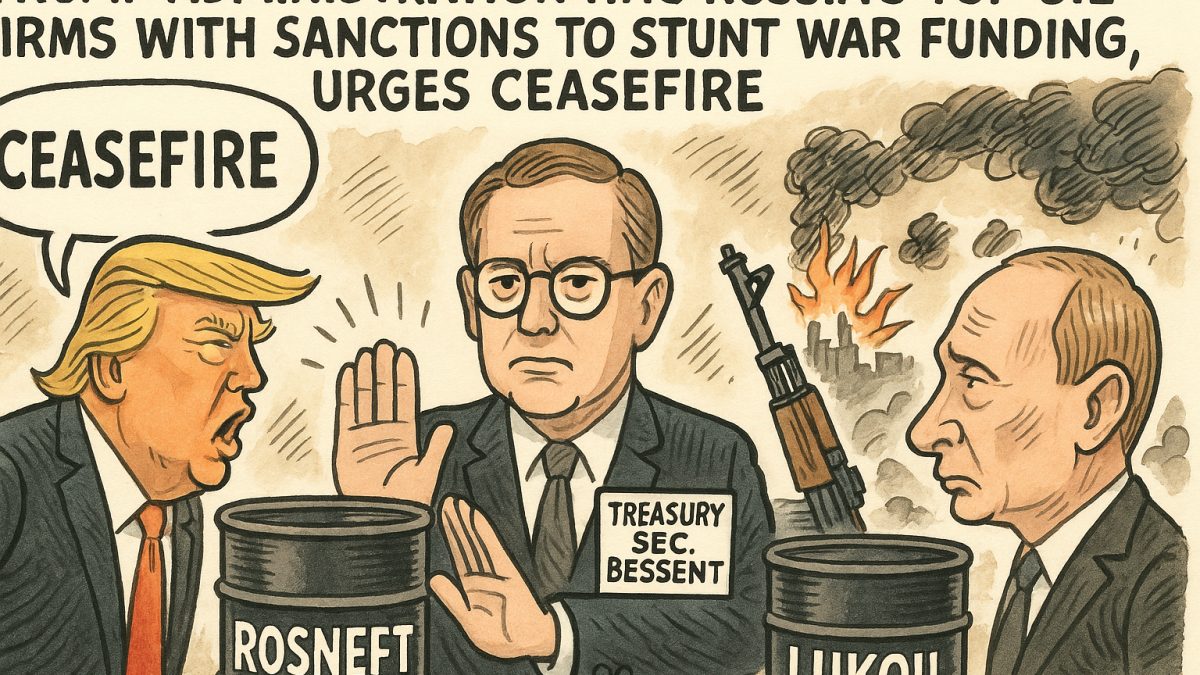
Trump team readies tough oil penalties targeting Rosneft, Lukoil as leverage for Ukraine ceasefire
The Trump administration is preparing tough new sanctions aimed at Russia’s top oil firms Rosneft and Lukoil to curb war financing and press for a Ukraine ceasefire, exploring asset freezes, secondary penalties and tariffs while plans remain fluid.
- Targeted plan: Administration options focus on limiting revenue from Russia’s largest oil companies — focused on Russia’s largest oil companies and reflected in Rigzone wire reporting.
- Tools under review: Measures under consideration include asset freezes, tougher secondary sanctions and steep tariffs on buyers — as outlined in analysis of enforcement options.
- Diplomacy vs pressure: Officials say the approach could range from “maximum pressure” to conditional relief if credible ceasefire talks advance — reporting summarized by Euromaidan Press.
Sanctions plan and objectives
Officials and reporting indicate the administration’s aim is twofold: choke off revenue that finances Russia’s military operations and use economic pressure as leverage to extract a Ukraine ceasefire. Options are described as ranging from maximum pressure to incentives if talks progress.
Treasury Secretary Scott Bessent is leading internal deliberations on the design and intensity of measures. Reporting notes potential use of asset freezes, new licensing rules, and expanded secondary sanctions aimed at non‑U.S. companies and shippers moving Russian oil — a framework captured in Rigzone and OilPrice.
Sanctions details and enforcement tools under study
- Asset freezes: Officials have discussed blocking foreign‑held assets tied to Rosneft and Lukoil and cutting access to dollar‑based finance using Treasury authorities — referenced in Charter97 and Rigzone.
- Secondary sanctions: Harsher penalties for intermediaries, shippers and buyers that facilitate Russian oil shipments — a tool designed to pressure third‑party actors as reported by Transport Topics and Charter97.
- Tariffs and import penalties: Proposals include steep tariffs — reports mention figures of at least 500% — aimed at countries knowingly importing Russian hydrocarbons, discussed in analysis.
- Price cap and licensing levers: Officials may adjust the existing price cap on Russian oil or let waivers lapse as bargaining chips if negotiations show progress — noted by Charter97 and Transport Topics.
Coordination with allies and global ripple effects
U.S. measures are being framed to align with European Union actions aiming to reduce dependence on Russian energy over time. Reporting notes possible coordination to increase traceability of flows and phase out Russian energy imports in some EU plans by 2027 — an effort discussed in OilPrice.
Proposed secondary sanctions would pressure major buyers in Europe and Asia — including China and India — forcing a choice between continued trade with Russia and access to U.S. markets and the dollar system. Markets already showed sensitivity: Brent crude futures rose after prior U.S. and EU steps, highlighting the risk of higher global oil prices if tougher sanctions are imposed (Euromaidan Press summary).
Political checks, diplomacy and alternatives
Inside Washington, policy choices are politically charged. Congress has taken steps to make it harder to lift certain sanctions without notification or consultation, creating an additional check on executive flexibility (Transport Topics).
“Top officials are divided between applying maximum pressure and keeping open the option of easing measures as incentives,” according to reporting summarized across outlets.
President Trump has signaled a willingness to meet President Putin, suggesting diplomacy could alter the sanctions trajectory if talks advance. Incoming Secretary of State Marco Rubio said at his confirmation hearing that tough oil sanctions are essential leverage for a peace deal (Rigzone).
Broader strategy and related targets
Officials are reportedly considering linking the Russia plan to pressure on other oil-exporting states such as Iran and potentially revisiting policy toward Venezuela — signaling a broader posture of using trade and sanctions to shape the behavior of producing nations (Rigzone).
Reporting cautions that these plans remain under development and that public details may change as the administration consults allies and Congress (Charter97, OilPrice).
Implications for California
Economic impact
Gas prices and energy costs: California drivers and businesses could face higher pump prices if tighter sanctions reduce global oil supply or raise transport costs. Markets reacted to earlier measures with Brent moves, signaling risk for state consumers (Rigzone).
Refineries and trade flows: California’s limited capacity for heavy sour crude and reliance on West Coast terminals means shipping-route changes or stricter tanker enforcement could disrupt local supply chains and raise refinery costs (Charter97, OilPrice).
Political consequences
Bipartisan pressure and oversight: California lawmakers from both parties are likely to press for clarity on consumer and business impacts, seeking protections against disproportionate price shocks (Transport Topics).
Trade relationships: If secondary sanctions target Asian buyers, Pacific trade links could face compliance burdens and slower cargo flows, affecting ports from Los Angeles to Oakland (OilPrice).
Social effects
Household budgets: Rising gasoline and heating costs tend to hit lower‑ and middle‑income households first. Californians already face high living costs; even modest price increases for transport or goods can strain budgets and raise demand for assistance.
Business and jobs: Small trucking firms, retailers and service providers could see higher input costs. Sectors tied to shipping and refining may face short‑term disruptions that ripple to local employment.
Cultural relevance
California’s environmental priorities — reducing oil dependence and promoting clean transport — could shape responses. Higher gas prices might accelerate incentives for electric vehicles and public transit, while provoking debate about short‑term pain vs long‑term climate goals.
Practical applications for Californians
- Budget planning: Households and businesses should review budgets and contingency plans for potential fuel cost spikes.
- Transit and subsidies: Local governments and transit agencies may need to prepare for increased demand for fare relief or subsidies.
- Compliance and trade: California ports, importers and logistics firms should monitor federal guidance and review sanctions compliance with counsel (Rigzone, OilPrice).
Sources and verification
Reporting on the plan draws on multiple outlets that described administration deliberations and tools under review. Key accounts include Charter97, Rigzone wire reporting, Euromaidan Press, Transport Topics and OilPrice.
These pieces indicate the plan is under serious consideration but differ on specific tools and timing. At present there are no unambiguous public confirmations that Treasury Secretary Scott Bessent has enacted immediate asset freezes of Rosneft or Lukoil; reported options remain under debate and will require coordination with Congress and allies (Rigzone, Transport Topics, OilPrice).



