
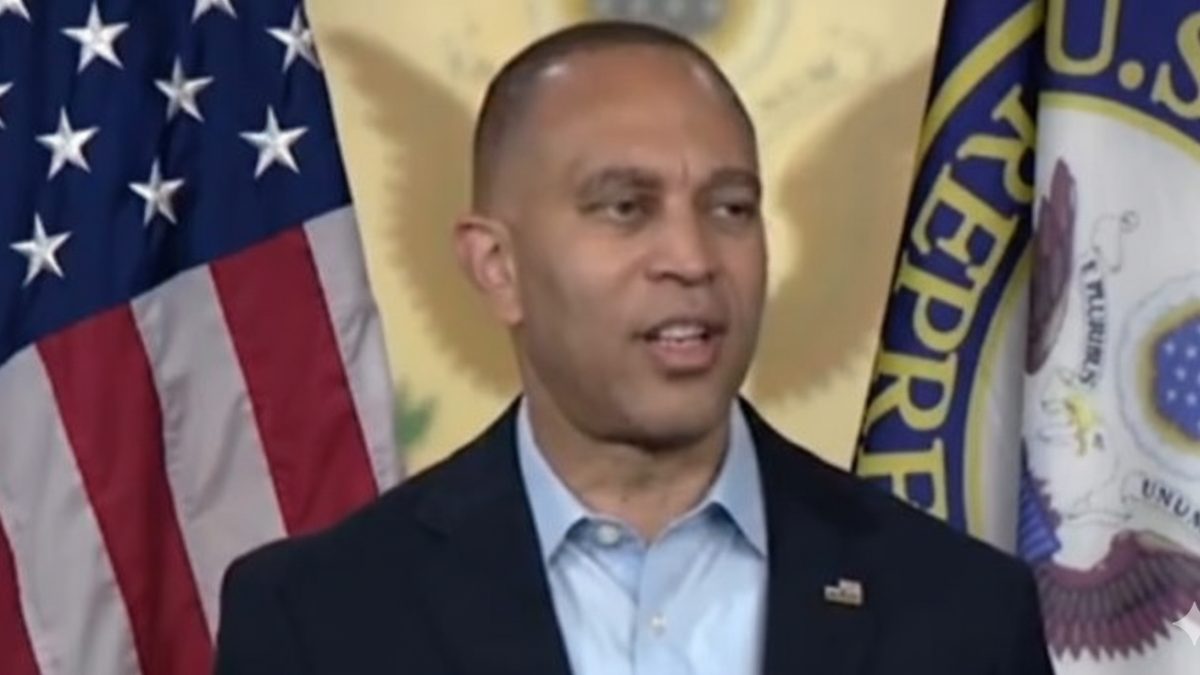
Jeffries Slams Leavitt as “Sick,” “Demented” and a “Stone‑Cold Liar” — Sparks New Flashpoint in Growing Feud
House Minority Leader Hakeem Jeffries sharply denounced White House Press Secretary Karoline Leavitt as “sick,” “demented” and a “stone‑cold liar” after her Fox News remarks, igniting a public confrontation amid budget and shutdown tensions in Washington.
Key takeaways
- Who: House Minority Leader Hakeem Jeffries and White House Press Secretary Karoline Leavitt.
- What: Jeffries publicly attacked Leavitt during a press conference, calling her “sick,” “demented,” “ignorant,” “out of control” and a “stone‑cold liar.”
- Why: The exchange followed Leavitt’s Fox News remarks accusing Democrats of a constituency including “Hamas terrorists, illegal aliens, and violent criminals.”
- When/Where: At a Washington press conference amid heightened tensions over a potential government shutdown and ACA subsidy disputes.
What happened, what they said, and why it matters
The confrontation is another public episode in the ongoing Hakeem Jeffries–Karoline Leavitt feud, reflecting widening partisan tensions in Washington. According to reporting and video, the flare‑up followed Leavitt’s Fox News interview covered by AOL, in which she said the Democratic Party’s “main constituency” included “Hamas terrorists, illegal aliens, and violent criminals.”
At a subsequent press conference, Jeffries moved beyond policy rebuttal and attacked Leavitt’s character and credibility, using blunt language — calling her “sick,” “demented” and a “stone‑cold liar.” Those remarks were captured on video and reported by multiple outlets, including AOL’s coverage of the press conference and a Times of India video. A video clip of the exchange is also available on YouTube.
Context: A fraught moment during shutdown fights
The exchange unfolded as lawmakers debated spending and a possible temporary government shutdown tied to fights over Affordable Care Act subsidies. That political backdrop amplified rhetoric on both sides and framed the confrontation as part of broader federal standoffs.
For Democrats and many independents, Jeffries’ words were intended to push back against what they view as inflammatory attempts to demonize broad groups. For Republicans and White House supporters, Leavitt’s comments were framed as an attack on the Democratic left and an effort to cast Democrats as soft on crime and national security.
Examining the claims: Leavitt’s Fox News remarks
Leavitt’s description of the Democratic Party’s “constituency” — quoting “Hamas terrorists, illegal aliens, and violent criminals” — sits at the center of the dispute. Critics argue her language unfairly stigmatizes millions of Americans and immigrant communities; supporters contend she was responding to a national security–focused line of questioning.
“Her remarks painted a broad and inflammatory picture that some see as dangerous and inaccurate,” analysts said while noting context matters in televised exchanges.
The Fox segment and the subsequent press conference are documented in multiple sources, including the AOL report and the video clip.
How the exchange escalated: Language and optics
What made the moment notable was not only policy disagreement but the personal nature of Jeffries’ words. Calling a sitting White House press secretary “sick” and “demented” is an escalation that drew immediate attention and shaped media coverage and public reaction.
Both parties are conscious of optics: Democrats may view Jeffries’ attack as necessary pushback, while Republicans could portray the incident as evidence of bias against the White House. For independents, the episode raises questions about decorum and whether personal insults advance political goals.
Coverage and verification
Primary accounts come from video and contemporaneous reporting that include direct quotations and on‑camera reactions. Key sources and footage include:
- AOL: Jeffries responds to Leavitt’s Fox News remarks
- AOL: Coverage of Jeffries’ press conference remarks
- Times of India: Video coverage of the moment
- Video clip of the exchange
Implications for California
While the feud is national in scope, it carries potential implications for California across several domains: economic, political, social and cultural. Below is a concise breakdown of likely effects and practical takeaways for Californians.
Economic impact
Short term: The dispute is unlikely to directly affect California’s economy, though partisan conflict can delay federal decisions on budgets or subsidies that matter to the state, including health care funding and disaster relief.
Long term: Continued polarization that stalls legislation could introduce uncertainty for industries that rely on federal programs — higher education, public transportation grants, and healthcare funding.
Political consequences
- State Democrats: Jeffries’ response may energize the Democratic base in California and mobilize turnout.
- Moderate conservatives: The feud could push moderates to demand calmer discourse and accountability from both parties.
- California Republicans: Leavitt’s remarks may be used in messaging to criticize Democrats on public safety and immigration.
Social effects
Communities targeted by Leavitt’s language — particularly immigrant and Muslim communities — may feel heightened anxiety about stigmatization. Local civic groups and leaders are likely to respond with forums or statements to address misinformation and reassure residents.
Cultural relevance
In California, where inclusion and diversity are central values, Leavitt’s framing clashes with many local institutions. The episode may deepen cultural debates and become a case study in media responsibility and political rhetoric.
Practical applications for Californians
- Voter behavior: Expect national disputes to be factored into messaging for local and federal races; watch leaders’ responses, not only rhetoric.
- Civic engagement: Community groups and officials can convene discussions on public safety, immigration, and the tone of debate.
- Media literacy: Seek primary sources — including the video clip and the AOL report — to verify claims and distinguish policy disputes from personal attacks.
Reporting notes and sources
This article draws on contemporaneous news reports and video of the exchange between Jeffries and Leavitt. Source material and footage include:
- AOL: Jeffries responds to Leavitt’s Fox News remarks
- AOL: Coverage of Jeffries’ press conference remarks
- Times of India: Video coverage of the moment
- Video clip of the exchange
The Hakeem Jeffries–Karoline Leavitt feud highlights how national rhetoric can shift from policy debate to personal confrontation, raising questions about tone, accountability and political consequences for diverse communities.



