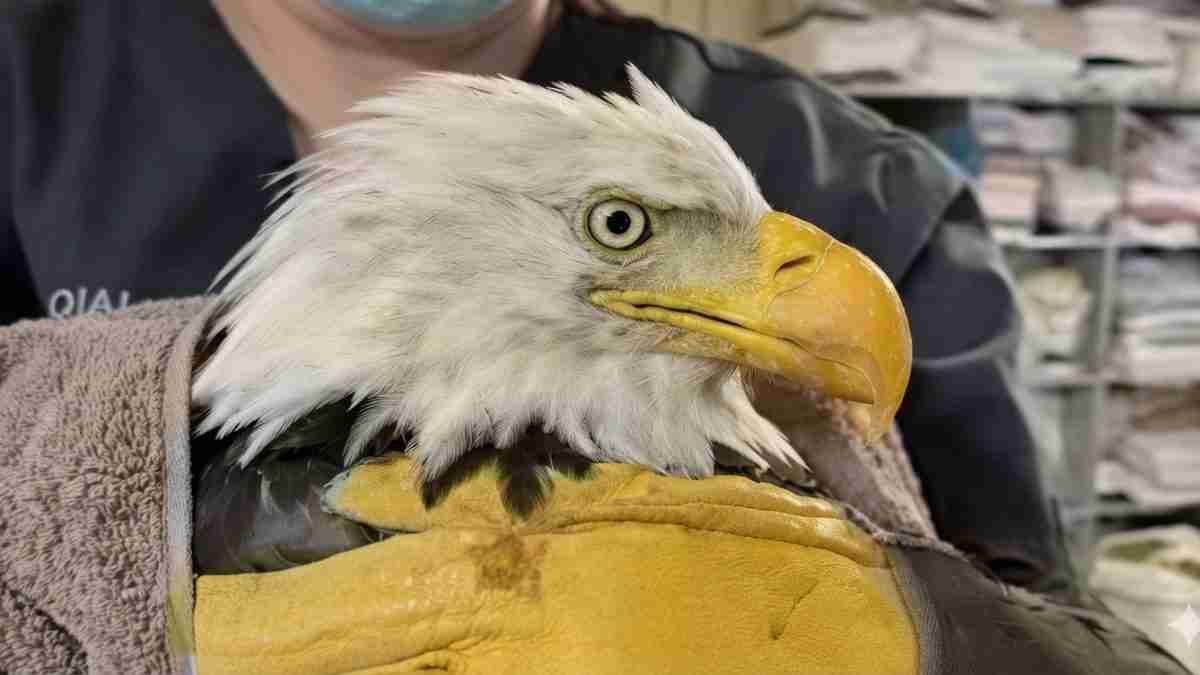
BIG BEAR, CALIFORNIA, Oct. 21 (Our California Times) — Bird flu was the primary underlying cause of the illness that killed Jackie, the bald eagle from California’s Big Bear Valley whose life was followed on a livestream, according to findings released by the California Department of Fish and Wildlife on Oct. 14, 2026.
The examination found an unusual course of disease: the infection caused severe stomach damage, followed by ongoing blood loss and a serious bacterial infection. Wildlife officials described several connected complications that developed over time, rather than a single injury or toxic exposure.
What did the examination involve?
Veterinary pathologists at San Diego Zoo Wildlife Alliance performed the necropsy — an examination of an animal after death. CDFW released the findings with the alliance and Ojai Raptor Center, which had cared for Jackie. She was identified in the findings as Patient 26-519.
The conclusions drew on the necropsy, laboratory testing and toxicology testing, which looks for poisons and other chemicals in the body.
Jackie died Aug. 10 after more than three weeks of intensive care at Ojai Raptor Center, KESQ reported. ABC News also reported that she had suffered an injury in a fight with other birds before her death.
How did bird flu damage her body?
Highly pathogenic avian influenza, or HPAI, is commonly called bird flu. It is an infectious disease that primarily affects birds and has circulated in wild bird populations across the United States, the San Bernardino Sun reported.
Steve Kubiski, director of disease investigations at San Diego Zoo Wildlife Alliance, described Jackie’s illness as an uncommon form of the infection.
“In an uncommon presentation of the virus, the infection caused a severe ulcer in her stomach that led to persistent internal bleeding, anemia, and the development of bacterial sepsis,” Kubiski said.
An ulcer is an open sore in tissue. Anemia means the blood has too few healthy red blood cells to carry oxygen properly. Sepsis is a severe response to infection.
CDFW said the chronic disease damaged Jackie’s ventriculus, the muscular part of a bird’s stomach also called the gizzard. The damaged, ulcerated tissue allowed bacteria to enter her body.
Laboratory testing detected genetic material from HPAI in several tissues, including the damaged gizzard, according to CDFW. Ojai Raptor Center said diagnostic testing confirmed the virus in affected tissue and linked it to the severe stomach ulceration.
What other complications were found?
CDFW reported severe inflammation and blood clots in Jackie’s heart and several major blood vessels. Yahoo News separately reported blood clots in a wing and a kidney, along with liver and lung abnormalities.
Ojai Raptor Center said multiple complications developed over time and ultimately contributed to her decline and death. The state agency likewise described the findings as multiple severe, interconnected disease processes.
Was rat poison responsible?
Toxicology testing detected brodifacoum in Jackie’s liver, along with other persistent environmental contaminants, CDFW said. Brodifacoum is an anticoagulant rodenticide — a rat poison that interferes with blood clotting.
Although Jackie had persistent internal bleeding from her stomach damage, pathologists did not find the pattern of uncontrolled bleeding typically associated with anticoagulant rodenticide poisoning.
“The necropsy did not find uncontrolled bleeding typically associated with anticoagulant rodenticide; therefore, brodifacoum was not identified as the primary cause of illness or death,” CDFW said.
Testing also ruled out West Nile virus infection and lead poisoning, according to the agency.