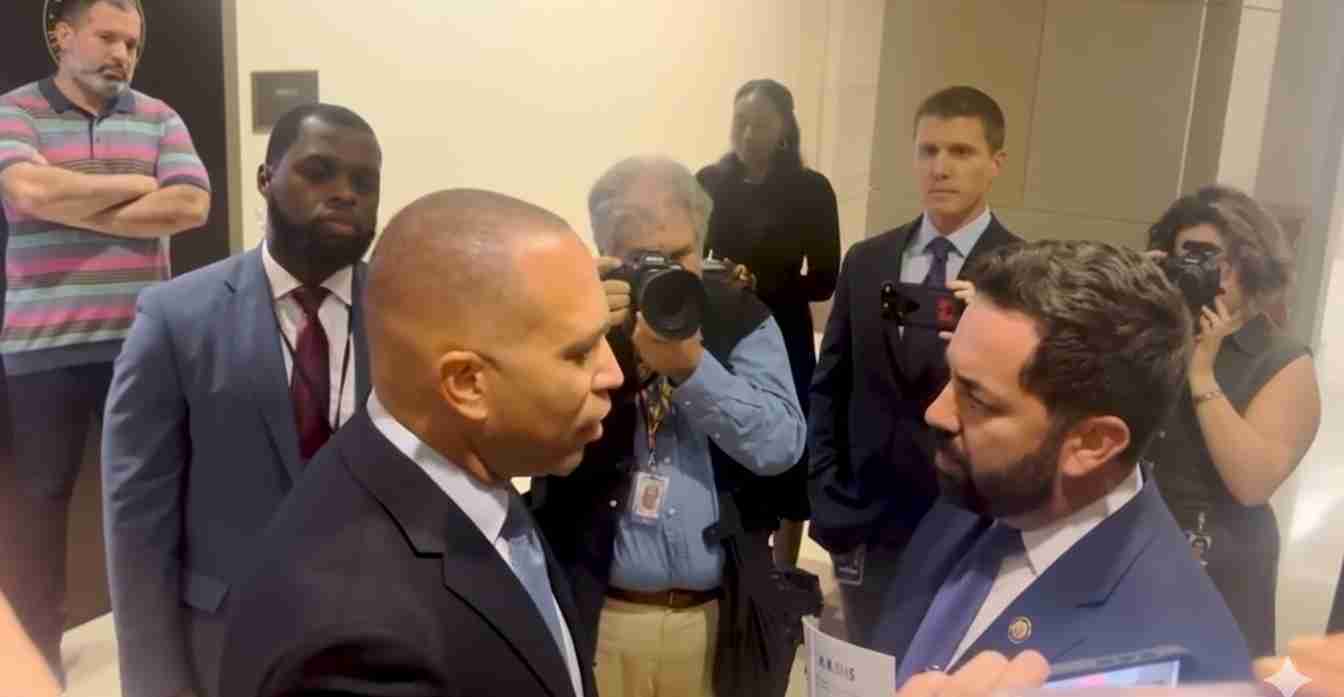
Screaming match on Capitol Hill: Jeffries, Lawler clash as government shutdown chaos mounts
A heated shouting match erupted on Capitol Hill between House Democratic leader Hakeem Jeffries and Rep. Mike Lawler as lawmakers clashed over a possible government shutdown and dispute over one‑year Affordable Care Act subsidy extensions.
Key takeaways
- A loud, public confrontation: A shouting match broke out between Hakeem Jeffries (D‑N.Y.) and Rep. Mike Lawler (R‑N.Y.) outside a press event; see the Source video (YouTube) and the Live coverage clip.
- Policy at issue: Lawler pressed Jeffries to back a one‑year extension of ACA premium tax credits, asking, “Why don’t you sign on right now?”
- Personal barbs: Jeffries accused Lawler of acting under the influence of former President Trump; Lawler replied, “He’s not my boss,” and both traded insults.
- Verification note: A widely shared line — “Are you mathematically challenged, bro” — could not be verified in primary footage or transcripts.
The confrontation: what happened on the steps
Video posted online shows Lawler waiting near the exit of a press conference and then stepping toward Jeffries to press him on legislation tied to the Affordable Care Act (ACA). The footage captures a rapid escalation: Lawler repeatedly urged Jeffries to commit to a one‑year extension of tax credits that help many Americans pay health insurance premiums, while Jeffries pushed back, questioning the influence of Republican leaders and former President Trump over House members. See the Source video (YouTube) and the Live coverage clip.
“He’s not my boss.” — Mike Lawler, as captured on video when challenged about his independence from former President Trump.
The exchange lasted roughly five minutes. Both men repeatedly talked over one another, raised voices, traded personal barbs and accused the opposing party of responsibility for the looming shutdown. The confrontation unfolded in public with no obvious de‑escalation.
What was said — checking the record
The central policy matter was a proposed one‑year extension of ACA premium tax credits, which lower monthly premiums for people who buy plans through the ACA marketplaces. Lawler told Jeffries on camera that he should support the extension and asked why the Democratic leader would not “sign on right now.” Jeffries, in turn, questioned Lawler’s independence and whether Trump had given him permission to take that position; Lawler’s reply, “He’s not my boss,” appears in the footage (Source video).
Verification: A phrase circulated widely — “Are you mathematically challenged, bro” — was attributed to Jeffries by some accounts. A review of the available video and summaries did not find that exact wording in the primary footage, suggesting it may be a paraphrase or later amplification (Source video, Live coverage clip).
Why the ACA tax subsidies dispute matters now
The clash reflects a high‑stakes disagreement over near‑term federal spending and health care costs. The expanded ACA premium tax credits have reduced insurance costs for many; supporters want a one‑year extension to prevent premium spikes while Congress negotiates longer‑term fixes. Opponents warn that temporary expansions carry fiscal costs and risks of dependency on stopgap measures.
The dispute intersects directly with ongoing funding talks. If lawmakers do not pass short‑term funding, parts of the federal government could shut down — a prospect that has heightened tensions across the Capitol. The Jeffries‑Lawler shouting match is emblematic of how policy fights become symbols of broader partisan stalemate.
Political theater and the pressure on leaders
For moderate conservative readers, the incident underscores a familiar complaint: public spectacles of partisan blame hinder practical governance. Both parties used the moment to shift responsibility. Jeffries accused Republicans of excessive deference to Trump; Lawler framed Democrats as unwilling to accept short‑term fixes that could stabilize insurance markets.
The shouting match shows how negotiation breakdowns can spiral into public confrontations, increasing posturing and reducing incentives to compromise — potentially making progress on spending priorities and program design more difficult.
How media and officials reacted
Videos spread rapidly online. Commentators emphasized the raw, confrontational nature of the exchange and used it to illustrate House dysfunction as the shutdown deadline approached. Some Democrats defended Jeffries as standing up to obstruction; some Republicans praised Lawler for pushing a pragmatic, temporary fix. No immediate new legislative path emerged after the incident (Source video).
Implications for California
Economic impact
- Health insurance costs: Millions of Californians rely on federal premium tax credits through Covered California. If temporary subsidy expansions lapse, households could face higher monthly premiums and increased pressure on state programs.
- Federal funding and state budgets: A shutdown or prolonged standoff can delay federal grants and reimbursements for health, transportation and social services, complicating state and county planning and cash flow.
Political consequences
- California officials may need to respond to higher uninsured rates or budget shortfalls, increasing pressure on both state Democrats and Republicans to explain mitigation plans.
- For moderate conservatives, the Washington spectacle may reinforce calls for accountable leadership and targeted fixes that avoid open‑ended spending commitments.
Social effects
- Sudden premium increases could strain middle‑income, working families in California already facing high housing and living costs.
- Health care providers and hospitals could see increased uncompensated care if coverage gaps widen.
Cultural relevance
California’s political culture values pragmatic problem solving and strong safety nets. The Jeffries‑Lawler confrontation highlights tensions between fiscal prudence and protecting access to care and suggests opportunities for local leaders to advocate balanced solutions.
Practical applications for residents
- Covered California enrollees: Monitor official guidance; any lapse or change in federal premium tax credits will likely prompt state briefings and possible short‑term mitigation.
- Federal employees in California: Prepare for possible furloughs and service disruptions if a shutdown occurs; local federal offices could be limited during a standoff.
Sources and further reading
Video of the altercation (primary footage): Video of the altercation (primary footage)
Live coverage clip: Live coverage clip
Summary: The Jeffries‑Lawler shouting match offers a window into how tense policy fights over ACA subsidies and short‑term funding can turn personal and public. As lawmakers trade accusations, Californians face possible higher health costs, interruptions in federal support, and renewed political debate over balancing fiscal responsibility with affordability.