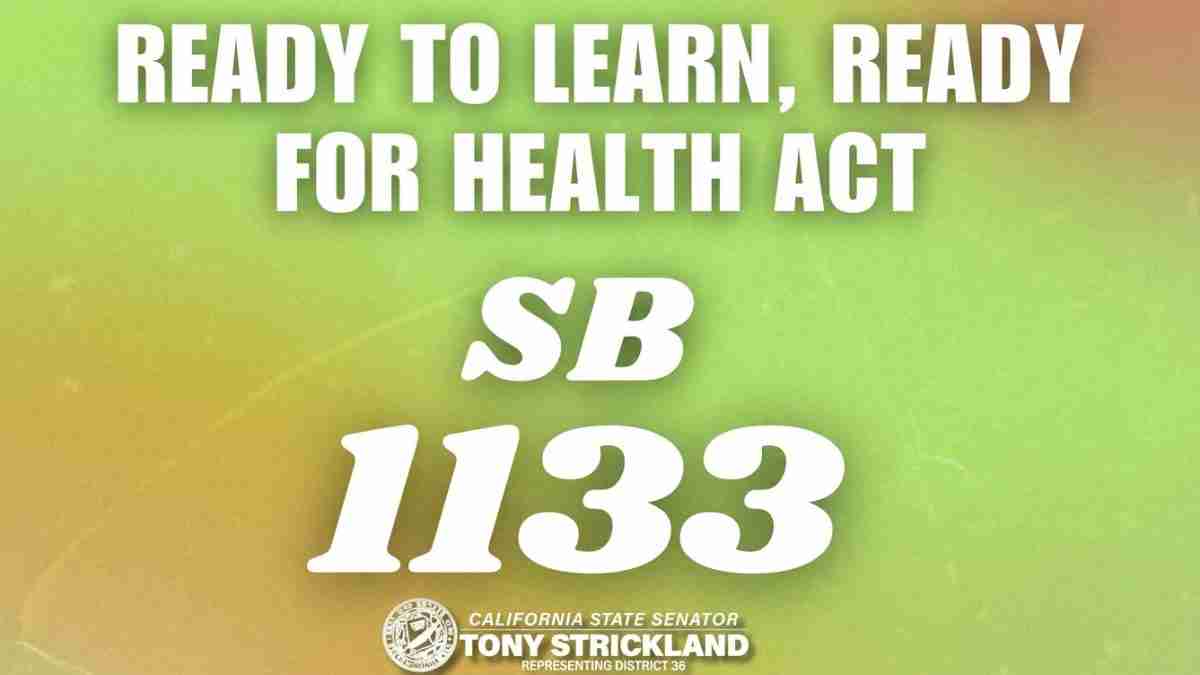
HUNTINGTON BEACH, Calif., Aug. 11 (Huntington Beach Times) — California lawmakers have sent Senate Bill 1133, the Ready to Learn, Ready for Health Act, to Gov. Gavin Newsom for consideration. The measure would guide a future update of health education in California public schools, including lessons on nutrition, sleep, physical activity, stress and digital habits.
The bill was authored by State Sen. Tony Strickland, a Republican elected to represent the 36th Senate District, which includes parts of Orange and Los Angeles counties. Strickland’s district office is in Huntington Beach.
Newsom’s action is still pending in the supplied records. If he signs the bill, it would not immediately require schools to create a new class or adopt a specific curriculum.
What would change?
SB 1133 would require the California Instructional Quality Commission to consider including evidence-based preventive health instruction during the next regular revision of the Health Education Framework for California Public Schools. The commission is to consider the material during a revision on or after Jan. 1, 2027, according to a California Senate Education Committee hearing packet.
The framework is state guidance used to help shape health education in public schools. A framework update can influence what schools and educators teach, but the bill does not prescribe a single lesson plan or classroom program.
The proposed areas include:
- Nutrition and food literacy
- Sleep
- Physical activity and exercise
- Stress management
- Digital balance and screen use
- Environmental factors, including water and air quality
The goal is to connect everyday habits with students’ health, learning and long-term well-being. Strickland said in a statement released by his Senate office that the legislation would help students understand how “nutrition, sleep, physical activity, stress, and technology impact health, learning, and long-term well-being.”
What would schools and families notice?
The immediate effect would be limited because SB 1133 works through the state’s existing curriculum review process. It does not require a new course, specify instructional materials or direct a particular school district to spend money.
If the commission recommends adding the subjects and the framework is revised, districts and schools could use the updated guidance when planning health instruction. The supplied records do not identify a Huntington Beach school district vote, funding plan or local implementation schedule.
The proposal also does not make standardized test scores the measure of whether the approach works. Its focus is preventive health education and the practical habits students develop at school and at home.
Why are these topics grouped together?
The bill treats health habits as connected rather than as separate subjects. Food choices and physical activity relate to physical health. Sleep can affect daily readiness for school. Stress management and digital habits address how students handle pressure and screen use. Water and air quality add environmental conditions that can affect health.
End Chronic Disease, identified in the Senate materials as the bill’s sponsor, has supported the proposal. The organization’s role is advocacy and sponsorship; the bill itself would be carried out through California’s public education framework process.
Where does the legislation stand?
The Senate Education Committee hearing packet listed SB 1133 for consideration on April 15, 2026. Strickland’s Senate office announced June 8 that the Assembly had passed the measure and that it was headed to the governor.
The supplied accounts describe the legislative vote differently. Strickland’s office called the Assembly support strongly bipartisan, while Fresno Bee coverage reported unanimous passage in both chambers. Official roll-call records were not included in the supplied materials.
The next decision belongs to Newsom. Until the governor acts, the bill is not a framework change. If signed, the Instructional Quality Commission would still have to consider the subject areas through the regular revision process, and the final framework would determine how the guidance is presented to California public schools.