SAN LUIS OBISPO, Calif., June 29 (San Luis Obispo Online) — San Luis Obispo County is asking residents and local agencies to weigh in on a long-range idea that could change how the region gets water: making drinking water from the ocean.
The effort is called the Desalination Executable Solution and Logistics Plan, or DESAL Plan. County materials say it is still in the feasibility-study stage, which means officials are studying options, not making a final choice.
What is the DESAL Plan?
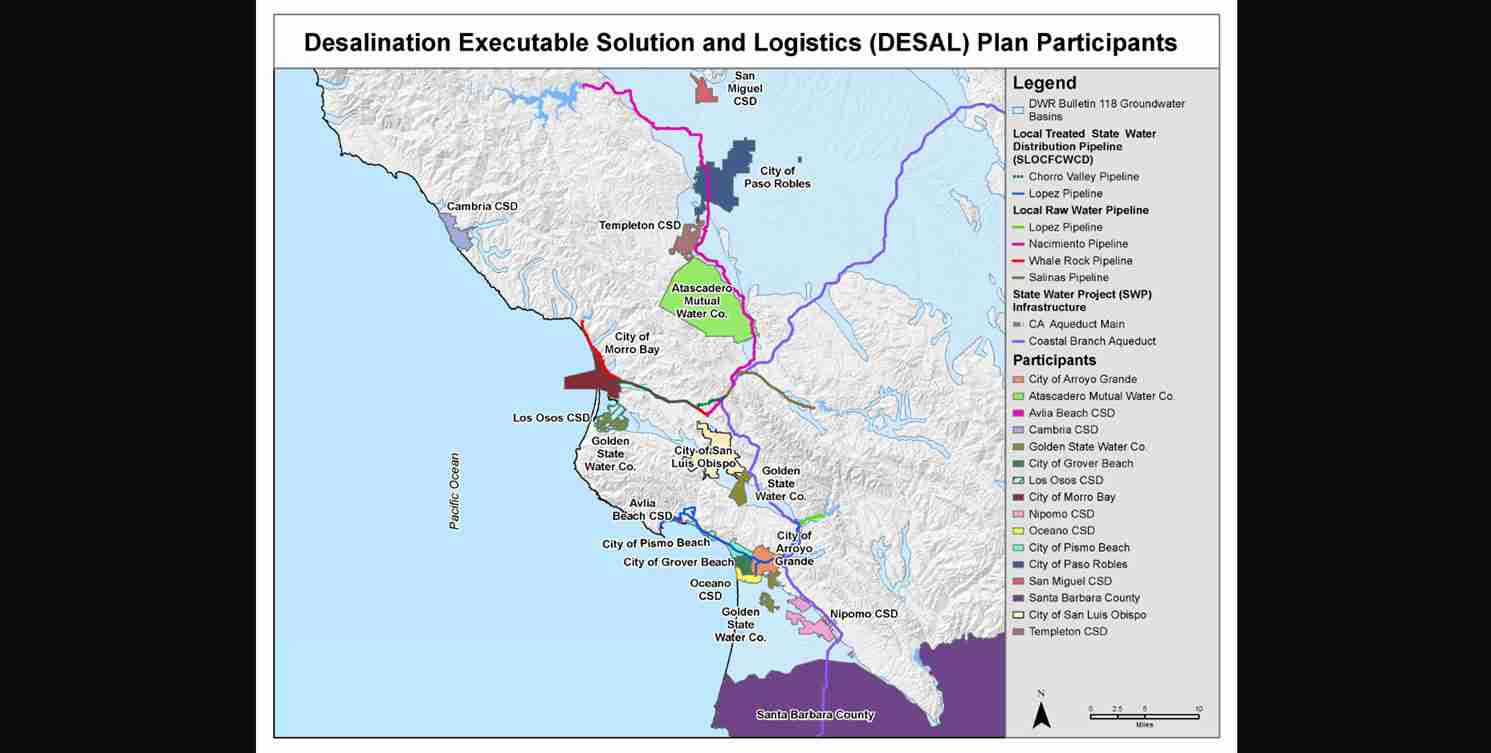
Desalination is the process of removing salt from seawater so it can be used as fresh water. County project materials say the DESAL Plan is a regional planning effort led by the San Luis Obispo County Flood Control and Water Conservation District with 16 partners.
The county says the work is being developed in phases and is now in Phase 1 of a five-phase process. In this stage, the county is looking at whether ocean desalination could help provide a future water supply for the region.
The county says no final decisions will be made during the feasibility study.
Why is the county studying desalination?
County materials say the goal is to help prepare for a water supply that is more reliable and resilient during dry periods. The county says the region depends heavily on rainfall for existing supplies, and officials say any desalination project would take a long time to plan and build.
A county public works deputy director, Courtney Howard, has said the county wants to start the planning process early so the region is ready if communities need the water later.
What will the study look at?
The county says the feasibility study will examine possible desalination locations, possible ways to move the water, infrastructure needs, impacts, partnership questions and estimated costs.
Planning materials also describe several project concepts that could be studied, including onshore and offshore options, building a facility at a new site or near existing infrastructure, and reusing existing outfalls or other infrastructure.
A federal WaterSMART grant from the U.S. Bureau of Reclamation is helping fund the feasibility work, according to county and federal documents.
Who is involved?
The county says the planning effort includes the Flood Control and Water Conservation District, Public Works staff, and partner agencies across the county.
A City of San Luis Obispo staff report says the city wants to be evaluated as a possible partner in a future regional desalination project. The report says that participation would line up with the city’s water and wastewater policies, which call for using multiple water sources to meet current and future demand.
The city report also describes the county effort as a five-phase approach developed with the Countywide Water Action Team, a countywide working group.
How has the public been included?
County materials say public and stakeholder engagement is part of the process. That includes sharing updates with the public, partner agencies, the Water Resources Advisory Committee and the Board of Supervisors.
The county also scheduled two identical in-person community sessions for April 20 and April 21, 2026.
What happens next?
For now, the DESAL Plan is a planning exercise, not a construction project. The county has not announced a final site, final technology or final partner list for any future desalination plant.
That means the main question is still the same one the county is asking the public: whether ocean desalination should be part of San Luis Obispo County’s long-term water future, and if so, what it should look like.