Federal judge blocks Trump’s National Guard deployment to Portland, citing constitutional limits
A federal judge in Portland has issued a temporary restraining order blocking former President Trump’s effort to federalize about 200 Oregon National Guard troops, finding protests did not rise to a “rebellion” and raising constitutional limits on federal power.
Key takeaways
- Emergency order issued: Judge Karin J. Immergut issued a temporary restraining order preventing federalization and deployment of about 200 Oregon National Guard troops, finding no legal basis that protests amounted to a “rebellion.” (VPM/NPR, LA Times)
- State sovereignty emphasized: The ruling stressed long-standing limits on federal military action in domestic affairs and the need for clear legal justification. (ClickOrlando)
- DOJ appeals: The Department of Justice announced it will appeal the order to the Ninth Circuit, setting up a higher-court test of presidential authority under the Insurrection Act. (ClickOrlando)
What the court said and why it matters
Judge Karin J. Immergut, who was appointed by President Trump, granted the temporary restraining order after hearing arguments from Oregon state officials and the city of Portland. The state and city argued the federal effort to federalize the Oregon National Guard was unconstitutional because the protests did not meet the statutory threshold for federal military intervention. The judge agreed, ruling the government had not demonstrated the unrest in Portland rose to a legal rebellion or that federal law enforcement could not address the situation through ordinary judicial means. (VPM/NPR, LA Times)
In her order the judge noted isolated incidents of violence and property damage to federal facilities, but found no credible evidence of a coordinated attempt to overthrow government authority. She emphasized the constitutional principle of state sovereignty and warned against permitting a federal executive to deploy military force within a state in the absence of clear legal justification, concluding:
“This is a nation of Constitutional law, not martial law.”
Facts on the ground in Portland
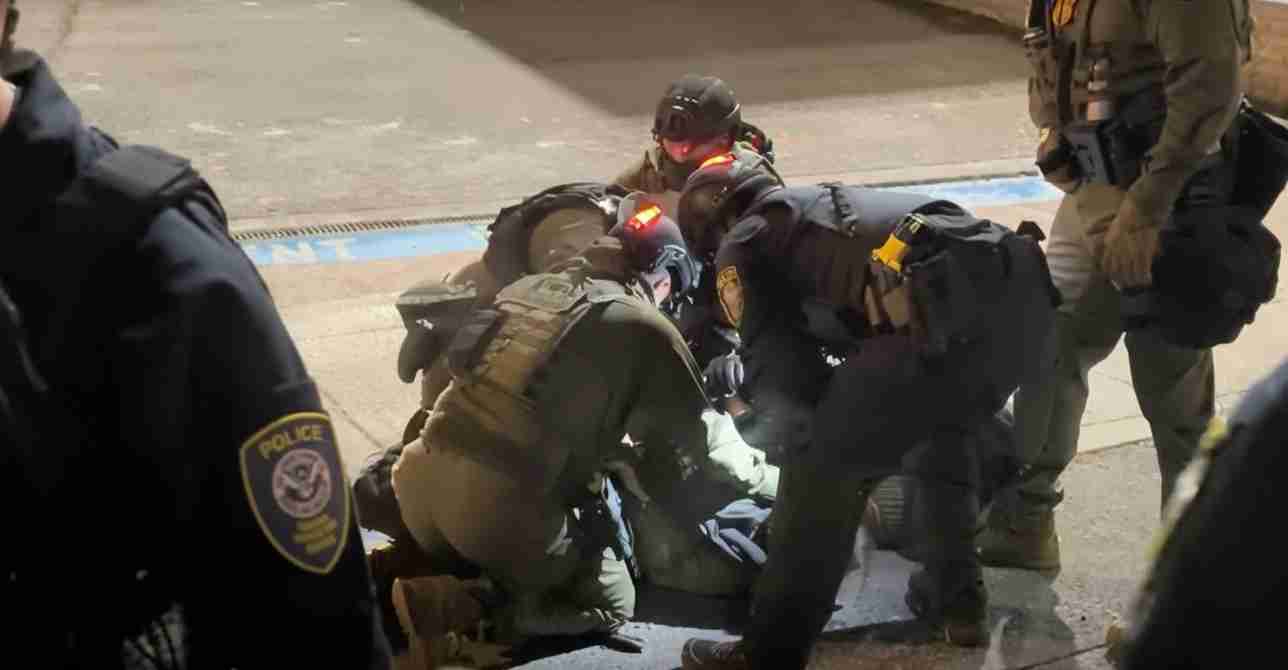
Court filings and local accounts portrayed Portland demonstrations as mostly small and peaceful for months, often fewer than 30 participants in many events since July. The judge noted the Portland Police Bureau’s mutual aid agreements and crowd-control resources as capable of addressing local unrest. While federal law officers and property experienced some attacks, the evidence did not show a coordinated, large-scale insurrection — a finding that weighed heavily in the court’s decision. (VPM/NPR, ClickOrlando)
Legal framework: Insurrection Act and 10 U.S.C. § 12406
The dispute centers on the Insurrection Act and related authority codified at 10 U.S.C. § 12406, which permits the President to call state militias into federal service when the President determines unlawful obstructions, assemblages, or rebellion make enforcement of federal law impracticable by normal judicial procedures. The federal government argued it could federalize Oregon’s Guard to protect federal property and enforce federal law; Oregon countered that the statutory conditions were not satisfied. The court found the legal standard was not met in this case. (VPM/NPR, LA Times)
Text of 10 U.S.C. § 12406 — National Guard in Federal Service: Call
Whenever—
1. the President considers that unlawful obstructions, combinations, or assemblages, or rebellion against the authority of the United States, make it impracticable to enforce the laws of the United States in any State by the ordinary course of judicial proceedings, or
2. the President considers it necessary to enforce a law of the United States or to suppress insurrection, domestic violence, or conspiracy,
he may call into Federal service such of the militia of any State as he deems necessary. When the National Guard is called into Federal service in this manner, it shall be subject to such regulations as the President may prescribe.
(The statute text above frames the core legal question in the court fight over the Oregon deployment.)
Why this case is unusual
Federalizing a state National Guard over the governor’s objection is rare. Court filings and media accounts note this may be the first such attempt in roughly 60 years outside civil-rights-era interventions. That history matters because courts have traditionally been cautious about domestic military deployments that bypass state control. The Portland case is a key test of presidential reach when asserting federal authority against a state without clear evidence of an insurrection. (VPM/NPR, LA Times)
The Justice Department’s response
The Department of Justice announced it will appeal the emergency restraining order to the Ninth Circuit Court of Appeals, arguing the federal government must be able to protect federal property and enforce federal law when needed and asserting the President’s authority under 10 U.S.C. § 12406 supports the move. The appeal will determine whether the decision withstands scrutiny at the appellate level and could set precedent on presidential power over state guard units. (ClickOrlando)
Implications for California
Economic impact
A federal deployment like the proposed Portland action could strain state resources and local budgets if California faced similar federal intervention. Local agencies sometimes absorb costs for legal defense, overtime, and logistics when federal and state responses clash, affecting city services and small-business recovery in affected neighborhoods.
Political consequences
The ruling reinforces state authority and could embolden California officials to resist federal interventions they view as overreach. It strengthens governors and state attorneys general when challenging federal moves in court and underscores the importance of checks and balances to a politically moderate conservative audience.
Social effects
Keeping state and local law enforcement in charge of crowd management may calm tensions. Community groups and civic leaders in California often prefer local oversight for protests and public safety, an approach that can reduce friction with distant federal forces.
Cultural relevance
Californians hold diverse views on federal power, but many value strong local control—particularly on issues linked to civil liberties and policing. The court’s emphasis on constitutional protections may resonate with voters who favor limited federal intrusion into state affairs.
Practical applications for residents
If federal authorities attempt a similar deployment in California, local leaders may point to this ruling to argue against federalization. Residents should expect litigation and public debate before any federal troops are sent into California cities over state objections. Local law enforcement could cite this case when seeking resources or coordination to address protests without federal troops.
Sources and further reading
- VPM/NPR reporting on the court order and reasoning
- ClickOrlando coverage, including DOJ appeal details
- Los Angeles Times analysis on the decision and historical context
Bottom line: This ruling sets up a high-stakes appeal and a broader legal test of presidential authority over state National Guard forces. The Ninth Circuit’s decision will shape the balance between federal power and state sovereignty for similar disputes in California and across the country.