
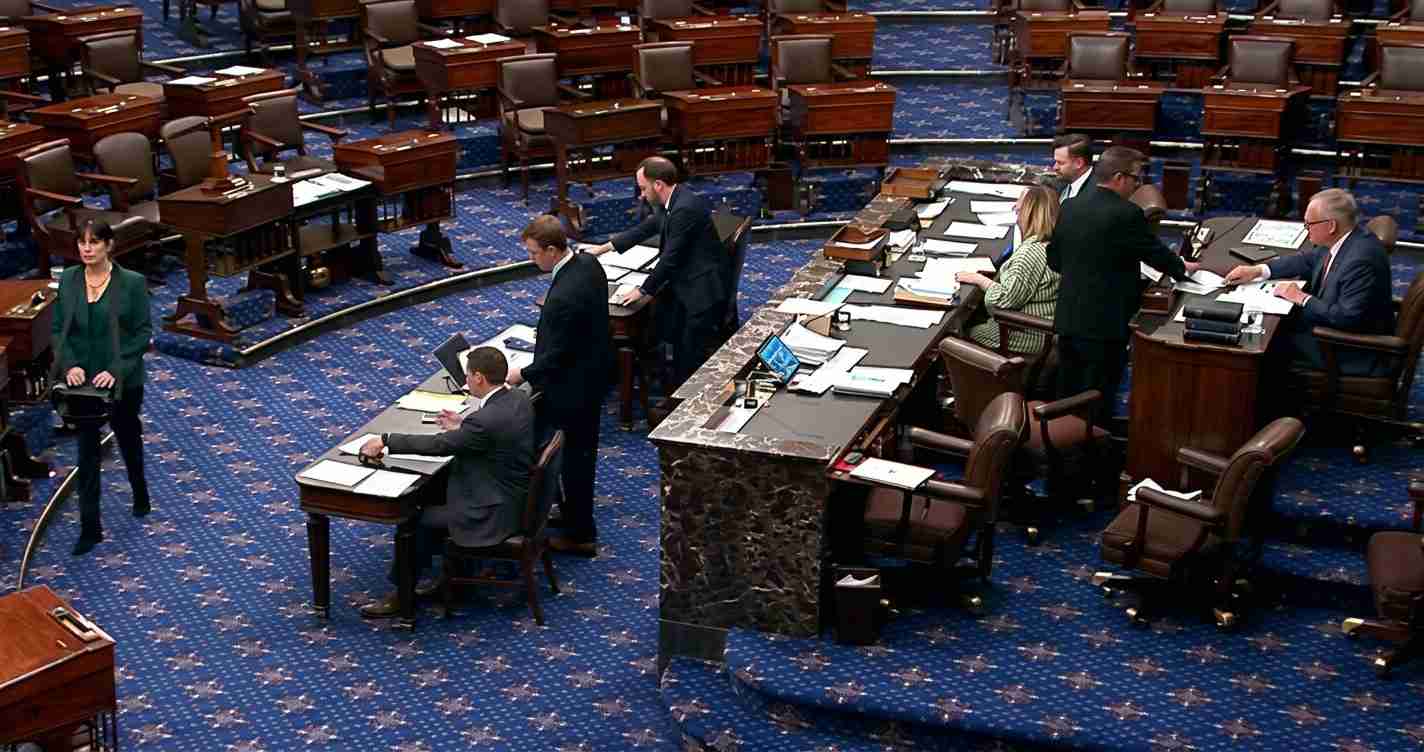
Senate approves resolution to withhold senators’ pay during future government shutdowns — pushed by Senator John Kennedy to align lawmakers with federal worker pay suffering
The Senate approved a resolution to withhold senators’ pay during future government shutdowns, championed by Sen. John Kennedy, placing salaries in escrow until funding is restored to make lawmakers share the financial consequences federal workers endured.
- What passed: Direction to the secretary of the Senate to withhold senators’ salaries during a shutdown and hold pay in escrow until government funding is restored.
- Who led it: Sen. John Kennedy (R-La.), arguing for shared sacrifice with unpaid federal employees.
- Scope: Applies only to senators (not House members or federal workers); largely symbolic and would take effect after the upcoming election.
- Pay context: Typical senator salary ~$174,000; party leaders > $193,000.
What passed
The Senate passed, by voice vote, a resolution directing the secretary of the Senate to stop paying senators during periods when Congress has failed to enact funding. Under the measure, withheld salaries would be held in escrow and released only after lawmakers vote to restore funding.
“FBI agents, national park rangers, CDC scientists, our staff here in Congress” were left unpaid by repeated closures, Sen. Kennedy told colleagues, adding the chamber “ought to hide our heads in a bag. It’s got to stop.”
What the resolution does and how it would work
Sen. Kennedy’s plan instructs the secretary of the Senate to withhold salary payments to senators for the duration of any funding lapse. Pay would be placed in escrow and distributed only after Congress agrees to reopen the government. Supporters say this creates an immediate personal cost for lawmakers.
Important limits: The resolution is symbolic in key ways — it applies only to senators, does not affect federal employee pay, contractors, benefits, or protections, and does not itself create emergency pay mechanisms for those groups.
Why senators are pushing the change now
Lawmakers point to a string of recent funding crises that turned shutdowns into a recurring political tactic rather than a last-resort outcome. Two major lapses over the past year left many federal workers unpaid, disrupted air travel screening, strained national parks and interrupted public health work.
Supporters frame the resolution as accountability: if federal workers can go without pay, those who set budgets should face similar consequences. That pitch is targeted at voters who demand fiscal responsibility and tangible consequences for officials’ choices.
Other proposals aimed at limiting shutdown harm
Kennedy’s resolution is one of several approaches proposed by lawmakers:
- Guaranteed pay: Sen. Ron Johnson (R-Wis.) has proposed a bill — supported by some federal labor groups — to ensure federal workers are paid even if funding is not enacted.
- Automatic short extensions: Sen. James Lankford (R-Okla.) has suggested automatic, temporary funding rollovers (two-week extensions) to prevent abrupt closures.
Limits and political reality
Symbolic scope: The change affects only senators and would not take effect until after the next election cycle, so it won’t deter any shutdowns before November. It does not resolve the political conflicts that cause shutdowns.
Senate leaders have signaled mixed reactions. Some Democrats, including Sen. Chuck Schumer (D-N.Y.), have supported steps to avoid shutdowns, but skepticism remains about whether the approach will change leverage strategies used by parties in future negotiations.
Background: the recent shutdowns and their impact
In the past year the federal government experienced two high-profile funding lapses: one lasting 43 days and another tied to Department of Homeland Security funding that affected operations for nearly 76 days. Those shutdowns produced missed paychecks, furloughs and operational disruptions.
TSA screeners often worked without pay, creating strain at airports and raising safety and staffing concerns. National parks and public health research also saw interruptions when agency staff went unpaid.
Implications for California
California could feel outsized practical effects from future shutdowns because of its major airports, national parks and extensive federal workforce.
Economic impact
Airports such as Los Angeles International, San Francisco International and San Diego International could face staffing strain and delays if TSA or air-traffic support staff miss pay. Tourism in Yosemite, Sequoia and other parks would suffer from closures or reduced services.
Public safety and services
TSA and other federal public-safety roles can see morale drop and turnover rise after repeated unpaid periods. California ports, airports and border operations are critical to trade; disruptions can ripple into supply chains and local law-enforcement cooperation.
Federal workforce in California
California employs many federal workers and contractors across agencies — National Park Service, CDC, U.S. Customs and Border Protection, federal courts. Repeated unpaid periods can force skilled staff toward private-sector jobs and erode institutional knowledge.
Political consequences
For moderate conservative voters, Kennedy’s resolution can be positioned as accountability. But because it targets only senators and begins after the election, immediate political impact in California is limited. The measure may increase pressure on the state’s delegation to seek broader bipartisan reforms.
Practical effects for residents
- Travelers: Potential delays and service reductions at airports if TSA staffing or morale declines.
- Tourists & local businesses: Park closures and reduced services reduce tourism revenue.
- Federal contractors: Delayed invoices and lost earnings for contractors relying on steady federal purchases.
- Public trust: Repeated shutdowns erode confidence in government, shifting voter priorities toward steady governance.
Sources and further reading
Reporting and background for this summary include coverage from major outlets and official sources:
- Politico search results on Senate pay resolution and shutdowns
- Associated Press search on government shutdowns and federal worker pay
- Reuters search on Senate actions regarding shutdowns
- The Hill search results
- U.S. Senate search for resolutions and secretary of the Senate
- Office of Sen. John Kennedy
Reporting compiled from Times Media Service and public news reporting cited above (Politico; AP; Reuters).



