Le’Veon Moss retires four days after signing with Dolphins — injuries and NIL money reshape the path from college star to pro
Le’Veon Moss, 23, abruptly retired from the NFL on May 12, 2026 — four days after signing as an undrafted free agent with the Miami Dolphins — a choice likely shaped by prior major injuries and NIL financial security.
Key takeaways
- Quick retirement: Moss was placed on the Miami Dolphins’ reserve/retired list on May 12, 2026, four days after signing as a UDFA.
- Medical red flags: Torn ACL and MCL in 2024 and an ankle injury in 2025 were central concerns for scouts and teams.
- Guaranteed UDFA money: The Dolphins reportedly guaranteed about $258,000, a large sum for a UDFA that may need to be returned after retirement.
- NIL context: Name, Image and Likeness earnings can provide a financial cushion that changes the risk calculus for players with significant injury histories.
The transaction and the silence
Officially, the Dolphins’ transaction log is procedural: Moss signed as an undrafted college free agent on May 8, 2026 and was placed on the reserve/retired list on May 12, 2026. The club recap restated his Texas A&M production and honors but offered no public reason or injury designation, which indicates — at least publicly — a voluntary retirement rather than a team-declared medical move. Local and national beat reporters immediately noted the unusual timing and the lack of a public statement from Moss.
College production, honors and the medical red flag
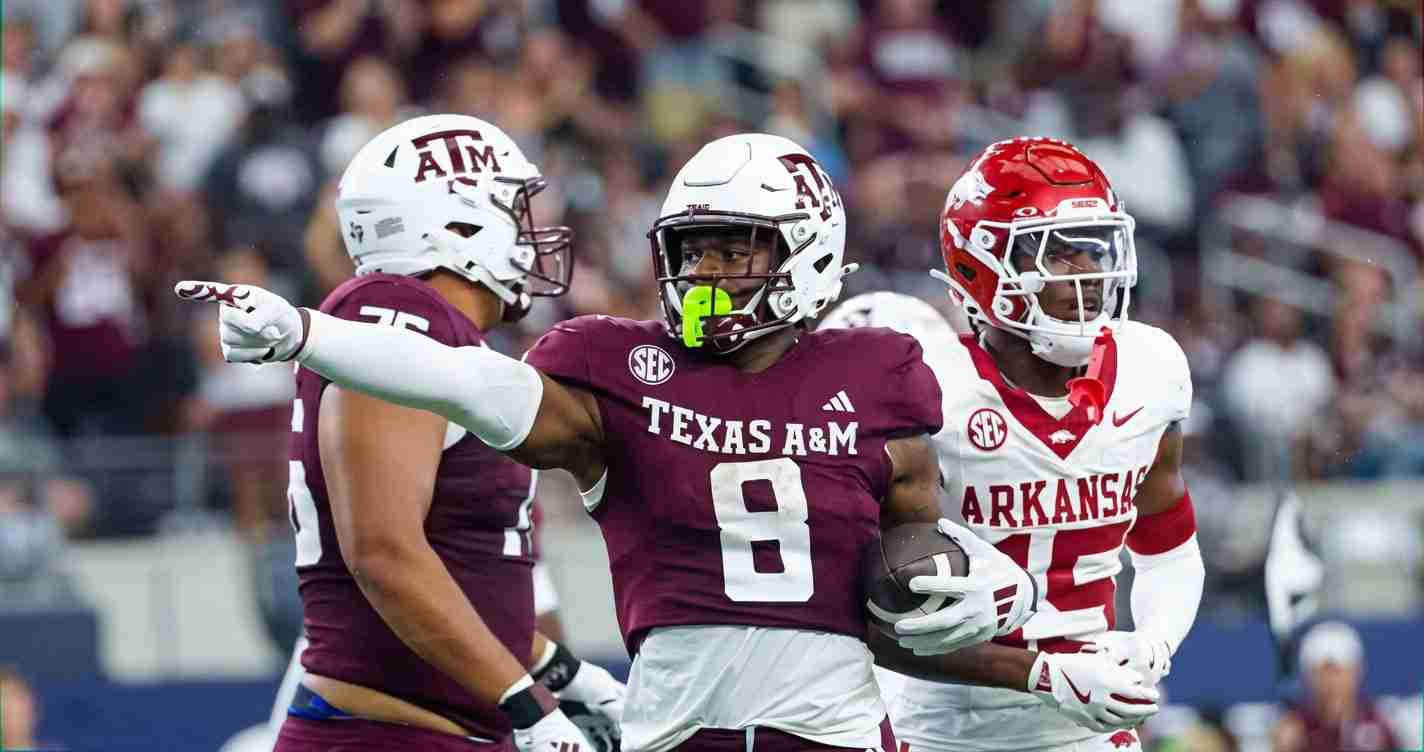
When healthy, Moss delivered: across 32 career games for Texas A&M he totaled roughly 1,767 rushing yards on 321 attempts, averaged about 5.5 yards per carry, and scored 22 rushing touchdowns. He earned All-SEC second-team honors in 2024 and was part of Texas A&M’s run to the College Football Playoff in 2025 — the kind of résumé that keeps scouts interested.
The persistent caveat in scouting reports was medical. Moss suffered a torn ACL and MCL in 2024 — a significant knee injury for a running back — followed by an ankle injury in 2025. Multiple pre-draft evaluations flagged him for medical red flags, which contributed to his slipping into the UDFA market.
The Dolphins’ gamble and the UDFA market
Barry Jackson of the Miami Herald reported the Dolphins guaranteed approximately $258,000 to secure Moss’s UDFA commitment — an above-market guarantee intended to buy early access to a prospect who slipped past the draft. That figure drew attention because it signals the team saw Moss as a genuine competitor for depth rather than a low-cost flyer.
The retirement underlines a practical problem for clubs: guaranteed UDFA dollars do not ensure availability. Placing Moss on the reserve/retired list preserves Miami’s rights should he return, but it also leaves a roster hole and wasted scouting capital. The administrative question of reclaiming guaranteed money is unsettled; reporting indicates the team may seek to recover most or all of the guarantee.
Barry Jackson reported that Moss “may have to return most or all” of the UDFA guarantee, though specifics were not public.
Health, life choices and the NIL effect
For a 23-year-old running back with prior ACL/MCL reconstruction and later ankle trouble, the long-term medical risks are a clear part of the equation. Running back is a high-impact position with a historically short average career length; repeated surgeries and rehab can affect long-term mobility and quality of life. Walking away to preserve health is a defensible personal choice.
Beyond health, NIL earnings are reshaping incentives. In the pre-NIL era, the NFL was often the first meaningful paycheck a college player could expect. Today, players at high-profile programs can monetize their name, image and likeness while still in college. That revenue can create a financial cushion that reduces the marginal benefit of risking further injury for an uncertain pro contract. While Moss’s exact NIL income has not been disclosed publicly, analysts argue that NIL revenue changes the calculus for medically risky prospects.
Media and public reaction
Coverage varied by outlet: beat writers stressed the missed opportunity for both player and club; film analysts noted the loss of a runner with burst and contact balance; fan pages reacted with a mix of humor and frustration about Miami’s roster turnover. Most reporters cautioned that, without a Moss statement, explanations remain partially speculative. The consensus view places injury risk first and NIL as a meaningful secondary factor.
What teams and prospects learn
Moss’s decision may foreshadow a trend: college standouts with sizable NIL revenue and notable medical histories could opt out of pro pursuits earlier than previous generations. Practical takeaways:
- Teams should plan for greater offseason attrition and consider contract structures that protect clubs when sizable guarantees are advanced to UDFA signings.
- Players and families must weigh NIL income as part of a broader career and health strategy, not just immediate cash.
- Universities and athletic departments may need expanded financial education and medical counseling for athletes managing early earnings.
Implications for California
California’s college football economy — anchored by programs with large NIL markets — is central to the discussion. If more medically at-risk players choose to forgo the pro route, the state could see shifts in recruiting, retention and the local NIL services ecosystem. Policymakers who supported access to NIL may face renewed calls for stronger health protections, transparent contracts, and financial-literacy programs for athletes.
Practical recommendations for California-based players and families:
- Prioritize documented medical evaluations and insurance counseling when considering the NFL path.
- Increase financial-education programming to help manage NIL earnings and plan contingencies.
- Expect NIL marketplaces and athletic departments to tailor services to athletes making more individualized career decisions.
Sources and attribution
Reporting and public records referenced in this article include the team transaction report and release, local beat reporting on contract terms, Texas A&M athletic records, and analysis of NIL trends. Primary sources:
- Miami Dolphins official site (transaction and team release)
- Barry Jackson, Miami Herald (reporting on guaranteed UDFA money and repayment)
- Texas A&M athletics (player statistics and team materials)
- General NIL reporting and sports-economics coverage from NCAA and major sports-business outlets.
Reporting note
Moss has not issued a public statement explaining his retirement. Details about his specific NIL earnings and the final accounting of the UDFA guarantee remain private. Journalists continue to seek comment from Moss, his representatives, and Dolphins officials.