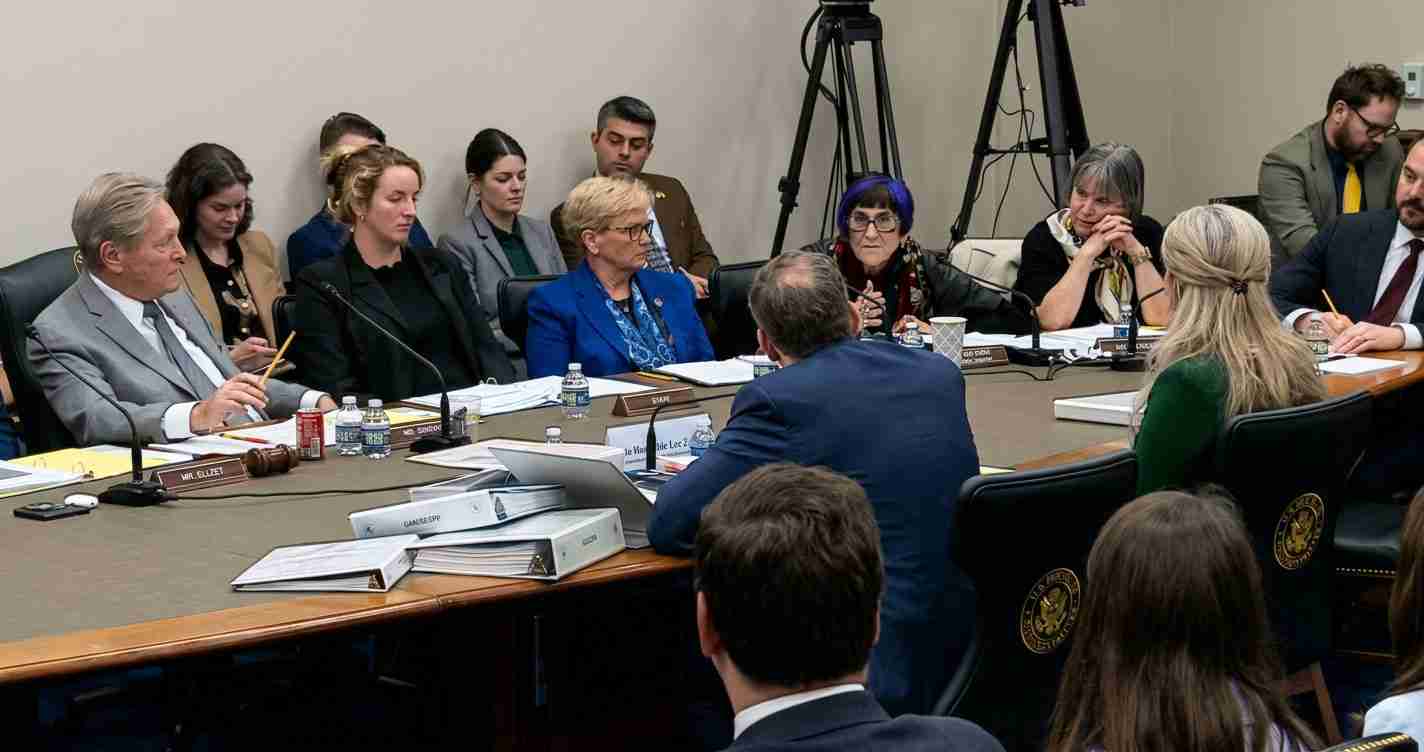
Zeldin, DeLauro clash over EPA budget and Loper Bright in tense hearing as cuts loom
WASHINGTON (Times Media Service) — A heated House Appropriations hearing saw Rep. Rosa DeLauro and EPA Administrator Lee Zeldin clash over a 2027 EPA budget that would cut funding by roughly 52%, with debate centering on Loper Bright and agency authority.
Key takeaways
- Budget shock: The White House seeks to reduce EPA discretionary funding from about $8.82 billion (2026) to roughly $4.2 billion (2027), a cut of ~52%.
- Legal flashpoint: Zeldin invoked Loper Bright and other recent Supreme Court rulings as limits on agency power.
- Partisan clash: DeLauro called the proposal “a climate change denier’s manifesto,” while Zeldin challenged congressional familiarity with case law.
- California stakes: Deep cuts could reduce federal grants, monitoring, and enforcement that many California communities rely on.
Hearing clash over EPA’s 2027 budget request
The confrontation began when Rep. Rosa DeLauro pressed Administrator Lee Zeldin about how the proposed budget frames climate science and the agency’s role. DeLauro said the document “reads like a climate change denier’s manifesto” and asked how the EPA could justify scaling back protections while communities face more flooding and worse air quality. (Source: Fox News; Full hearing clip.)
Zeldin pushed back, arguing the EPA lacks legal authority in certain areas under recent Supreme Court decisions. He interrupted DeLauro multiple times and said, in essence, that members of Congress should be familiar with precedent. At one point he told her, “You’re upset that you don’t know what Loper Bright is.” He also offered to name “the two biggest Supreme Court cases” that affect EPA authority. (Video: Video.)
DeLauro’s response was sharp: “You do not have the right to say climate change does not exist, that it’s a hoax,” she said, accusing the administration of seeking to “appease polluters under the false flag of economic growth.” The exchange was loud and captured on camera, drawing attention from committee members and staff. (See clip of DeLauro’s remarks.)
What Zeldin cited: Loper Bright and recent Supreme Court rulings
Zeldin invoked Loper Bright as a turning point in federal regulatory law. In the hearing he tied that case to others — including Michigan v. EPA and West Virginia v. EPA — as top rulings that have narrowed how agencies interpret statutes and set policy. Supporters say those cases require agencies to adhere strictly to statutory text; critics argue the rulings erode agencies’ ability to respond to new threats, including climate-driven risks. (Video: Video.)
The budget math and policy stakes
The White House’s 2027 budget request would reduce EPA discretionary funds from about $8.82 billion (2026) to roughly $4.2 billion (2027), a reduction of roughly 52%. That level would force deep cuts across programs that support air and water quality, state grants, pollution research, and enforcement. (Budget figures: Fox News.)
Republicans backing cuts argue the EPA has overstepped statutory authority and that federal spending should be restrained, suggesting states, local governments, and the private sector can better drive improvements. Democrats and many environmental groups warn steep cuts would weaken safeguards for communities most exposed to pollution and climate impacts and would reduce funding for scientific monitoring and emergency response. (Source: Fox News.)
Partisan reactions and viral spread
Video of the hearing exchange went viral on social media Monday night. Conservative commentators praised Zeldin for “stumping” DeLauro by naming recent Supreme Court precedents and framing the debate as one of legal limits on agency action; some posts called the exchange “one of the most satisfying hearing exchanges” they had seen. Coverage has been uneven, with much of the immediate reporting and clips appearing on conservative platforms and cable shows where Zeldin later discussed the hearing. (Coverage examples: Fox News; Fox News video segment; Zeldin interview on The Ingraham Angle.)
What the debate means for policy and oversight
The clash highlights two linked questions now central to national debates: how far the EPA can go under recent Supreme Court guidance, and how much funding the agency needs to fulfill its duty to protect public health and the environment. For lawmakers, cases like Loper Bright change what the EPA can do without new congressional authorization. For state and local officials, funding determines whether the agency can maintain grants, testing, and enforcement crucial to many communities.
Implications for California
- Economic impact: California relies on federal environmental grants and research funding for air and water quality monitoring, wildfire smoke response, and coastal resilience. A >50% EPA cut could reduce federal support and shift costs to the state or private actors. (Budget context: Fox News.)
- Political consequences: California’s Democratic delegation supports robust EPA resources; proposed cuts and legal limits cited by Zeldin could spark state-federal clashes and influence voters and lawmakers ahead of future elections.
- Social effects: Low-income neighborhoods and communities of color that face higher pollution and climate hazards could see delayed remediation, fewer grants for local projects, and reduced federal public-health support.
- Cultural relevance & practical applications: Perceived rollbacks may galvanize activists, municipalities, and state agencies to seek state-level action or litigation. Local governments and utilities may need alternative funding or to scale back projects if federal grants shrink.
Sources and related coverage
– Fox News: “Top Trump official ignites heated exchange after stumping House Dem on SCOTUS case”
– Full hearing clip on YouTube
– Clip of DeLauro’s remarks
– Zeldin interview on The Ingraham Angle
– Fox News video segment
Bottom line: The hearing made clear that EPA funding levels and the legal lines drawn by recent Supreme Court cases — including Loper Bright — will be major battlegrounds in upcoming budget fights and oversight battles, with direct consequences for states like California.