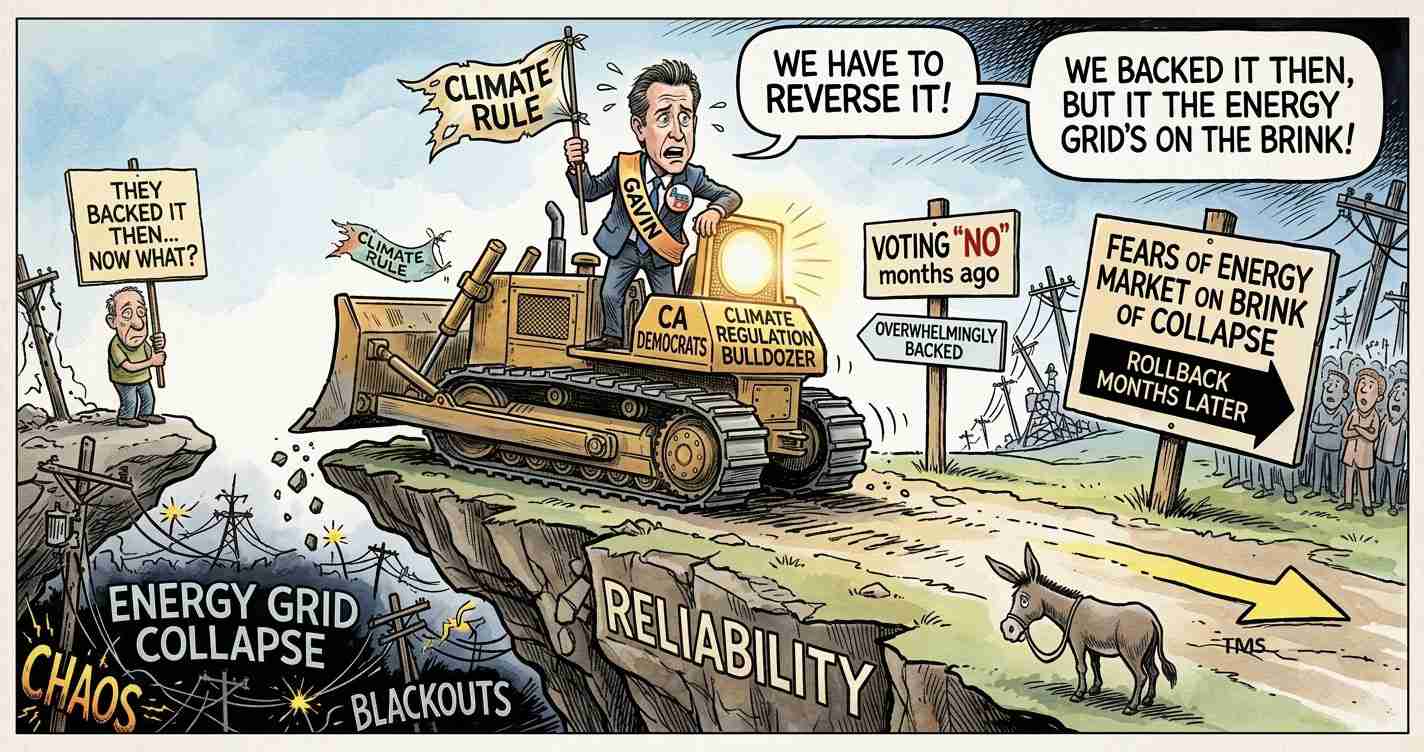
California Democrats Who Backed Cap-and-Invest Now Urge CARB to Rethink Stricter Emissions Rules, Citing Higher Gas Prices and Energy Risks
Fifteen California Democratic Assemblymembers who backed the state’s cap-and-invest reauthorization urged the California Air Resources Board to reconsider stricter emissions amendments, warning the changes could drive higher gas prices, supply risks and energy-market instability ahead of a May 2026 vote.
Key takeaways
- Legislative pause requested: Fifteen Assemblymembers who voted to reauthorize the program sent a joint letter asking CARB to reconsider proposed rule changes for fuels, gas and electricity — reported in a video report and the San Joaquin Valley Sun.
- Risk of outpacing readiness: Lawmakers warn tighter limits and fewer credits through 2030 could outpace infrastructure and market realities, risking chronic supply imbalances and long-term market instability (video report; Carbon Pulse).
- Industry price estimates: Chevron and other groups say the proposal could add more than $1 per gallon to California gas prices by 2030, and may push refineries out of state (video report).
- Decision timeline: CARB is scheduled to vote on the amendments in May 2026 after the legislature reauthorized the program in September 2024 (video report).
Main story
Background: What is California’s cap-and-invest program?
California’s cap-and-invest program sets a declining cap on greenhouse-gas emissions from major polluters. Companies that emit carbon must buy allowances to cover emissions; proceeds fund clean-energy projects and climate programs. Supporters call it a cost-effective path to meeting statutory climate goals. The state legislature reauthorized the program in September 2024 and directed CARB to update the rules; the agency’s proposed changes covering fuels, gas and electricity are now under review ahead of a planned May 2026 vote (video report).
Lawmakers who switched tone: the March letter
On Monday, 15 Assemblymembers who voted for the 2024 reauthorization sent a joint letter asking CARB to pause and rethink the current proposal. Signers included Blanca Rubio, Michelle Rodriguez, Jose Luis Solache, Stephanie Nguyen, Lisa Calderon, Juan Carrillo, James Ramos, Lori Wilson, Blanca Pacheco, Maggy Krell, Esmeralda Soria, Tina McKinnon, Cecilia Aguiar-Curry, Anamarie Avila Farias and Mike Gipson (San Joaquin Valley Sun).
The lawmakers argue CARB’s current draft would reduce allowance supply and impose stricter emissions cuts through 2030. Their letter warns:
“This crisis is not a fallacy nor a thinly veiled threat. It is a reality borne by consumers today who are historically and empirically least able to afford it.”
They urged CARB to balance environmental goals with economic stability so costs do not disproportionately fall on low- and middle-income Californians. The letter was addressed to CARB’s chair — reports vary between naming Lauren Sanchez and Liane Randolph as the recipient (video report; San Joaquin Valley Sun).
Industry warnings and price estimates
Oil companies and industry groups have echoed the lawmakers’ concerns. Chevron, in a recent letter, estimated the CARB proposal could add more than $1 per gallon to California gas prices by 2030. The company warned that stricter rules could accelerate refinery closures, push fuel production out of state, and increase reliance on imported fuel — outcomes that could raise costs and threaten jobs. Recent global pressures, including Middle East tensions, have already driven short-term price spikes of roughly $0.50 per gallon in stretches, compounding household strain (video report).
CARB’s position and timeline
CARB and supporters maintain the cap-and-invest program is essential to meet California’s climate laws and has the authority to tighten limits. The agency is conducting a formal rulemaking process; proposed amendments are slated for a vote in May 2026. The lawmakers’ letter and industry pushback increase political pressure as CARB weighs trade-offs between emissions targets, market impacts and energy reliability (video report).
Political dynamics in Sacramento
The letter from Democrats who supported reauthorization creates an uncommon intra-party clash, pitting legislative allies against the agency charged with enforcing the law they helped pass. Republicans and oil-industry groups have seized on the letter to amplify criticism, framing CARB’s proposal as harmful to working families and the economy. The dispute sets up a likely heated showdown in Sacramento among climate advocates, environmental groups, labor, industry and lawmakers concerned about immediate economic impacts (Carbon Pulse; San Joaquin Valley Sun).
Implications for California
Economic impact: California gas prices and household budgets
If CARB finalizes tighter limits as proposed, industry estimates imply upward pressure on gas prices. Chevron’s estimate of more than $1 per gallon by 2030 would raise commuting and transportation costs for families and businesses. Even smaller swings of about $0.50 per gallon have strained household budgets; higher fuel prices ripple through freight and food costs, squeezing disposable income for middle- and working-class Californians (video report).
Jobs and industry: refinery closures and supply
Stricter rules could accelerate retirements of older refineries that face steep compliance costs. Industry groups warn this could reduce in-state refining capacity, increase dependence on out-of-state or foreign imports, and threaten local refinery jobs and related supply-chain work. Net employment effects will hinge on the pace of clean-energy job creation and the availability of transition supports (video report; Carbon Pulse).
Energy reliability and infrastructure readiness
Assemblymembers argue an accelerated transition must not outpace infrastructure and market readiness. Without sufficient investment and planning, they warn, tighter caps could create supply imbalances, fuel shortages or price spikes that threaten reliability. CARB contends it can tighten while maintaining reliability, but technical analyses and transition measures in the rulemaking record will determine real-world impacts (video report).
Political consequences: Sacramento showdown and voter concerns
The dispute may be a political test for California Democrats: lawmakers who signed the letter respond to constituent pressure over high living costs, while CARB and climate proponents must balance emissions cuts with public support. The outcome could influence voter views on climate policy, energy regulation and institutional trust in both the legislature and regulatory agencies (Carbon Pulse; San Joaquin Valley Sun).
Social and community effects
Working families, commuters and small businesses are likely to feel fuel-price increases most acutely. Communities that host refineries could face job losses and reduced local tax revenue if facilities close or curtail operations. Conversely, communities targeted for clean-energy investments could benefit if cap-and-invest revenues are directed to local projects. The lawmakers’ letter emphasizes that benefits and burdens must be shared fairly across California’s diverse population (San Joaquin Valley Sun; Carbon Pulse).
Practical considerations for residents
- Track CARB rulemaking: CARB plans a May 2026 vote; Californians can review materials and public comments on CARB’s website as the process unfolds (video report).
- Watch local markets: Changes to refinery output and transportation costs could affect local gas prices and employment prospects in refinery towns.
- Expect more debate: The lawmakers’ letter increases the odds of hearings, amendments or compromise measures aimed at softening near-term impacts while maintaining long-term emission goals.
Reporting notes and sources
This report draws from public reporting and the lawmakers’ letter as described in media coverage. Key sources include a recent video report, coverage by Carbon Pulse, and the San Joaquin Valley Sun. Full sources: video report; Carbon Pulse; San Joaquin Valley Sun.