
Sen. Tim Sheehy Intervenes as Capitol Police Remove Protester; Man Injured and Charged After Heated Senate Hearing
Lede: A Senate Armed Services Subcommittee hearing on Capitol Hill turned chaotic when Senator Tim Sheehy physically intervened to help Capitol Police remove protester Brian McGinnis, who was later treated for an alleged broken arm and charged with multiple offenses.
Key takeaways
- Hearing disruption: The disturbance occurred during a Senate Armed Services Subcommittee meeting on the Current Readiness of the Joint Force — CBS News.
- Protester: Brian McGinnis, 44, a Marine veteran and Green Party Senate candidate from North Carolina, shouted against sending U.S. troops to war for Israel.
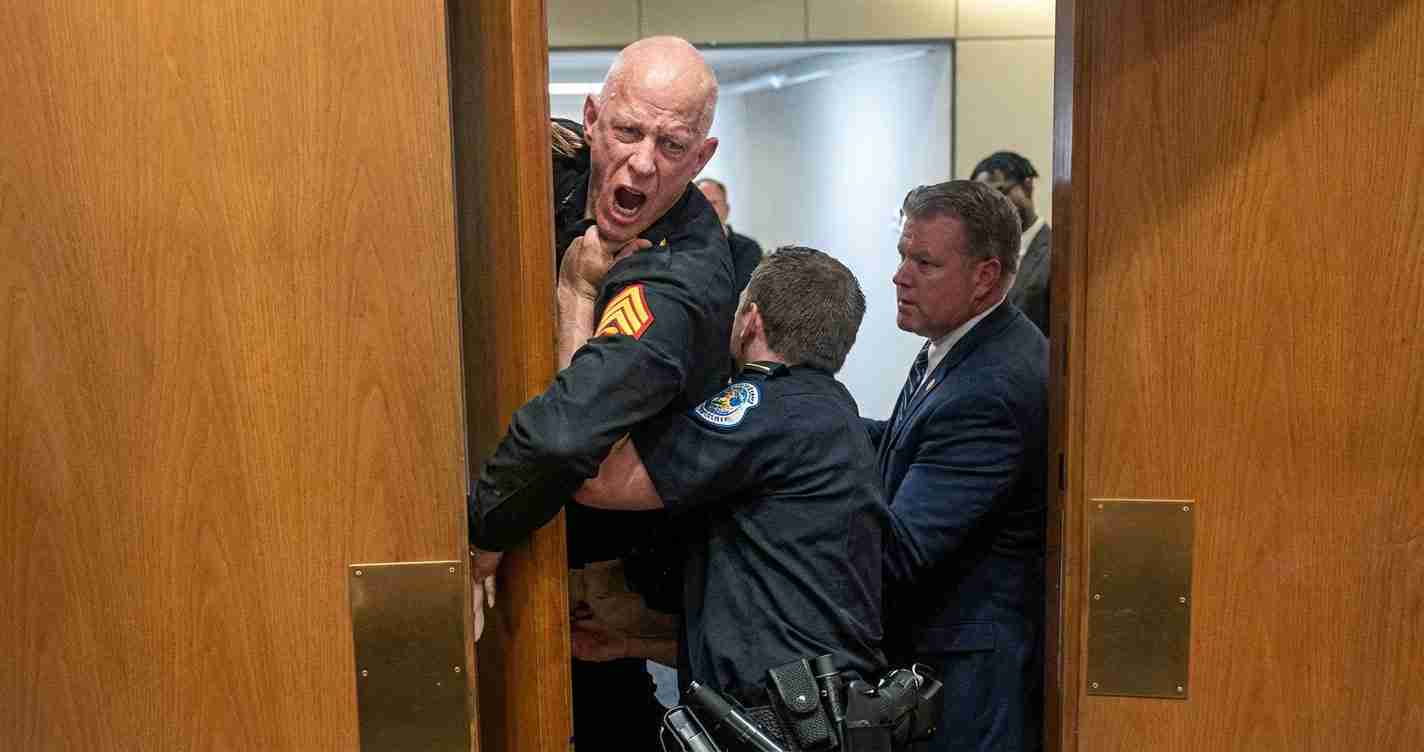
- Sen. Sheehy intervened: Sen. Tim Sheehy, a Republican and former Navy SEAL from Montana, left the dais and joined officers in removing the protester; video shows a struggle at the doorway.
- Injury & charges: McGinnis alleges a broken arm; he faces multiple counts including assault on officers and resisting arrest.
The protest and initial removal
What happened: The hearing was underway when Brian McGinnis rose from the audience and shouted, “America does not want to send its sons and daughters to war for Israel,” abruptly interrupting the session. Capitol Police moved quickly to escort him out because demonstrations inside congressional hearing rooms are prohibited. (See CBS News.)
Two officers initially tried to guide McGinnis toward the exit. Video shows an early struggle in the aisle, then escalation as McGinnis resisted and wedged his left arm between the door and frame while officers attempted to remove him. (Visual accounts documented in reporting and video; see Fox News.)
Sen. Sheehy’s involvement
Sen. Tim Sheehy left the panel to assist officers at the doorway. In a statement he described the protester as “unhinged” and said the man “was fighting back. I decided to help out and deescalate the situation.” He added: “This gentleman came to the Capitol looking for a confrontation, and he got one. I hope he gets the help he needs without causing further violence.” (Statement reported by Fox News and CBS News.)
Video shows Sheehy and officers pushing and pulling at the doorway while McGinnis clung to the frame. Bystanders and staff reacted with alarm. Notably, an elected lawmaker physically engaging in a removal from a committee room is rare and raises questions for security and ethics review.
The injury and the disputed account
During the struggle a loud cracking noise is audible on video; McGinnis later said his arm was broken. He received treatment at the scene and was transported to George Washington University Hospital for further care. (Reporting includes video evidence and statements; see CBS News.)
Capitol Police said McGinnis “got his own arm stuck in a door to resist our officers and force his way back into the hearing room,” describing the incident as an unlawful protest that put officers at risk. By contrast, McGinnis’s campaign manager, Mark Elbourno, called the event an assault and said officers and others “broke his arm,” denying that McGinnis assaulted any officers. These competing narratives highlight disputed accounts over causation of the injury. (See related coverage: CBS News; Fox News.)
Injuries and medical treatment
DC Fire and Emergency Medical Services reported that three Capitol Police officers were treated for injuries after the struggle. Capitol Police confirmed McGinnis was treated prior to transport. The full extent of officers’ injuries has not been publicly detailed. (Sources: Fox News; KRTV.)
Criminal charges and legal process
Charges: McGinnis faces three counts of assault on a police officer, three counts of resisting arrest, and one count of crowding, obstructing and incommoding related to the unlawful demonstration. Capitol Police emphasized that protests are not allowed inside congressional buildings and pointed to designated areas on Capitol Grounds for demonstrations. (See reporting: Fox News; CBS News.)
The legal outcome may depend on video evidence, witness testimony and medical reports to clarify how the injury occurred and whether actions meet legal definitions of the alleged offenses.
Security, rules and context
Congressional hearing rooms are secure workspaces with strict decorum rules. Police say those rules protect members, staff and the public so lawmakers can carry out their duties. When disruptions occur, officers restore order. The involvement of a senator in a physical intervention will likely prompt review by security officials and possibly ethics advisers. (Coverage: CBS News; Fox News.)
Reactions and political response
The incident drew immediate attention on social media and in political circles. Supporters of law-and-order responses argue Sheehy acted to protect officers and keep the hearing on track. Critics warn about the optics of a lawmaker engaging physically with a civilian and call for a full accounting. McGinnis’s campaign framed the event as an assault on a peaceful protester, while Capitol Police described it as necessary enforcement of the law. (See media coverage: CBS News, Fox News, KRTV.)
Implications for California
Economic impact
Immediate economic effects for Californians are limited. However, if congressional hearings become more prone to disruption, federal staff and contractors who travel from California for briefings may face higher costs and scheduling delays. (Context: CBS News.)
Political consequences
For California’s moderate conservative audience, the episode highlights tensions between public order and the right to protest. Lawmakers may cite the incident in debates over Capitol security and when defending constituents who travel to Washington to advocate.
Social and cultural effects
The event may prompt veterans groups, peace activists and campus organizers to rethink demonstration tactics and emphasize compliance with designated protest areas to avoid legal risk. California’s political culture values both free speech and institutional order; responses will vary by audience. (See Fox News and CBS News.)
Practical guidance
Californians planning to attend congressional hearings or protests in Washington should be aware that demonstrations are barred inside committee rooms and that designated areas on Capitol Grounds exist for activism. Legal advisers may use this case to caution activists about risks associated with direct disruption of federal proceedings.
Source links
- Fox News: “Watch: Navy SEAL-turned-senator tackles ‘unhinged’ protester during chaotic hearing”
- CBS News: “Tim Sheehy joins police in ejecting protester from Capitol Hill hearing”
- KRTV: “Sen. Sheehy involved in brief struggle between Capitol Police and protester”
Reporting note: This article draws from video of the incident and statements by Senator Sheehy, Capitol Police, and representatives for Brian McGinnis. The matter is under review and legal proceedings remain pending.



