
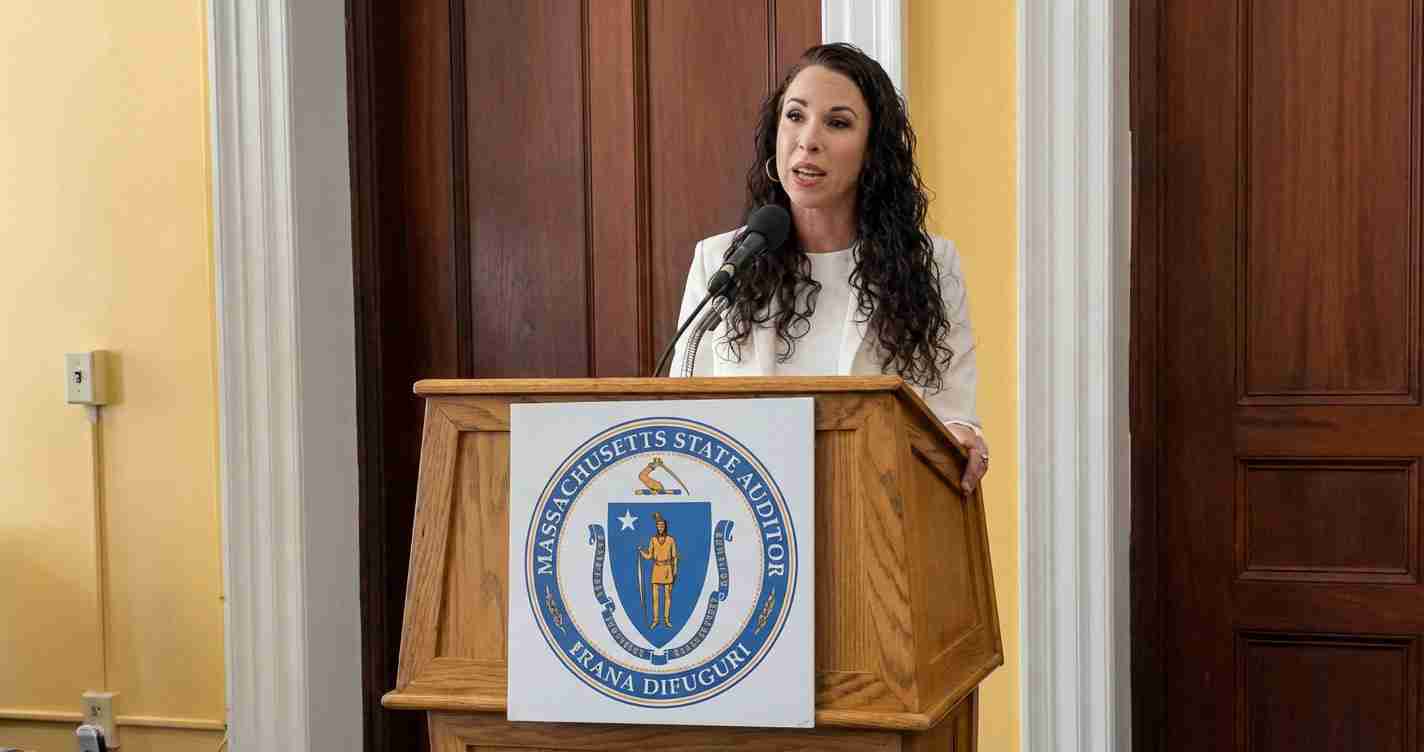
Massachusetts Auditor sues Beacon Hill leaders to force voter-approved legislative audits, alleging nearly $12M in fraud
Massachusetts Auditor Diana DiZoglio sued Beacon Hill leaders on Feb. 10, 2026, asking the Supreme Judicial Court to enforce a voter-approved 2024 amendment authorizing legislative audits after nearly $12 million in alleged public-assistance fraud was identified this year.
Key takeaways
- DiZoglio filed suit naming House Speaker Ron Mariano, Senate President Karen Spilka and the clerks of both chambers as defendants.
- The 2024 ballot question passed with 72% of the vote and explicitly gave the auditor authority to audit the Legislature and require records.
- DiZoglio’s office reports it found nearly $12 million in alleged fraud in fiscal year 2025 in public assistance programs.
- Legislative leaders argue the audit would violate separation of powers and cite existing private audits.
- DiZoglio says the attorney general declined to press the case; she seeks permission to appoint special assistant attorneys general.
Overview
On Feb. 10, 2026, Massachusetts Auditor Diana DiZoglio filed suit in the state’s Supreme Judicial Court to compel legislative leaders to comply with a 2024 voter-approved ballot amendment that grants her office the authority to audit the Legislature and require production of records. The action escalates a major transparency dispute on Beacon Hill.
What DiZoglio is asking for
DiZoglio — a Democrat and former state representative and senator — seeks court orders enforcing the ballot amendment’s plain language so her office can conduct performance audits focused on:
- Legislative contracting and procurement
- Use of taxpayer-funded nondisclosure agreements
- The Legislature’s balance forward line item
Her office says auditors requested documents but were directed by the Senate to public websites that did not contain the requested records. The complaint details those refusals and seeks judicial enforcement.
Alleged fraud and the transparency argument
The lawsuit follows a report from the auditor’s office identifying nearly $12 million in alleged fraud across public assistance programs in fiscal year 2025. DiZoglio’s team says that loss underscores the need for audits that can reach all branches of government.
DiZoglio argues Massachusetts lags national norms: the Legislature, the governor’s office and the courts remain exempt from the state public records law. She says the ballot question was intended to modernize transparency and ensure taxpayer dollars are tracked.
Legislative leaders’ response: separation of powers
Top officials — including House Speaker Ron Mariano and Senate President Karen Spilka — have strongly rejected the auditor’s approach. They contend that, even when voter-approved, an audit that compels legislative records would violate the constitutional separation of powers and risk undermining legislative independence. They point to long-standing legal doctrines and past resistance to similar audits.
Leaders also note the Legislature undergoes private audits by accounting firms and have characterized DiZoglio’s move as political. In 2023, the Legislature blocked a proposed audit on similar grounds, prompting the voter-driven change in 2024. That history is cited in the complaint.
Role of the attorney general
DiZoglio asked Attorney General Andrea Campbell to bring the case beginning Jan. 9, 2025, but says the AG refused and “effectively obstruct[ed] the OSA’s efforts to enforce the document requests through litigation.” Her complaint recounts that timeline and seeks court permission to appoint special assistant attorneys general if the AG will not proceed.
Campbell’s office disputes DiZoglio’s account, saying it lacked sufficient information about the audit’s scope and legal claims and contending DiZoglio lacked authority to sue without AG approval. Campbell told reporters the auditor was the lone agency they had concerns with enforcing. The AG’s statements are included in coverage of the dispute.
Political dynamics and public support
DiZoglio emphasizes bipartisan backing for the ballot question, noting it passed with roughly 72% of the vote as progressives and conservative Republicans joined. She argues that broad voter support demonstrates public will for legislative accountability rather than a Beacon Hill insiders’ decision. Supporters say the fight is about protecting taxpayers and restoring trust.
Outside actors have also weighed in. Republican U.S. Senate candidate John Deaton filed a separate suit alleging unlawful spending by legislators to resist the audit and urged federal officials to withhold certain discretionary grants, calling it a “Democratic Accountability & Transparency (DAT) Squeeze.”
Why the courts matter
The central legal question is whether a voter-approved statute can authorize an executive-branch official to demand documents from the legislative branch, or whether constitutional separation-of-powers protections limit that authority. The Supreme Judicial Court will weigh the ballot measure’s clear language against established constitutional protections. Observers warn the decision could set a precedent for audit authority over state legislatures nationwide. Legal analysts and coverage frame the case as potentially precedent-setting.
Implications for California
Economic impact: California taxpayers should watch the outcome. A ruling empowering auditors to compel legislative records could prompt deeper audits nationwide, improve fraud detection and cost recovery, and influence federal grant oversight. If Massachusetts recovers funds, other states may follow.
Political consequences: For California’s moderate conservatives, the case spotlights accountability and balance-of-power tensions; an outcome upholding broad audit authority could push for similar Sacramento reforms, while a separation-of-powers victory could spur more ballot measures. Observers note those political dynamics.
Social and cultural effects: A decision favoring DiZoglio may boost public confidence in oversight and encourage whistleblowers; conversely, overly aggressive audits could create administrative chill. The dispute mirrors California debates about privacy, accountability and record exemptions. Commentators see parallels with Sacramento policy debates.
Practical applications: California officials and watchdogs could use the Massachusetts case as a template: pursue ballot measures, tighten record-keeping, review procurement and NDA practices, and prepare for broader auditor requests. Policy strategists are already mapping possible next steps.
Bottom line
The DiZoglio legislative audit lawsuit crystallizes a clash between voter-driven transparency reforms and constitutional separation-of-powers doctrine. The Supreme Judicial Court’s ruling could reshape how states oversee legislative spending — with implications for accountability, budgets and public trust.


