MirrorMe Technology Shanghai unveils Bolt, the fastest humanoid robot — it runs 22 mph in real-world test
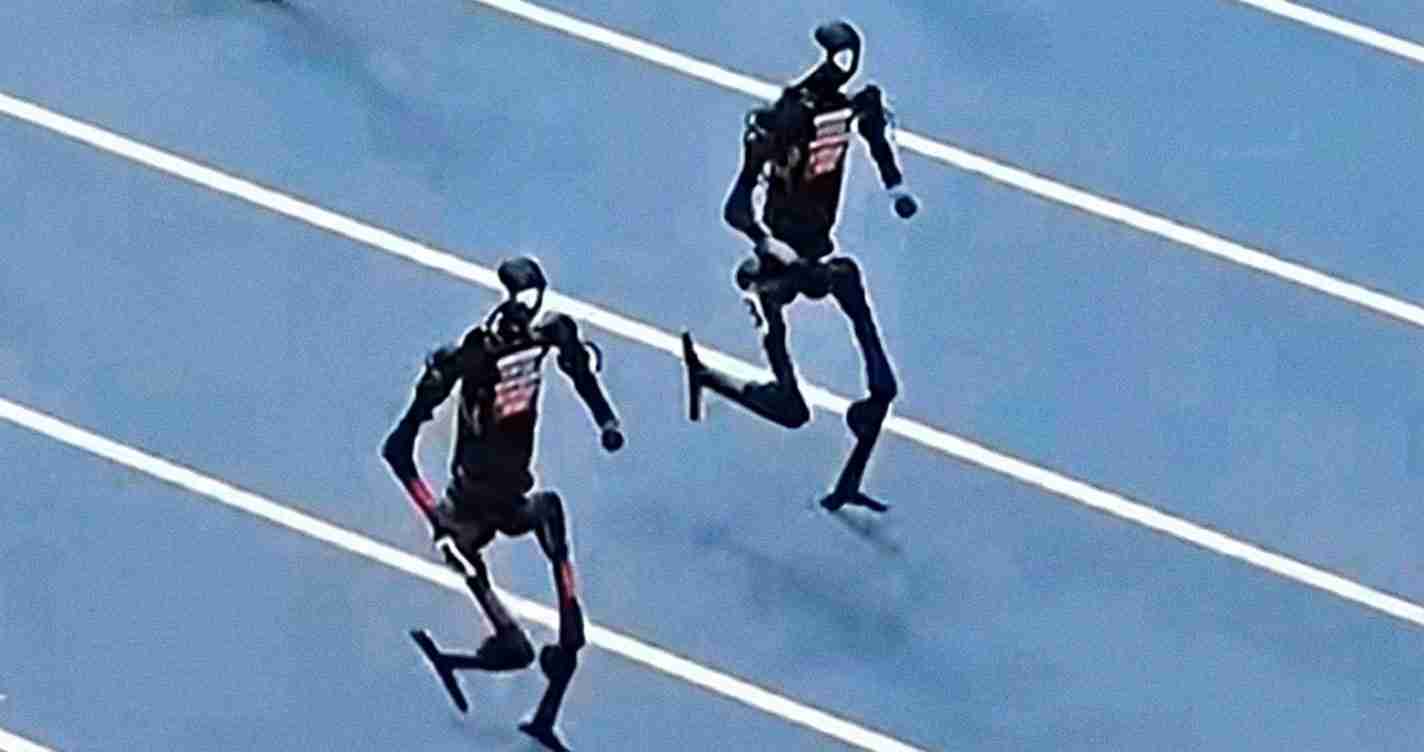
Shanghai startup MirrorMe Technology unveiled Bolt, a 175cm, 75kg full-size humanoid that hit 10 m/s (about 22.4 mph) in controlled real-world tests, claiming unprecedented speed and balance for practical dynamic tasks in varied environments.
- Record speed: MirrorMe says Bolt reached 10 m/s (≈22.4 mph), a top speed faster than most human sprints and demonstrated in real-world testing conditions.
- Design for balance: At ~175 cm and ~75 kg, Bolt’s form emphasizes short stride and high cadence enabled by optimized joints and power systems.
- Real-world demo: Promotional footage on X shows a split-screen treadmill test with founder Wang Hongtao and the robot, which MirrorMe and outlets say is not CGI (MirrorMe’s coverage and the Bolt video).
- Ongoing scrutiny: Independent, peer-reviewed verification and extended endurance tests remain pending; MirrorMe plans further refinements and public testing.
The demonstration: real-world speed, not simulation
MirrorMe published a split-screen treadmill video showing founder Wang Hongtao running alongside Bolt as speeds increased. The footage highlights a shorter stride but much higher cadence for the robot while maintaining posture and balance at speed. MirrorMe and multiple outlets describe the run as occurring in a controlled testing facility and not as computer-generated imagery (Fox News report; MuggleHead coverage; Interesting Engineering context).
“Bolt maintained balance and stride as speed rose and outpaced the human,” the company and clips contend, framing the demo as a milestone beyond lab-only rigs.
How Bolt was built and tested
MirrorMe’s engineering core includes researchers from Zhejiang University and other institutions. The firm traces locomotion-focused work back to 2016 and cites earlier platforms — Baobao, Apollo, and the Black Panther research line — as predecessors to Bolt. The company credits private collaborations (for example with Kaierda) for power systems and actuators that withstand repeated high-speed motion (MuggleHead; Interesting Engineering).
Engineers highlight progress across joint torque control, rapid sensor feedback, and high-performance drive systems that let Bolt keep balance while increasing cadence. MirrorMe says future work will emphasize endurance, precision control, and trials beyond controlled tracks (CGTN report).
Speed in context: how fast is 22 mph for a humanoid robot?
Bolt’s peak of 10 m/s (~22.4 mph) surpasses previous full-size humanoid demonstrations outside labs. For perspective, MirrorMe’s earlier Black Panther II quadruped recorded ~9.7 m/s in a televised 100-meter sprint, and elite human sprinting (Usain Bolt’s top speed) reached roughly 12.4 m/s. MirrorMe positions Bolt as optimized for sustained cadence and balance rather than a one-off human-record breaker (Related sprint context).
Why MirrorMe calls this a line-crossing moment
The company and observers call Bolt’s run a milestone because it demonstrates controlled locomotion at speeds previously seen mostly in simulation or specialized rigs. MirrorMe frames Bolt as a practical tool — a “steel sparring partner” for athletes, an unfatigued pacer for training, and a mobile data collector for form and endurance analysis. They also point to logistics, inspection, and emergency response as potential applications where dynamic speed and balance matter (Fox News).
Skepticism and verification
Independent, peer-reviewed data on the run are not yet published. While video evidence and demonstrations support MirrorMe’s claims, external engineers stress the need for repeated, independent testing to confirm endurance, handling of varied terrain, and public-safety characteristics. MirrorMe acknowledges plans for broader testing and refinements to address these open questions (analysis).
Who else is in the race
Bolt’s demonstration renews competition among private robotics firms worldwide. Boston Dynamics and other firms set earlier dynamic benchmarks with quadrupeds and biped prototypes; observers now debate measurement standards, test conditions, and how to compare results across platforms. The next phase is expected to emphasize open, repeatable demonstrations in realistic environments (MuggleHead).
Implications for California
A commercially successful Bolt-like platform would affect California’s tech ecosystem across several fronts:
- Economic opportunity: Demand for sensors, motors, batteries, and software could create contracts and jobs for Bay Area firms, manufacturers, and university labs.
- Regulation and workforce: Policymakers and city planners may need updated safety and permitting rules for dynamic robots in training and public spaces, using existing autonomous-vehicle and drone frameworks as reference points.
- Public safety: Benefit possibilities (search and rescue, rapid medical delivery) are balanced by questions of certification, oversight, and risk mitigation in crowded or disaster-prone environments.
- Entertainment and sports: Film studios and sports science labs could adopt Bolt for repeatable pacing, controlled stunts, and athlete training without fatigue.
- Supply chain and competitiveness: MirrorMe’s progress may spur investment in domestic production and targeted incentives to secure components and software for next-generation robots.
Practical effects on daily life
For Californians, near-term effects are likely to show up through commercial tools: advanced training gear at gyms and universities, inspection robots in construction, and faster material handling in warehouses. At the same time, residents and regulators will demand clear answers about safety, privacy, and workforce impacts.
Sources and further reading
- MirrorMe’s coverage and the Bolt video
- Fox News report
- MuggleHead report
- Interesting Engineering overview
- CGTN coverage
- China Daily report
Reporting from Times Media Service