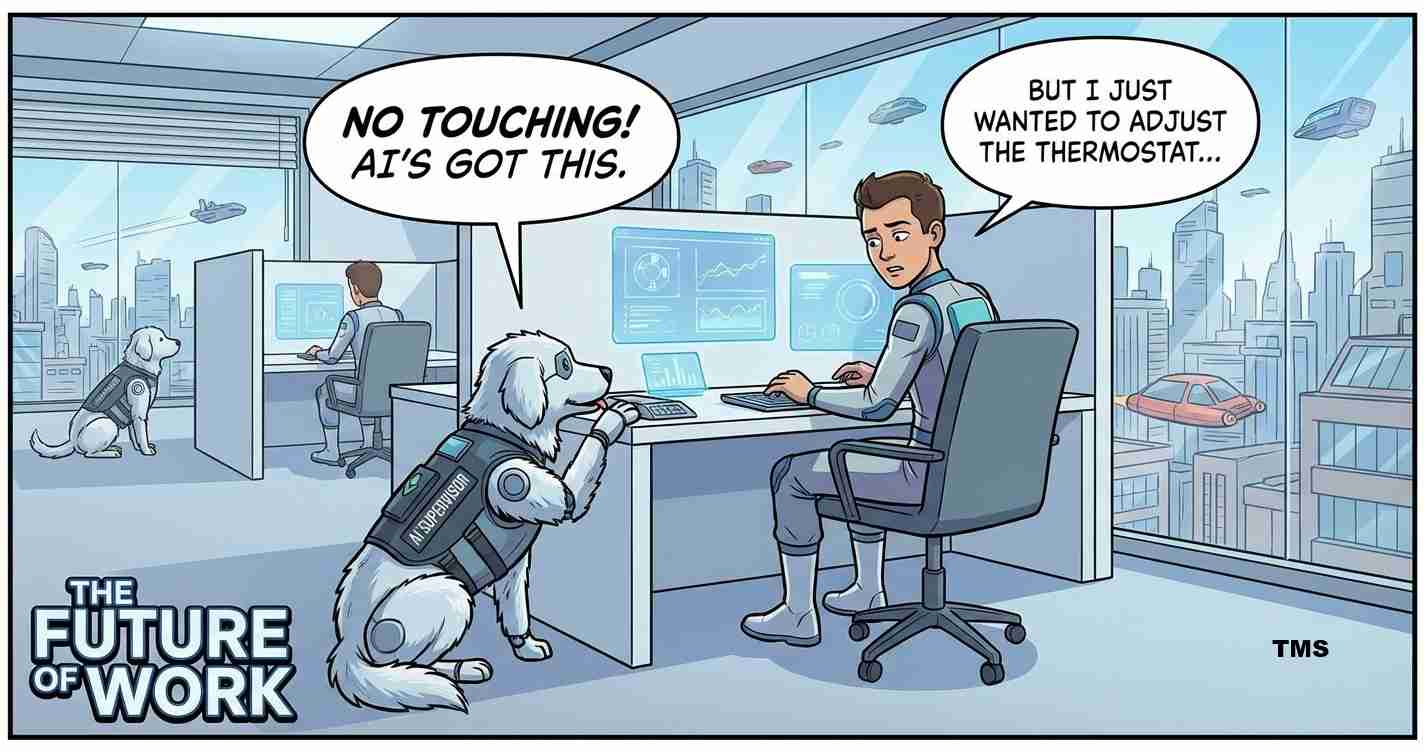
No, AI won’t ruin your life — it could reshape work and even make a 4-day week possible
Andrew Yang warns AI could eliminate 30–40 million U.S. jobs within a decade and advocates a $1,000 monthly universal basic income, funded by taxes on profitable AI firms, to give workers breathing room to retrain and communities time to adapt.
- Yang warns AI could displace 30–40 million U.S. jobs over the next decade and proposes a $1,000 monthly Freedom Dividend, paid by taxing AI firms.
- Automation is already reshaping work: companies cite efficiency drives and AI when announcing layoffs and automation plans.
- Experts disagree: estimates vary from modest, transitory shifts to very large-scale automation; timing and policy choices matter.
- Productivity gains could shorten workweeks: a four-day week is feasible if gains are widely shared through policy, bargaining, or corporate choice.
What Andrew Yang is saying about AI and jobs
Andrew Yang made automation and the future of work central to his 2020 campaign and has continued to emphasize the issue. He says roughly 44% of U.S. employment is in repetitive manual and cognitive roles; if machines replace half of those jobs, he argues the country could lose 30–40 million positions in about ten years — a level of displacement he calls “devastating.” Yang cites coverage and commentary in Business Insider, his own Andrew Yang blog, and public talks and interviews on YouTube.
“If machines replace even half of those roles, America could lose 30–40 million jobs in the next 10 years.”
Early targets: driving, delivery and compressed knowledge work
Yang often highlights driving and delivery as early examples of displacement: self-driving technology could affect large numbers of drivers and delivery workers, producing severe local strain. He also notes AI can compress timelines — tasks that once took hours can now be done in minutes — accelerating disruption in knowledge work.
Concrete examples of automation in industry
To illustrate speed and scale, Yang points to corporate actions: Amazon’s public plans to automate much of warehouse operations and statements from firms like Salesforce, Walmart, HP and IBM linking some layoffs to efficiency drives tied to automation or AI. These moves, he argues, show companies will replace routine roles when technology cuts costs (see reporting by Business Insider and remarks on his YouTube appearances).
What independent studies say
Scholars and institutions offer mixed estimates:
- MIT “Iceberg Index” summary: AI can now perform skills across about 11.7% of the U.S. labor market, affecting roughly $1.2 trillion in wages.
- IMF (2024): large shares of jobs in advanced economies may be affected, with many experiencing negative impacts.
- McKinsey: more than half of U.S. work hours could be automatable to some degree by 2030.
- Goldman Sachs: projects a smaller direct displacement (around 6–7%), and some analysts argue much change could be transitory as new jobs emerge.
The bottom line: AI will reshape work, but the scale and timing remain uncertain and depend on corporate choices, regulation, and retraining.
Proposed fixes: universal basic income and an AI tax
Yang’s signature policy is the Freedom Dividend: $1,000 monthly for every adult American with no conditions. He argues this provides breathing room for people to retrain, care for family, or pursue entrepreneurship. To fund it he proposes a compute or token tax on AI companies, saying tech firms extract substantial value from public data and should help bear the social costs of automation (see his The Future of Work blog).
Yang stresses that money alone won’t fix social dislocation: people need purpose, community, and civic ties. He pairs financial proposals with calls for stronger job training, portable benefits, and civic investment.
Counterpoints: new jobs, temporary disruption, and choices
Not all experts foresee catastrophe. Historical technology waves eliminated some work but created others and raised productivity. AI could spawn new industries, higher-value roles, and more leisure — especially if gains are shared. Estimates diverge (from modest, possibly temporary shifts to large-scale change), so policy and bargaining will shape outcomes.
On the four-day workweek: productivity gains from AI could make a shorter workweek feasible, but only if regulators, companies, and labor prioritize worker time and compensation instead of pure cost-cutting. Yang argues social choices — not technological inevitability — will decide whether workers enjoy shorter weeks or deeper unemployment.
Policy debates now: regulation, taxes, and retraining
Yang and allies call for new rules: taxing AI firms, stronger labor protections, and public investment in retraining and community services. Policymakers must balance how to tax and regulate AI without unduly stifling innovation that could spur growth. Business-friendly advocates favor incentives for firms that retrain workers; moderates may prefer targeted safety nets and workforce programs that preserve work incentives and community stability.
Implications for California
Economic impact: California leads in AI development and cloud computing, creating both growth potential and concentrated risk. If AI displaces routine tech support, logistics, or retail roles, local disruption could be acute. Policymakers might consider targeted tax credits or incentives for companies that retrain California workers and use tax revenue to fund state retraining programs.
Political consequences: Debates over an AI tax or UBI will be heated in a state where tech firms wield political influence. Moderate conservatives in California may favor targeted supports — retraining, portable benefits, temporary wage supports — rather than an unconditional national UBI.
Social and cultural effects: communities reliant on service, logistics, and retail could see sharper economic stress. Investments that preserve nonprofits, vocational centers, and community colleges will be crucial to keep displaced workers engaged and secure.
Practical applications for residents and employers
- Workers: upskill in areas needing human judgment, social skills, or oversight (healthcare, AI governance, advanced manufacturing, cloud operations).
- Employers: pilot reduced-hour schedules if productivity gains are shared; invest in employer-aligned certificates and retraining.
- Local governments: partner with community colleges to expand short certificates; fund training through voluntary contributions, federal grants, or targeted state taxes on compute-heavy operations.