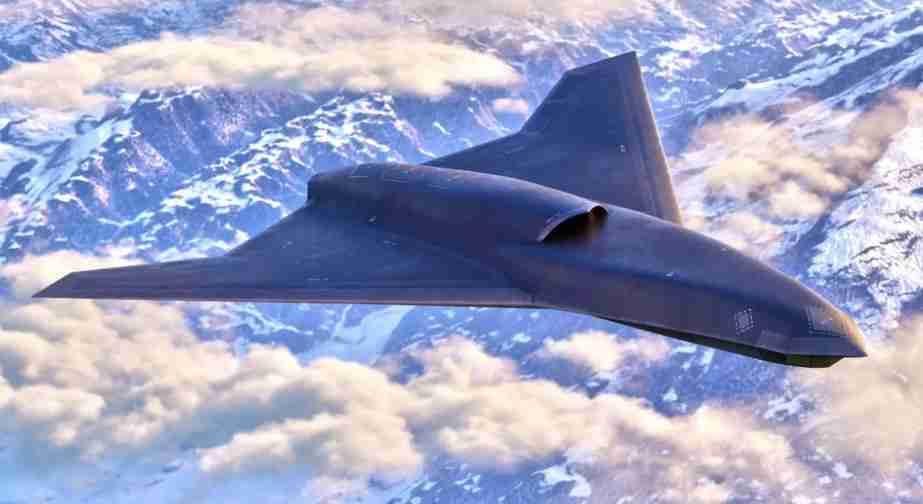
Lockheed’s Skunk Works unveils Vectis — a stealth combat drone built to be an autonomous “wingman” for F-22s and F-35s
Lockheed Martin’s Skunk Works unveiled Vectis, a stealthy, modular unmanned combat aircraft designed as an AI-driven “loyal wingman” for F-22s, F-35s and allied fighters, with flight tests targeted within roughly two years.
Key takeaways
- Vectis is a Group 5 UAS—tailless lambda-wing stealth airframe for ISR, precision strike, EW and counter-air roles.
- AI-enabled autonomy allows loyal-wingman teaming with fifth-generation fighters and independent operations in contested airspace.
- Lockheed expects flight demonstrations within ~two years; the platform is modular, networked, and pitched as “affordable” and scalable.
- Several details (engine, full performance, unit cost) remain undisclosed; Vectis is a candidate for Collaborative Combat Aircraft efforts.
What Lockheed announced
Lockheed Martin’s Skunk Works publicly revealed Vectis, describing it as a stealthy, modular unmanned combat aircraft that integrates Skunk Works experience in stealth, fighters, autonomy and systems integration. The company framed the program as a “culmination” of prior work and touted “best in CCA class survivability”. See the Lockheed Martin news release for the company’s official materials and claims.
Design and capabilities
The Vectis airframe uses a tailless lambda wing with stealth shaping, chine lines and blended antennas to reduce radar cross section while permitting multiple internal bays and mission modules. Lockheed showcased renderings and technical descriptions in public materials and a briefing video; the design briefing illustrates the platform concept and layout.
The platform is explicitly modular: mission kits can be swapped to configure Vectis for ISR, precision strike, electronic warfare, air-to-air combat, or decoy/attrition roles. Skunk Works emphasized common core systems to allow the same airframe to support different missions and partners (coverage in Air & Space Forces and Axios).
Autonomy and teaming
A major emphasis for Vectis is AI-driven autonomy. Lockheed describes the system as capable of operating as a “loyal wingman,” sharing sensor data in real time, acting on commander direction, and operating either independently or under human oversight. Company materials and reporters say the autonomy is intended to enable complex tasking in high-threat environments while reducing risk to manned pilots (company release; Axios).
Compatibility with F-22 and F-35
Lockheed repeatedly tied Vectis to fifth-generation fighters. The company positions the drone as a force multiplier for F-22 Raptors and F-35 Lightning IIs, extending reach and supplying complementary sensors, decoys and weapons options. Reporting frames the platform as intended for networked operations with U.S. and allied assets rather than as a standalone system (Axios; Air & Space Forces).
Program context and strategy
Vectis is not yet tied to a specific U.S. Air Force contract, though industry observers view it as a candidate for the Air Force’s Collaborative Combat Aircraft (CCA) effort—particularly Increment 2 focused on unmanned systems teaming with manned fighters. Skunk Works’ choice to reveal Vectis publicly, ahead of a major defense conference, signals Lockheed’s intent to compete in the growing autonomous combat aircraft market (Air & Space Forces; Axios).
Open questions and limits
Several important details were omitted in the public reveal. Lockheed has not named the engine or provided full performance figures; officials indicated Vectis is expected to operate with fifth-generation fighters but is not expected to be supersonic. Unit cost was not released—Lockheed called the design “affordable” and scalable but did not provide a per-aircraft price. Such omissions are common in early, pre-contract demonstrations (Air & Space Forces; Fox Business).
Deployment timeline
Lockheed said it expects Vectis to be flying within about two years of the 2025 reveal, an aggressive demonstration timeline intended to position the aircraft for near-term Defense Department and allied consideration. The company highlighted modular production and rapid integration as selling points if formal programs proceed (company release; Air & Space Forces).
Where Vectis fits strategically
Lockheed frames Vectis as a response to evolving threats across theaters—Indo-Pacific, Europe and the Middle East—where survivable, networked unmanned systems can add sensors, decoys and strike options while reducing risk to human pilots. Industry analysts see Vectis as part of a broader competition to shape next-generation air combat using autonomous, lower-cost partners for high-end fighters (Axios).
Implications for California
Vectis development and potential production centered in Southern California—near Skunk Works’ Palmdale operations—could drive local economic activity. Potential impacts include:
- Economic impact: work for factories, avionics shops and software firms supporting autonomy and sensors; multi-year contracts if Lockheed wins DoD programs.
- Jobs and skills: increased demand for systems engineers, software developers, avionics technicians and composite specialists; opportunities for training partnerships with California colleges.
- Fiscal and procurement scrutiny: conservative constituencies will want clear cost estimates and performance metrics before supporting major spending.
- Politics and oversight: local officials may tout job creation while raising questions on export controls, base security and oversight.
- Community effects: more flight tests could mean added noise, environmental and housing pressures near test ranges and facilities.
Sources and reporting
Primary coverage and reporting on Vectis includes Axios, Air & Space Forces, Fox Business, the Lockheed Martin news release, and a Skunk Works briefing video.
Reporting note
This article draws on Lockheed Martin’s public materials and independent reporting from the sources listed above. It preserves original facts and links to primary coverage for readers to inspect primary materials.