
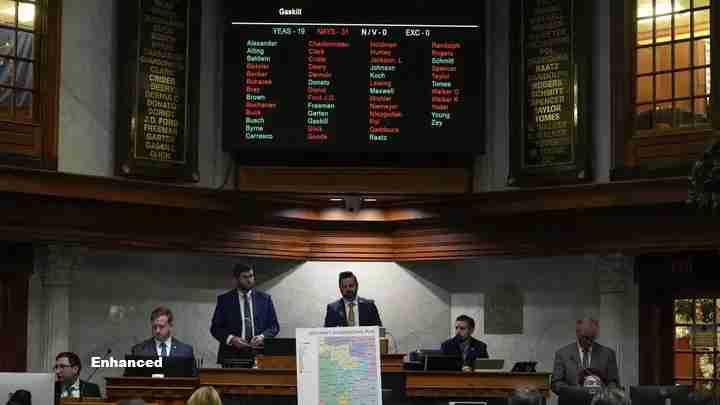
Indiana Senate Rejects Trump-Backed Map in Bipartisan Rebuke, Blocking Plan to Add Two GOP U.S. House Seats
Indiana senators delivered a bipartisan rebuke Tuesday, rejecting a congressional map backed by former President Donald Trump that sought to add two GOP U.S. House seats by redrawing district lines ahead of the 2026 elections.
- Vote outcome: Senate defeated House Bill 1032 by 31–19, with 21 Republicans joining 10 Democrats to kill the map.
- What it would have done: The proposal aimed to redraw nine districts to create two safer GOP seats by splitting Democratic-leaning Indianapolis and northwest Indiana districts.
- Procedural constraint: Because the vote took place during an early regular session, leaders say the map cannot be reintroduced this session.
- Political fallout: The outcome signaled intraparty independence and set the stage for likely primary fights from pro-Trump groups.
Overview
In a significant public defeat for former President Donald Trump, the Indiana Senate voted to reject House Bill 1032, a redistricting plan backed by Trump and national conservative groups. The bipartisan opposition — including 21 GOP senators — stopped a plan that supporters said would bolster Republican prospects for the U.S. House in 2026. (Sources: Axios, ABC News, YouTube.)
How the vote unfolded
Lawmakers held a high-stakes floor vote after the plan had cleared the Indiana House with limited resistance. In the Senate, the map failed 31–19. The margin reflected a cross-party coalition that surprised observers in Indianapolis and Washington, underscoring local concerns over national strategy. (Sources: Axios, ABC News, YouTube.)
What the rejected map would have done
The bill proposed to redraw Indiana’s nine congressional districts by “cracking” Democratic strongholds. Indianapolis-based and northwest Indiana seats would have been split and paired with heavily Republican rural and exurban areas. Analysts warned it likely would have turned a current 7–2 GOP advantage into something nearer a 9–0 scenario, or at minimum created two much safer Republican seats ahead of 2026.
“Supporters framed the plan as a chance to boost the national GOP’s House prospects.”
Trump’s pressure campaign and national stakes
For months, Trump publicly urged Indiana Republicans to back the map, praising supporters and warning detractors of political consequences. National GOP redistricting groups argued the plan was central to shoring up House seats. After the Senate defeat, Trump and allied organizations pledged investment in primary challenges against Republicans who opposed the measure. (Sources: Axios, ABC News.)
Why many Republicans voted no
Reporting and floor debate revealed several recurring themes behind GOP opposition:
- Community and identity: Senators argued their districts would be absorbed into metro-centered districts that don’t reflect local values or needs. (Source: Axios.)
- Process and precedent: Critics objected to an aggressive, last-minute redrawing not tied to the normal census cycle and viewed the rush skeptically. (Source: Axios.)
- Legal and electoral risk: Some feared that an overt partisan gerrymander would invite litigation and voter backlash, harming long-term GOP prospects. (Sources: Axios, ABC News.)
- Independence from national pressure: The vote signaled a preference among many Republicans to prioritize local judgment over directives from national figures. (Source: Axios.)
Key players and political lines
Senate President Pro Tem Rodric Bray (R–Martinsville) initially resisted a vote, saying the caucus lacked the votes. Under pressure he allowed the floor vote and opposed the map, saying, “We’ll vote and answer the question.” After the defeat he said, “We finally have a resolution now,” noting disagreement over method despite shared goals. (Source: Axios.)
Governor Mike Braun strongly backed the map, criticized Republicans who voted with Democrats, said he was “very disappointed,” and warned of political consequences and primary challenges. (Sources: Axios, ABC News.)
Sen. Greg Goode (R–Terre Haute) said he voted no because constituents opposed being merged into an Indianapolis-dominated district — emphasizing local views over national strategy. (Source: Axios.)
What this means for the Indiana 2026 elections
With the proposed map defeated, Indiana will use its current congressional districts for the 2026 elections. That preserves the existing balance of seats and denies national Republicans the two additional likely GOP pickups they sought. Parties and candidates must now plan under current lines rather than the proposed redraw, tightening the national GOP’s hoped-for margin in the House fight. (Sources: YouTube, ABC News, Axios.)
What happens next in the legislature and politics
Senate leaders say the map cannot be revisited this session because the vote occurred during an early regular session rather than a special session, leaving no simple path to revive the proposal before 2026. Pro-Trump groups and state leaders have signaled they will pursue primary challenges against GOP senators who opposed the measure, suggesting intense intra-party fights in 2026 centered on loyalty to Trump versus local control and institutional norms. (Source: Axios.)
National significance
The episode is being watched as a test of Trump’s influence over state legislatures. It demonstrates that personal pressure from a former president and national groups can be resisted when local concerns or procedural worries are strong. Strategists note losing two potential pickups from Indiana narrows the national GOP’s cushion for winning or maintaining a House majority in 2026. (Sources: Axios, ABC News.)
Implications for California
Though the battle occurred in Indiana, California political leaders and strategists will watch closely:
- Electoral arithmetic: Indiana’s rejection reduces the number of likely GOP pickups, which may slightly shift national targeting and competitiveness for House seats.
- Fundraising and targeting: National Republicans may redirect resources to other battlegrounds, potentially increasing pressure in California’s competitive districts.
- Primary dynamics: California Republicans may face similar choices between local priorities and alignment with national figures, with moderate conservatives warned about risks of overtly partisan redistricting.
- Legal and civic lessons: The episode underscores that aggressive partisan maps can trigger legal challenges and voter backlash — insights useful to California advocacy and legal strategy.
Further reporting and analysis
The rejected plan raises broader questions about how far national leaders can push state lawmakers and how local concerns will shape 2026 election maps. A follow-up could map proposed changes district-by-district and analyze partisan and demographic shifts under the defeated proposal for readers seeking deeper technical detail. (Sources: Axios, ABC News, YouTube.)
Sources
Reporting and details for this article are drawn from:


