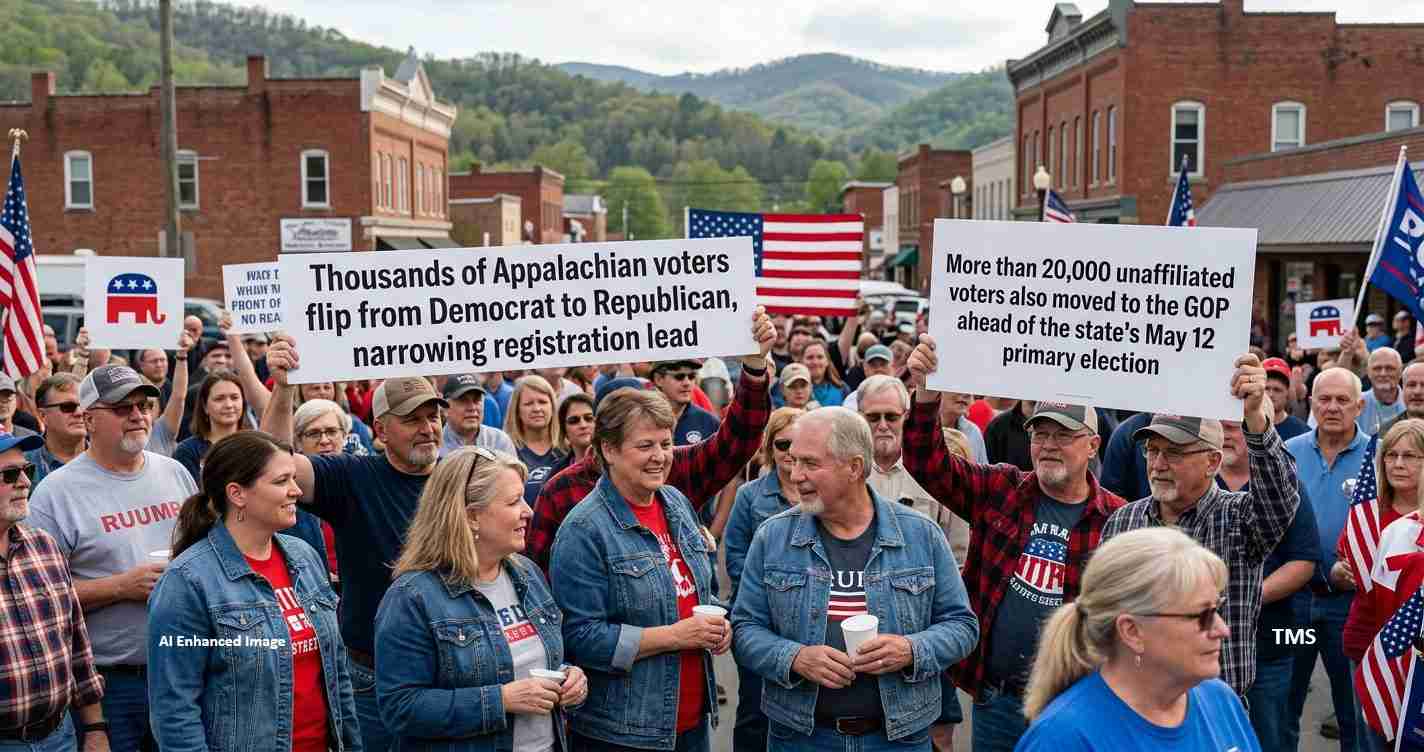
Wave of party switching in West Virginia reshapes politics as tens of thousands change affiliation ahead of primary
West Virginia saw a surge of party switching: 68,235 voters changed affiliation since Jan. 31, 2024, reshaping registration ahead of the May 12 primary as thousands move between Democratic, Republican, and unaffiliated statuses in a rapid realignment.
- 68,235 voters changed party affiliation since Jan. 31, 2024 (Source: Fox News: Thousands of Appalachian voters flip party affiliation in recent months).
- 16,910 moved from Democrat to Republican; 20,003 unaffiliated registered as Republican; 12,299 Democrats became unaffiliated (Source: Fox News).
- As of April 23: 519,756 Republicans, 327,089 Democrats, 301,933 independents — Democrats and independents combined still outnumber Republicans (Source: Fox News).
- More than 1.19 million registered voters eligible for the May 12 primary; rolls to be finalized by April 28 (Source: Fox News).
What the data shows
Secretary of State Kris Warner’s office released records documenting 68,235 party-affiliation changes since Jan. 31, 2024. The largest inflows into the Republican column were 16,910 from Democrats and 20,003 from unaffiliated voters. Simultaneously, 12,299 Democrats and 7,559 Republicans moved to no party preference. Smaller flows included 5,211 unaffiliated registering as Democrats and 2,399 switching from Republican to Democrat (Source: Fox News).
Raw registration totals still show a Republican edge — roughly 520,000 Republicans versus 327,000 Democrats and 302,000 independents — but combined Democrats and independents exceed Republicans by about 100,000, underscoring that registration shifts do not automatically determine outcomes (Source: Fox News).
Why voters are switching: closed primaries and other motivations
Party leaders and operatives point to several drivers:
- Closed primary mechanics: Del. Josh Holstein, state GOP chair, links the uptick to West Virginia’s closed primary system, saying many voters registered Republican to participate in competitive GOP primaries.
“This huge uptick in the last couple of months is certainly tied to the primary being closed,” Holstein said. “So I think it’s why a lot of those folks said, ‘Hey, I’ll just register Republican.’”
(Source reporting quote: Fox News).
- Departures from party labels: Del. Mike Pushkin, state Democratic chair, emphasized a broader reshuffle and noted thousands leaving party labels entirely:
“While Republicans have gained some voters, they are also losing thousands to ‘No Party,’ and many voters who re-engage are continuing to choose Democrats.”
(Source reporting quote: Fox News).
- Short-term incentives: The clustering of registration changes near the April 28 roll-finalization date and before early voting suggests many voters reacted to the immediate ability to influence a closed primary’s outcome rather than long-term party realignment.
Legislative response and longer-term rules
State lawmakers have considered measures to curb opportunistic candidate switches. In February 2026 the West Virginia House passed House Bill 4710 by a 79-13 vote. The bill would:
- Extend required party affiliation for candidates from 60 to 180 days before filing (effective Jan. 1, 2027).
- Require electronic verification by filing officers and create a complaint process that could remove candidacies after filing if violations are found.
- Supporters say it deters opportunistic candidacies timed to short voter shifts; critics warn it could restrict legitimate changes of affiliation (Source: The News & Sentinel: West Virginia House passes bill changing deadline for candidates to switch political parties).
Context: an evolving West Virginia electorate
Although West Virginia has trended Republican in recent decades, the recent 68,000+ registration changes over two years show volatility in labels and engagement. Analysts caution registration totals are a piece of a larger puzzle that includes turnout, candidate quality, and local issues (Source: News From The States: More than 68K West Virginians change political parties over last 2 years, SOS office says).
Reporting and transparency
Officials released aggregated numbers, but experts recommend more granular analysis: county-level shifts, age and demographic breakdowns, and turnout among newly registered voters. Voter rolls were to be finalized by April 28, with early in-person voting from April 29 through May 9 (Source: Fox News).
Implications for California
Practical lessons for California:
- Resource allocation: National shifts can change where parties deploy advertising and staff, indirectly affecting California fundraising and campaign focus.
- Primary rules matter: West Virginia’s closed-primary behavior offers a cautionary example for states weighing closed vs. open/top-two systems; California’s top-two and largely open presidential practices produce different incentives.
- Outreach to unaffiliated voters: The rise in independents stresses issue-focused messaging and targeted registration drives timed to roll-finalization deadlines.
- Cultural and local context: Regional issues drive much of voter behavior; California operatives should prioritize local concerns like jobs, schools, and public safety to reach moderates and independents.
Conclusion
West Virginia’s recent wave of party switching demonstrates how primary rules and short-term incentives can reshape registration quickly. While Republicans gained numerically, the combined strength of Democrats and independents remains significant. The upcoming May 12 primary and subsequent turnout will determine how lasting these shifts prove to be.
Sources
- Fox News: Thousands of Appalachian voters flip party affiliation in recent months
- News From The States: More than 68K West Virginians change political parties over last 2 years, SOS office says
- The News & Sentinel: West Virginia House passes bill changing deadline for candidates to switch political parties