Turin protest clashes after Askatasuna eviction leave 108 officers hurt; Meloni vows tough response
Violent clashes erupted in Turin’s Vanchiglia neighborhood on January 31, 2026, after authorities evicted the Askatasuna social center, leaving 108 security personnel injured and prompting Prime Minister Giorgia Meloni to promise a hard-line government response.
Key takeaways
- Casualties and arrests: Authorities reported 108 security personnel injured (96 police, seven Guardia di Finanza, five carabinieri) with at least 29 hospitalized and at least three arrests — per Anadolu Agency and on-scene video.
- Crowd size dispute: Police estimated about 15,000 at the march while organizers claimed up to 50,000 — reported by Anadolu Agency and Freedom News.
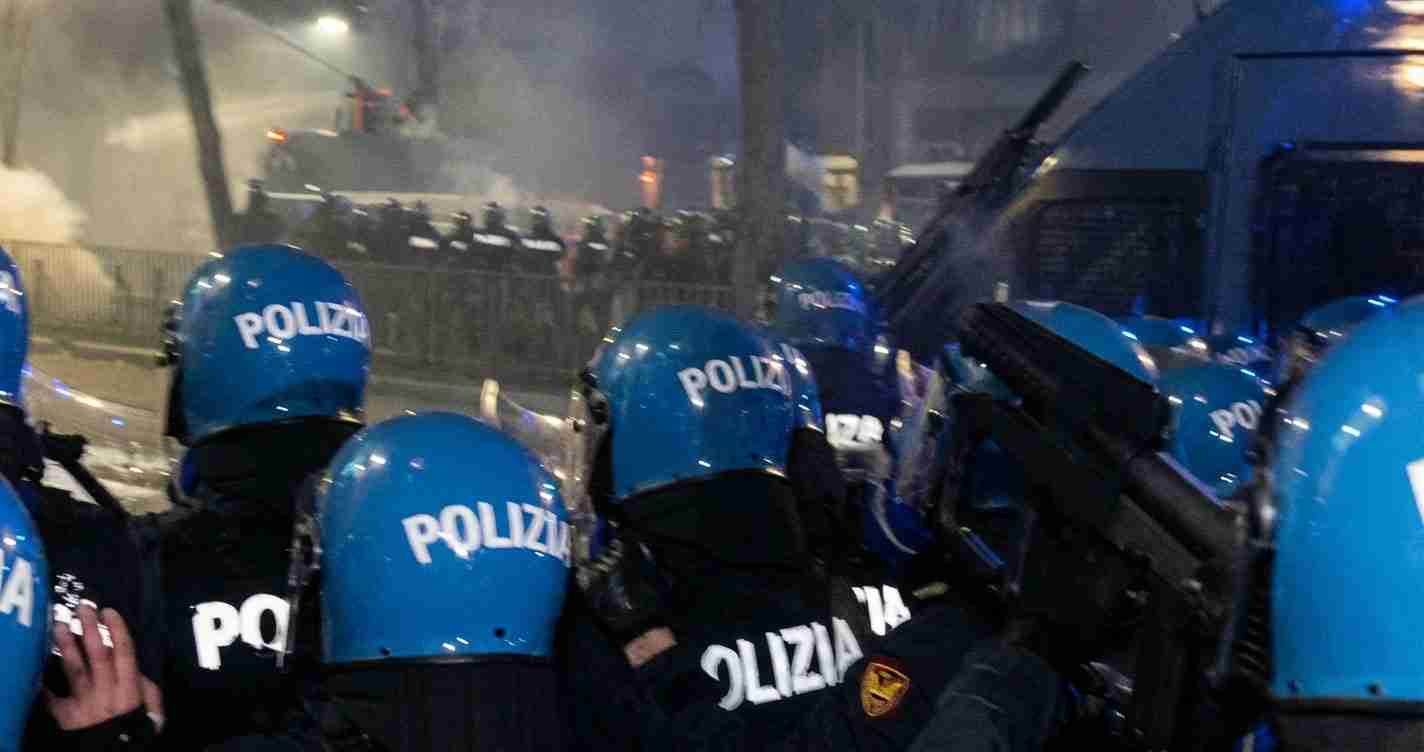
- Violent tactics described: Officials said protesters used bottles, stones, fireworks, Molotovs and improvised projectiles; police used tear gas and water cannon to respond (video and media reports).
- Government reaction: Prime Minister Giorgia Meloni condemned the violence — calling some acts “attempted murder” — and called a government meeting to consider tougher security measures.
What happened at the Turin protest
The demonstration began as a march in support of Askatasuna, a longstanding social center evicted by authorities after decades of occupation by far-left activists. Organizers said the eviction and raid drew union members, activists and public figures; police gave lower turnout figures. Reporting was provided by Anadolu Agency and Freedom News.
After nightfall, masked groups reportedly split from the main march. On-scene footage and eyewitness videos show black-clad individuals — described by officials as anarchists and hardcore far-left activists — confronting police lines, throwing objects, and using red smoke to obscure movements. See the posted footage referenced as on-scene video.
Weapons and tactics used
Italian authorities and media accounts detailed a wide range of improvised and incendiary devices used against security forces:
- Bottles, stones and fireworks
- Homemade incendiary devices, including Molotov cocktails
- Smoke bombs, nails hidden in paper devices, hammers and catapults
- Improvised projectiles from street furniture and uprooted lampposts; rubbish bins set alight and a reported torched police armored vehicle
Police said one officer was surrounded, beaten and hospitalized with head injuries. Officers used tear gas, water cannons and physical charges to try to clear the most violent groups (reports and video cited by media).
Government and political response
Prime Minister Giorgia Meloni visited injured officers at Le Molinette hospital and posted on X that weapons — including hammers and Molotovs — were used, quoting an officer saying,
“They were there to kill us.”
Meloni labeled parts of the violence as “attempted murder” and called a government meeting for February 2 to review public-order threats and consider measures such as expanding preventive detention powers for police, according to Anadolu Agency.
Interior Minister Matteo Piantedosi called the attackers a “danger to democracy,” accusing parts of the left of shielding violent elements. Deputy Prime Minister Matteo Salvini labeled the rioters “terrorists” and demanded quick arrests and further evictions. Carabinieri commander Lt. Gen. Salvatore Luongo described the events as an “attack on the state.” The ruling coalition is pushing for a new security package in response (reporting via Anadolu Agency).
Arrests and investigations
Authorities reported at least three arrests connected to the worst violence, including a suspect accused of the assault on the officer who was beaten. Prosecutors and police said investigations and searches were underway to identify organizers and violent participants; charges could range from public-order offenses and violent assault to potential terrorism-related charges depending on evidence (Anadolu Agency).
Context and expert views
Askatasuna had been occupied for nearly 30 years, functioning as a hub for social-center activity and political organizing. The eviction challenged a network of occupied spaces — seen by some as community centers and by others as illegal strongholds for extremist activity. Reports and footage outline that tension (on-scene video, Anadolu Agency).
Experts in extremism studies note Turin’s history as a staging ground for militant left-wing groups and links to broader European anarchist networks. Dr. Lorenzo Vidino (Director, Program on Extremism Studies, George Washington University) has highlighted connections between these groups and wider protest movements, including pro-Palestinian and Antifa-style networks. Analysts say the eviction likely catalyzed diverse fringe groups willing to use violence (Fox News).
At the same time, left-leaning outlets and organizers argued the march defended community spaces and criticized heavy-handed eviction tactics, reflecting Italy’s polarized debate over civil liberties and policing (Peoples Dispatch).
Implications for California
Although a single event in Turin is unlikely to disrupt global supply chains, the clashes have several lessons for California policymakers and the public:
- Economic and travel ties: High-profile unrest can dent tourist confidence and briefly affect travel plans — relevant to California’s tourism and hospitality sectors.
- Public safety and policing policy: The events raise familiar trade-offs between civil liberties and public order; officials may study crowd-control training and nonlethal tool use.
- Political messaging: For moderate conservative audiences, Turin’s response — calls for tougher detention powers and evictions — may underscore priorities of order and rule of law, while raising concerns about overreach.
- Community relations: The long history of social centers shows the need for mediation and legal pathways to avoid violent escalations during evictions.
- Law enforcement cooperation: The clashes highlight the importance of intelligence-sharing and tactics to isolate violent actors without undermining lawful protest activity.
Sources
Full reporting and footage referenced in this article:
- Anadolu Agency — “Italian government to meet after clashes in Turin injure over 100 officers”
- Fox News — “Italy rocked by anarchist-led riots over 100 police injured; Meloni condemns violence”
- On-scene video coverage (posted footage)
- Freedom News — “Turin: 50,000 protest Askatasuna eviction”
- Peoples Dispatch — “Partisan Turin rises against militarization and repression”