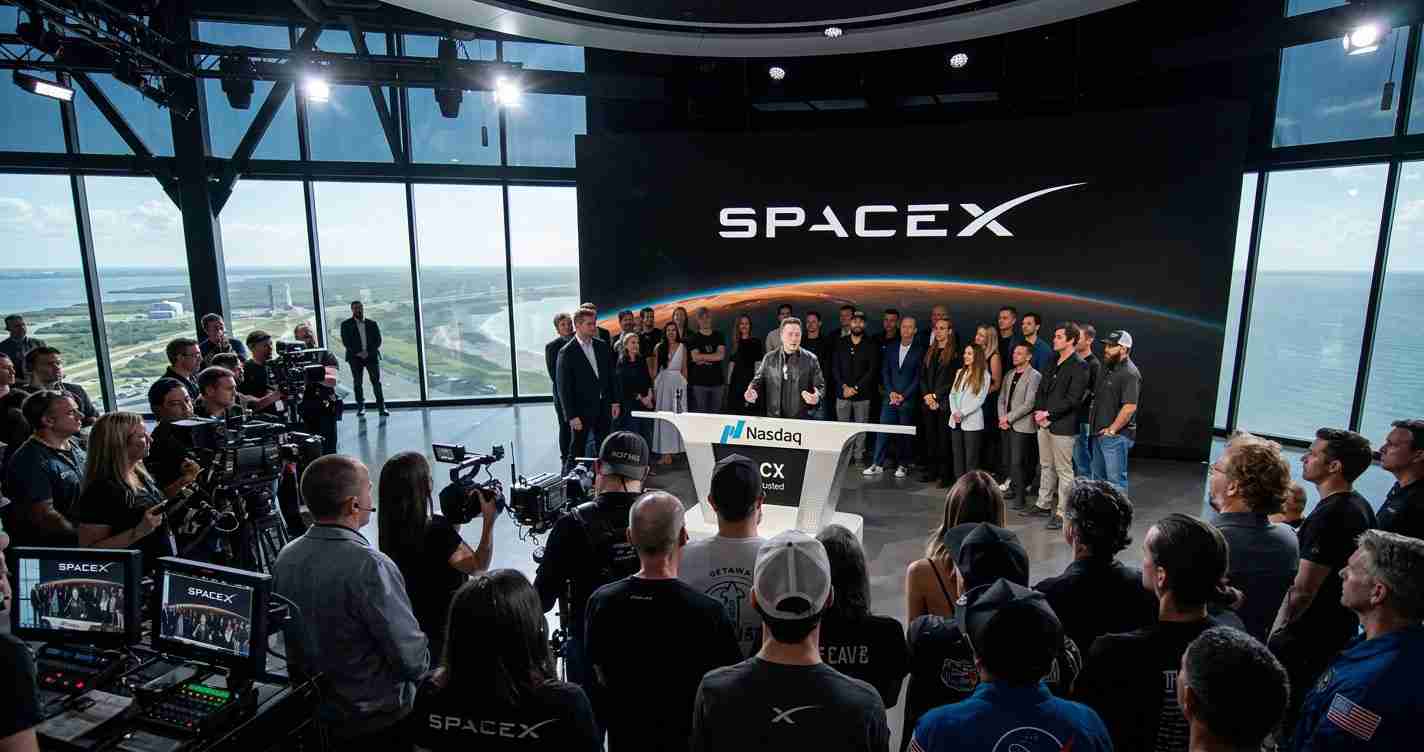
NEW YORK, June 13 (Our New York News) — SpaceX’s first day as a public company turned Elon Musk’s long-private rocket and satellite business into one of the largest companies in U.S. markets, while also exposing a wide gap between public-market pricing and at least one independent valuation.
SpaceX began trading on Nasdaq on June 12 under the ticker SPCX. The company priced its initial public offering at $135 a share and raised $75 billion, according to offering terms attributed to SpaceX and reflected in the market debut. Nasdaq trading data showed the stock opened around $150, climbed as high as about $176.50 during the session and closed near $161.
Those trading records imply that investors valued SpaceX at more than $2 trillion by the close of its first day. The IPO price had put the company’s value at about $1.77 trillion to $1.8 trillion, based on the offering terms reported before trading began.
The financial impact was immediate for Musk, SpaceX’s founder and a major shareholder. Forbes and Bloomberg wealth calculations placed Musk’s total net worth at roughly $1.05 trillion to $1.11 trillion after the debut, making him the first person whose estimated wealth crossed $1 trillion. Those estimates are not cash holdings. They are largely tied to shares and options whose value can move with the market price.
Musk’s SpaceX stake alone was estimated at roughly $688 billion at the IPO price and about $690 billion in one market calculation. Other estimates rose to about $766 billion to $800 billion when using higher first-day trading prices or when including options. The range shows how sensitive the figures are to the stock price used and to assumptions about Musk’s holdings.
For new public investors, the first day created a different result. Anyone who bought at the open paid about $15 more per share than the IPO price. Anyone who bought near the intraday high paid about $41.50 more than the IPO price and about $15.50 more than the closing price. The records show a strong debut, but also a wide first-day trading range.
The valuation was not accepted by all analysts. Morningstar analysts, described in AP and PBS accounts as independent of investment-banking fees, estimated SpaceX’s value at about $780 billion. They called the IPO “significantly overvalued.” That estimate was less than half the company’s IPO valuation and far below the market value implied by the first-day close.
The available source material reviewed for this article did not include the full prospectus, audited financial statements or an official share-count filing. That limits what can be confirmed about SpaceX’s exact post-IPO ownership structure, voting rights and financial history. Several accounts described a dual-class or special share structure that left Musk with outsized control, but the reported ownership and voting figures conflicted. Without the underlying filing, those percentages could not be independently reconciled.
SpaceX was established in 2002. Musk said the company was going public now to fund plans for satellites and data centers in space and, ultimately, a human settlement on Mars, according to AP’s account of his statement. The records reviewed do not show how the $75 billion in IPO proceeds will be divided among those plans, operations, workers, suppliers or specific communities.
The New York market debut also moved SpaceX from a private company backed by selected investors into a publicly traded company whose value is now set in daily trading on Nasdaq. That shift affects public investors who can now buy or sell SPCX shares, while also making Musk’s wealth estimate more visible and more exposed to stock-market swings.
The documented finding is clear: SpaceX’s completed Nasdaq debut raised $75 billion, pushed the company’s public valuation above $2 trillion on its first day and lifted major wealth-index estimates of Musk above $1 trillion. The unresolved question, based on the records available, is whether the public-market price can be supported by SpaceX’s underlying business value.