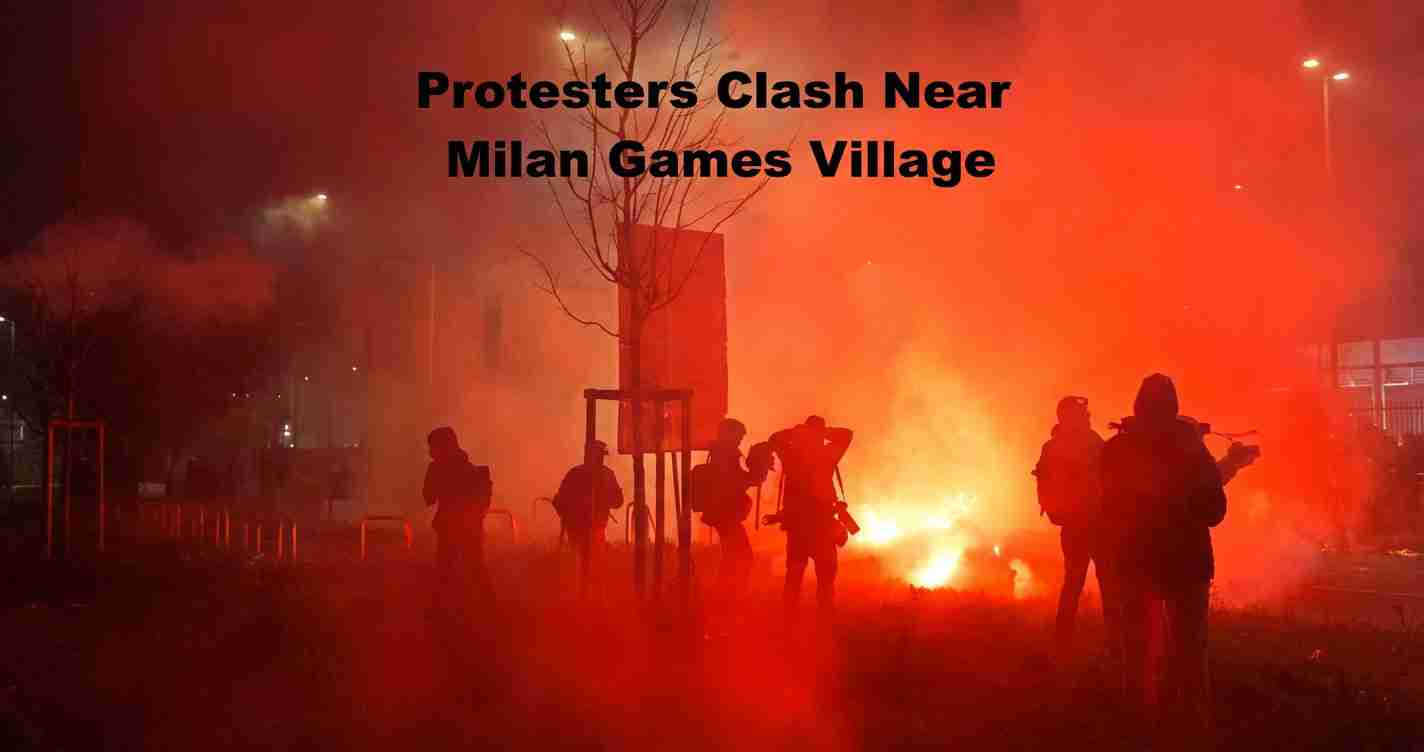
Clashes Near Santagiulia Ice Rink Turn Violent as Milan Olympics Protests Draw Thousands
Thousands marched in Milan on Feb. 7, 2026 against the Milan‑Cortina Winter Olympics over environmental, housing and security concerns; clashes near the Santagiulia Ice Hockey Arena saw masked agitators confront police as officers used tear gas and water cannons.
Key takeaways
- Up to 10,000 people joined a largely peaceful march organized by the Unsustainable Olympics Committee, including families, students and music trucks — documented in Euronews video and an ABC News wire.
- A breakaway group of roughly 100 masked agitators set off smoke bombs, flares and firecrackers near a bridge about half a mile from the Olympic Village; police responded with water cannons and tear gas (on-the-ground video).
- Authorities arrested at least five people; Global Guardian issued a travel alert warning of heightened security and disruptions documented in news dispatches (ABC News wire).
What happened
On the first full day of the Milan‑Cortina Winter Olympics a large march began in the Corvetto neighborhood. Organizers described the action as a protest against what they call the “unsustainable” costs and harms of the Games. The procession remained peaceful for hours before a smaller group moved toward a bridge and a nearby construction site about 800 meters from the Olympic Village.
Video and eyewitness accounts show masked protesters setting off smoke bombs, firecrackers and flares while some threw objects at riot police; officers in riot gear pushed forward and used water cannons and tear gas to clear the area. Authorities detained at least five people and said main athlete accommodations and event transfers were not affected (Euronews video, on-the-ground footage, ABC News wire).
Who organized the protests and why
The march was led by the Unsustainable Olympics Committee. The group argues the Games divert public funds to costly infrastructure projects while local needs go unmet. Specific complaints included deforestation for venues near Cortina, the expense of new arenas, and the use of public money instead of investment in community services like youth sports facilities (Euronews article).
Housing was a major theme: activists linked Olympic development to rising rents and displacement in Milan, citing post‑2016 World Expo property growth. Protest signs demanded policies prioritizing affordable housing and community needs (video, ABC News wire).
Anti‑ICE sentiment also featured prominently. Demonstrators criticized the presence of U.S. Immigration and Customs Enforcement personnel and broader U.S. law-enforcement roles; officials clarified that Homeland Security Investigations staff supported the U.S. delegation in diplomatic areas and were not conducting street-level immigration enforcement (ABC News wire).
Police response and security alerts
Italian police described the situation as largely controlled. Officers said a small violent subset attempted to reach a highway or bridge and provoked clashes. Video shows lines of officers advancing, retreating and deploying crowd‑control measures until the area cleared; several people were arrested for public‑order offenses (Euronews video, ABC News wire).
Global Guardian issued a travel alert advising people to expect heightened security and related disruptions in the area for several hours; the alert recommended bypass routes and warned travelers to avoid protests (ABC News wire).
Venue scrutiny: Santagiulia rink and construction issues
The clashes occurred steps from the Santagiulia Ice Hockey Arena, a new rink criticized locally for construction delays and questions about rink size. Critics say Santagiulia illustrates a broader problem: rushed or expensive Olympic construction that may not serve long‑term local needs and can strain public budgets (Euronews article).
Organizers and some officials defend the investments as necessary for hosting the Games and for leaving legacy sports facilities; protest leaders counter that legacy promises often fall short, warning short‑term prestige should not outweigh long‑term community welfare (video statements).
Voices from the street
Marchers included families and students who had been peaceful before clashes. Activists chanted and held banners reading “Let’s take back the cities and free the mountains”, and speakers accused authorities of prioritizing corporate and international interests over local residents (Euronews, on-the-ground footage).
“Olympic officials have bypassed local rules and risk leaving taxpayers on the hook for expensive projects,” said Guido Maffioli in footage reviewed by reporters.
Broader context
The demonstrations coincided with the Games’ opening on February 6, amplifying local grievances about public spending, housing and environmental impact. Activists have staged repeated rallies in recent months; organizers expected protests and planned security measures to protect venues and athlete movements (Euronews video, ABC News wire).
Implications for California
Economic impact: California businesses tied to tourism, hospitality and event services watch major international events for demand signals. Protests that disrupt travel or increase security costs can affect airline schedules, hotel bookings and corporate travel.
Political consequences: The Milan clashes underline how large events can trigger local backlash over public spending. California voters — particularly moderates focused on fiscal responsibility — may see parallels in debates about state and municipal investment strategies.
Social effects: Housing affordability concerns in Milan mirror issues in California; the episode reinforces calls for stricter oversight of public‑private development and policies to protect affordable housing.
Practical takeaways: Event planners and officials should prioritize security planning and community engagement, clarify the role and limits of foreign security assistance, and consider binding commitments to affordable housing and independent audits for major public projects.
Policy takeaway: The clashes show the risks when large projects advance without broad local buy‑in; California leaders weighing bids for major events should pair fiscal oversight with community safeguards to reduce protest‑related risks.
Sources and reporting
- Euronews video: Italian police fire tear gas as protesters clash near Winter Olympics venue
- Euronews article: Milan protesters rally against environmentally and economically unsustainable Winter Olympics
- ABC News wire: Italian police fire tear gas as protesters clash near Winter Olympics venue
- On-the-ground video footage
Reporting from Milan; Times Media Service