ICE, CBP seize about 400 firearms hidden in fake trailer walls at Laredo port of entry
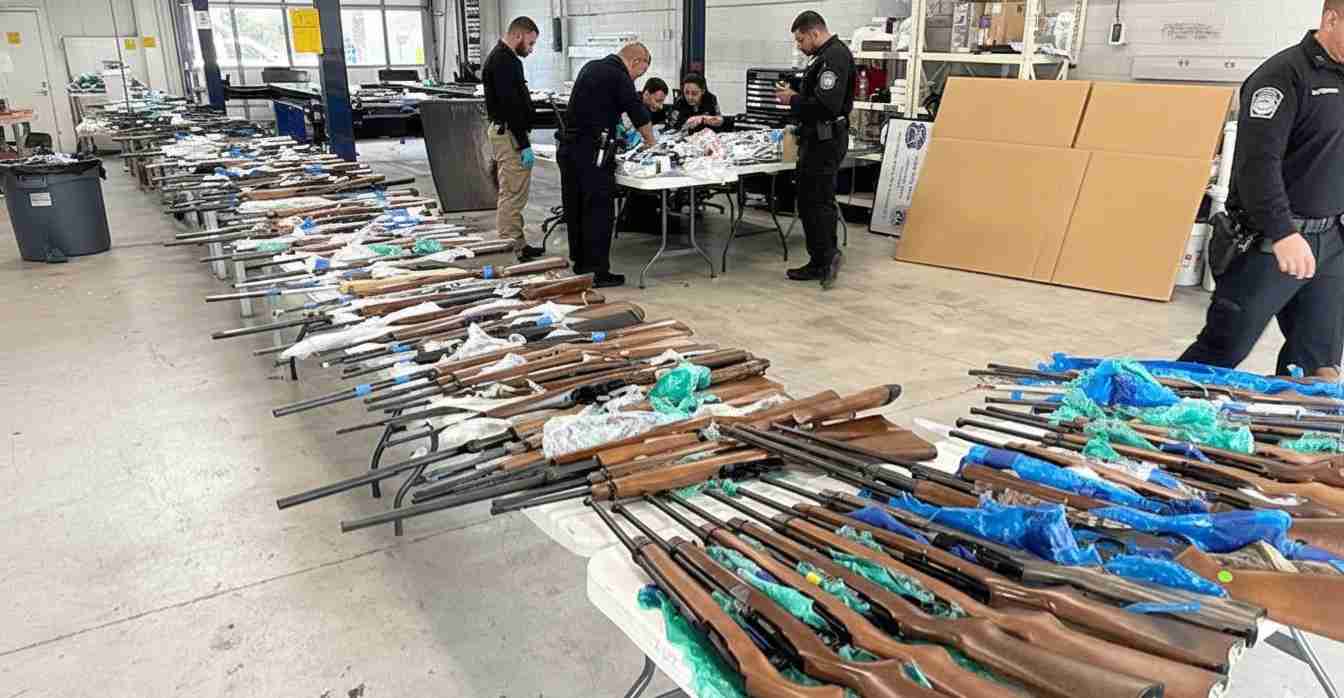
Federal authorities at Laredo Bridge 2 Port of Entry seized about 400 firearms, high-capacity magazines and thousands of rounds of ammunition hidden in false trailer walls on October 23, 2025, arresting a father and son in the smuggling probe.
- What happened: CBP officers discovered sophisticated false compartments in two box trailers containing roughly 400 firearms, magazines and ammunition. (Source: Fox News)
- Who was arrested: ICE HSI arrested Emilio Ramirez-Cortez and his son, Edgar Ramirez-Diaz; both face federal firearms smuggling charges and were turned over to the U.S. Marshals Service. (Source: Fox News)
- Why it matters: Authorities say the weapons were bound for Mexican drug cartels, reflecting a pattern that fuels cartel violence and threatens public safety. (Context: KSAT)
Discovery and seizure
CBP officers conducting routine southbound inspections at Laredo Bridge 2 noticed construction irregularities on two commercial box trailers that prompted a secondary inspection. That search revealed sophisticated false compartments built into the trailer walls.
Inside the concealed spaces agents found hundreds of firearms, high-capacity magazines and thousands of rounds of ammunition—items deliberately arranged to impede detection during routine checks at a major crossing used for commercial and private southbound traffic. (Source: Fox News)
The suspects and federal charges
ICE Homeland Security Investigations agents arrested Emilio Ramirez-Cortez (lawful permanent resident) and his son Edgar Ramirez-Diaz (U.S. citizen) at the scene after the weapons were discovered. Both men were charged with federal firearms smuggling offenses and transferred to the custody of the U.S. Marshals Service pending initial court appearances.
Officials warned the investigation remains active and additional charges or defendants may be identified as evidence is processed. Federal prosecutors may also pursue material support charges if forensic work ties the weapons to organized criminal groups. (Context: KSAT)
Broader context: how weapons flow south
Federal officials say this seizure fits a larger pattern in which firearms purchased or stolen in U.S. cities are smuggled south to supply Mexican drug cartels. Investigations have traced recovered weapons to U.S. sources, including purchases and thefts in Texas and connections to straw purchasers and trafficking networks.
Law enforcement agencies—CBP, ICE HSI, the ATF and local police—have increased cooperation to disrupt the entire smuggling chain: buyers, middlemen who conceal and transport arms, and the criminal organizations that receive them.
Enforcement response and continuing investigation
After the seizure, ICE HSI took the lead on investigative steps, coordinating with CBP and the U.S. Marshals Service. Officials said evidence will be forensically examined and that ballistic tracing, purchase records and digital forensics could link firearms to crimes in Mexico or the U.S., potentially expanding prosecutions.
“This seizure underscores the sophistication of smugglers’ concealment methods and the necessity of interagency cooperation to halt arms trafficking,” officials said. (Source: Fox News)
Investigative angle: the tradecraft of concealment
False walls and hidden compartments have long been used by smugglers, but the scale and workmanship in these trailers indicate organized planning and resources. The use of commercial-style box trailers shows how everyday freight methods can be adapted to carry illicit cargo, highlighting the need for trained inspection teams and detection technology.
Implications for California
Economic impact
When weapons leave U.S. supply chains and fuel violence abroad, the ripple effects can reach California—some seized arms traced back to sellers or thefts that touch California markets. Disrupting smuggling networks can reduce illegal flows and downstream costs tied to violence and law enforcement.
Political consequences
For politically moderate conservative Californians, the seizure reinforces priorities on strong border security, federal enforcement of gun laws and funding for ports-of-entry inspections and technology upgrades. It may intensify debate over federal versus state roles in stemming illegal gun flows. (Sources: Fox News; KSAT)
Social effects
Arms trafficking contributes to instability that can drive migration, endanger border communities and strain regional law enforcement. Keeping weapons out of smuggling networks reduces the risk they are diverted to gangs and cartels that harm civilians and officials.
Cultural relevance
Many Californians support lawful gun ownership while opposing illegal trafficking. This case frames the issue as national security and public safety, potentially building broader support for targeted enforcement and measures that close loopholes exploited by traffickers.
Practical applications for residents and policymakers
- Fund inspection technology and training. Visible seizures can justify scanners and trained inspection teams. (Source: Fox News)
- Support coordinated federal-state task forces. Strong interagency cooperation can help trace weapons and prosecute straw purchasers. (Source: KSAT)
- Encourage reporting of suspicious purchases and thefts. Tips and records help law enforcement trace weapons after seizures.
Sources and further reading
This reporting draws on statements and initial reports from CBP and ICE HSI and situates the seizure within known patterns of Laredo firearms smuggling and the role of Mexican drug cartels in driving demand.