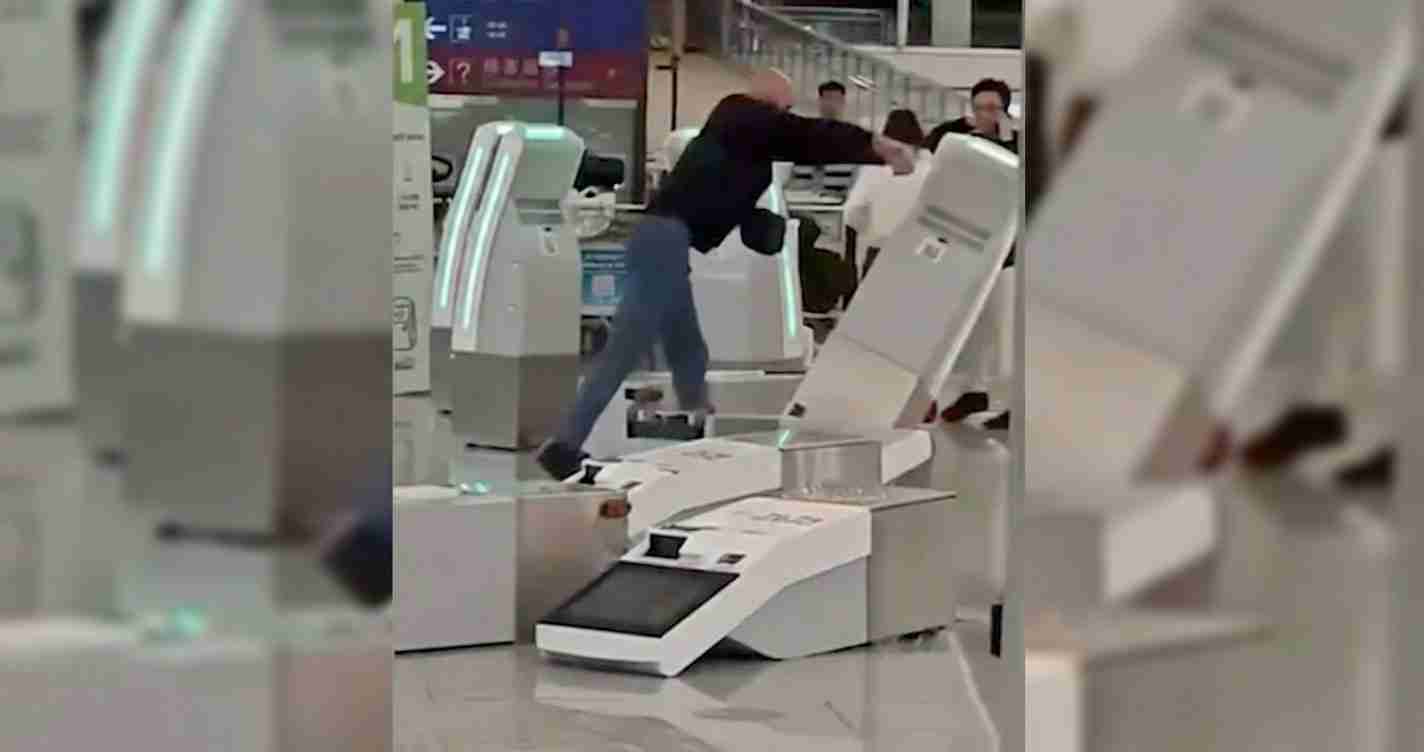
British tourist shatters check-in kiosks in viral Hong Kong airport rampage; arrested on criminal damage and Viagra charges
At about 6 a.m. on Feb. 16, 2026, a 35‑year‑old British national violently destroyed roughly ten check‑in kiosks and nearby fixtures at Hong Kong International Airport Terminal 1, prompting an arrest and charges for criminal damage and unprescribed Viagra.
- Widespread damage: About 10 automated check‑in kiosks and surrounding barriers, counters and a glass panel were smashed in Terminal 1 near Aisle J (One Mile at a Time, Fox News).
- Arrest and charges: The 35‑year‑old was detained after the incident and faces criminal damage charges plus a drugs-related charge for possession of unprescribed Viagra pills (classified as Part 1 poisons).
- Operational impact: Backup smart kiosks and staffed airline counters were deployed to limit disruption; no immediate flight cancellations were reported (The Telegraph).
- Travel advisory reminder: The case underscores that medicines available by prescription in the U.S. may be controlled abroad; travelers should carry prescriptions and check local rules.
What happened, according to video and eyewitnesses
Surveillance and bystander footage circulating online show a man in a black jumper, blue jeans and a cross‑body bag walking directly to a row of automated check‑in kiosks in the departure hall. He pushed the units forcefully; they toppled in quick succession with loud crashes that drew stunned looks from travelers and on‑duty staff.
Sequence: After toppling several kiosks he grabbed a metal stanchion and used it to smash the fallen machines and strike nearby fixtures. Reported damage includes roughly ten kiosks plus marks to metal barriers, counters and at least one glass panel. Video shows airport staff and passengers watching but not physically intervening as the destruction unfolded (One Mile at a Time, Fox News).
“Passengers and staff watched in disbelief as kiosks fell and were repeatedly struck; no one physically intervened,” footage and eyewitness accounts indicate.
Police response and arrest
Airport security and Airport Authority personnel moved quickly to the scene, warned the suspect to stop and called police. Officers later detained the man; reports say he was apprehended at a bus station just outside the airport perimeter.
Authorities searched his belongings and found four Viagra pills in his backpack without a prescription. Possession of unprescribed Viagra is illegal in Hong Kong and is classified under “Part 1” poisons. The suspect now faces two charges: criminal damage and a drugs‑related charge for possession of unprescribed medication (The Telegraph, One Mile at a Time).
Legal context and potential penalties
Under Hong Kong law, possession of medicines classified as Part 1 poisons without a valid prescription can carry up to two years’ imprisonment and fines up to HK$100,000 (~US$12,800). The criminal damage charge will be assessed separately and could add penalties depending on the valuation of damage and any aggravating factors.
Local reports say authorities are treating the case seriously because the attack targeted airport infrastructure and posed risks to public safety; investigators will review footage and witness statements as the inquiry progresses (One Mile at a Time).
Who the man is and motive questions
Hong Kong outlets report the suspect is a 35‑year‑old British citizen who arrived in November 2025 under the standard visa‑free allowance for UK passport holders. He was reportedly attempting to buy a ticket at the airport before the outburst.
Investigators have not released a motive. Media coverage indicates no public link to terrorism or political motives; the incident appears to be an isolated act of vandalism and disruption while authorities continue to seek witness statements and review footage (One Mile at a Time, Fox News).
Airport operations and immediate disruption
The Airport Authority said backup smart check‑in kiosks were deployed and airline check‑in counters remained available so operations could continue with minimal interruption. While the attack damaged multiple machines, officials worked to restore services so passengers could check in and continue planned travel.
There are no immediate reports of flight cancellations tied directly to the incident, though property damage and repair needs will carry costs for the airport and affected carriers (The Telegraph).
Reporting and viral spread
Video and social‑media posts of the incident spread rapidly, prompting international coverage. The footage captured the sequence of events and bystanders’ stunned reactions, which helped the story reach global outlets quickly.
Security experts note that nonintervention by untrained bystanders is common; confronting someone violent or unstable risks escalation and injury. The viral nature of the clips also raised public debate about appropriate passenger and staff responses during such events (One Mile at a Time, Fox News).
Implications for California
Economic impact: California airports, airlines and travel businesses monitor incidents like this because damage to automated systems can impose significant repair and staffing costs. Automated kiosks are common at U.S. airports — including LAX and SFO — and serious vandalism could force airlines to redeploy staff to manual check‑in, slowing throughput and raising labor expenses (One Mile at a Time).
Political consequences: For moderate conservative readers in California, the episode highlights public‑safety and enforcement questions at major transport hubs. Officials may face pressure to review security protocols and ensure visible deterrents without overburdening lawful travelers (One Mile at a Time).
Social effects: The footage showing bystanders not intervening underscores the need for clearer guidance on safe reporting and response. Airports could consider increased visible security, passenger messaging and protocols that prioritize trained intervention.
Cultural relevance: Californians who travel internationally may be reminded to carry prescriptions and confirm medication regulations abroad; the Viagra possession charge in Hong Kong illustrates that prescription norms vary by jurisdiction (One Mile at a Time).
Practical applications: Airports can mitigate risk by reviewing kiosk placement and anchoring, hardening fixtures around self‑service areas, improving CCTV coverage and testing rapid‑response procedures. Durable kiosk designs and passenger messaging about carrying prescriptions in original containers can also reduce future exposure (The Telegraph).
Reporting notes and sources
This report draws on international media accounts and footage descriptions. Key sources included:
- One Mile at a Time
- Fox News
- The Telegraph — including Airport Authority statements on backup kiosks and continued service.
Authorities in Hong Kong have not released a full motive or final charge sheet; this article will be updated as official statements and court filings become available.