Spring forward: California, most states set clocks ahead March 8 as Daylight Saving Time returns
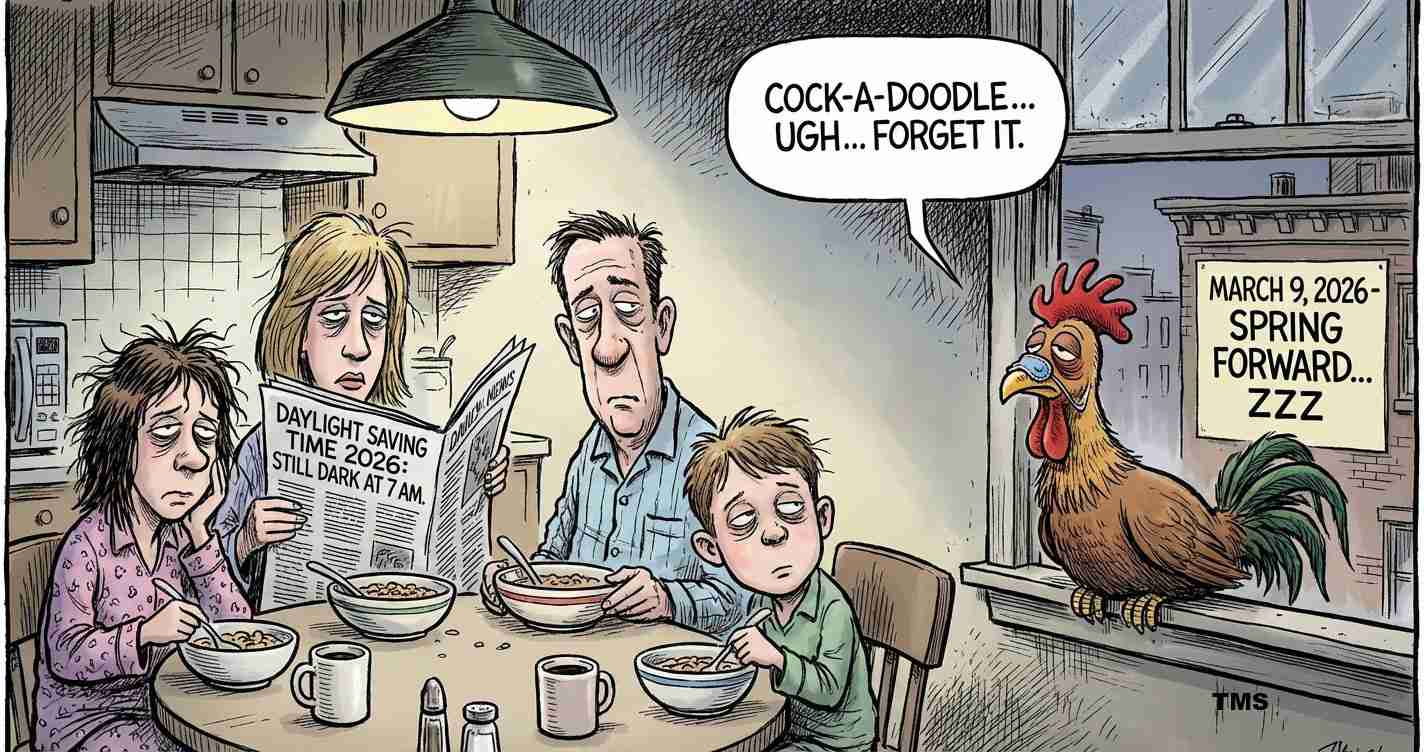
Daylight Saving Time 2026 begins Sunday, March 8 at 2:00 a.m., when California and most U.S. states move clocks forward one hour. The schedule runs through Nov. 1, 2026, and affects morning light, evening daylight and daily routines.
- When: Clocks spring forward at 2:00 a.m. local time on Sunday, March 8, 2026; they fall back at 2:00 a.m. on Sunday, Nov. 1, 2026. (Source: Time and Date — U.S. time changes and 2026 DST schedule)
- Where: California and most U.S. states observe DST; exceptions include Hawaii and most of Arizona. (See: Wikipedia — Daylight saving time in the United States)
- Practical: Most smartphones and computers update automatically; manual clocks should be set forward before bed on Saturday night. (Guidance: California Daylight Saving Time 2026 overview)
What happens March 8, 2026
At 2:00 a.m. on Sunday, March 8, clocks will be advanced one hour to 3:00 a.m. local daylight time. Sunrise and sunset times shift one hour later on the clock, producing darker mornings for about a week or two and brighter evenings that support commuting, recreation and retail after work. This schedule follows federal law set by the Energy Policy Act of 2005 (second Sunday in March through the first Sunday in November). (Sources: Time and Date; Wikipedia)
A look back: winter nights and fast facts
Daylight Saving Time 2025 ended on Nov. 2, 2025, when clocks were set back one hour and sunsets moved earlier. For 2026, DST ends on Nov. 1, 2026, returning clocks to standard time. The March–November period covers roughly 34 weeks, nearly two-thirds of the year, when daylight is shifted later into the evening. (Source: Time and Date)
Why the clock change exists
The stated purpose of Daylight Saving Time is to align daylight hours with when people are active—potentially reducing evening artificial lighting and saving energy. That rationale is grounded in federal policy and long-standing practice, though critics note the net energy savings are debated and point to health and safety trade-offs. (Reference: Wikipedia)
Who does not switch?
Hawaii and most of Arizona do not observe Daylight Saving Time. The Navajo Nation in northeastern Arizona does observe DST because it spans state lines. California follows federal rules and will move to Pacific Daylight Time (UTC−7) when clocks spring forward. (Source: Time and Date)
Health, safety and daily life: what to expect
- Sleep and schedules: Losing an hour can disrupt sleep. Studies report short-term increases in sleep disturbances and modest upticks in traffic accidents and workplace injuries in the days after the switch. Consider shifting bedtime earlier by 15–20 minutes in the nights before March 8.
- Devices and clocks: Most digital devices update automatically. Manually set wall clocks, microwaves, older watches and thermostats, and check smoke and carbon monoxide alarms when you change clocks. (See: California Daylight Saving Time 2026 overview)
- Energy and commerce: Longer evening daylight often boosts retail, tourism and outdoor recreation, though modern energy use patterns make net savings uncertain.
California legal and political background
California follows federal DST rules and has debated permanent changes. Voters approved Proposition 12 in 1949 keeping statewide time aligned with federal standards. Proposition 7 (2018) allowed the legislature to consider a permanent change, but federal approval under the Uniform Time Act is required to make DST permanent. No federal action has made DST permanent; California will observe the standard March–November schedule in 2026. (Reference: Wikipedia)
Astronomical timing: equinox and the march to spring
The vernal equinox occurs on March 20, 2026 at 10:46 a.m. EDT, marking the astronomical start of spring. By March 8 daylight hours are already increasing, so the later evening light after the change is part of the natural march toward spring. (Source: California Daylight Saving Time 2026 overview)
Practical tips for residents and businesses
- Prepare sleep routines: Shift bedtime earlier by 15–20 minutes each night starting a few days before March 8.
- Check devices: Verify automatic updates on phones and computers and reset manual clocks before bed on Saturday, March 7.
- Safety checks: Replace batteries in smoke and carbon monoxide detectors when you change clocks.
- Employers and schools: Consider flexible start times the week after March 8 to accommodate adjustment.
- Outdoor businesses: Use extended evening light to plan promotions and staffing for after-work activity.
Full 2026 DST schedule (U.S.)
DST begins: Sunday, March 8, 2026 — clocks forward 1 hour at 2:00 a.m. local standard time (to 3:00 a.m. local daylight time). (Source: Time and Date)
DST ends: Sunday, November 1, 2026 — clocks back 1 hour at 2:00 a.m. local daylight time (to 1:00 a.m. local standard time). (Sources: Time and Date; California Daylight Saving Time 2026 overview)
Implications for California
Economic impact: Longer evening daylight can boost retail, restaurants, outdoor recreation and tourism—helpful for evening commerce and local events. Political consequences: Any permanent change would require federal approval under the Uniform Time Act. Social effects: Later sunsets support after-work activities, while darker mornings may affect school start times for a short period. (Source: California Daylight Saving Time 2026 overview)
Source notes and further reading
- Time and Date — U.S. time changes and 2026 DST schedule
- Wikipedia — Daylight saving time in the United States
- California Daylight Saving Time 2026 overview (practical tips and local notes)
Quick reminder: Set manual clocks forward before going to bed on Saturday, March 7, and check alarms and detectors when you change clocks.