Big Boy No. 4014 to lead Union Pacific’s first coast‑to‑coast steam tour for America’s 250th anniversary
Union Pacific’s restored Big Boy No. 4014 will lead the railroad’s first coast-to-coast steam tour from March 29–April 24, 2026, marking America’s 250th anniversary with western displays in Roseville and Ogden and an eastern leg to follow.
Key takeaways
- What: Big Boy No. 4014 Tour 2026 — Union Pacific steam locomotive leading the company’s first coast-to-coast steam tour for the America 250th anniversary. Sources: Union Pacific and Trains.
- When: Western leg runs March 29–April 24, 2026; public displays include Roseville, CA (April 10–11) and Ogden, UT (April 18–19). Full daily schedule to be released by Union Pacific (schedule).
- Access: No passenger excursions planned on the western leg; public display opportunities only. See Union Pacific’s safety guidance and tracker (Steam pages).
- Significance: Restored in 2019, No. 4014 is the only operating Big Boy; the tour both celebrates heritage and raises public visibility amid broader corporate activity.
Tour overview
Union Pacific announced that Big Boy No. 4014 will depart its Cheyenne steam base on Sunday, March 29, 2026, pulling several historical passenger cars from the railroad’s Heritage Fleet. The western leg runs through communities along Union Pacific routes and returns to Cheyenne on April 24, 2026. Public display stops slated so far include Roseville, California (April 10–11) and Ogden, Utah (April 18–19). Union Pacific will release a full daily schedule and route map closer to the tour; the company notes there will be no public ride opportunities on the western portion. (Source: Union Pacific schedule; Trains.)
Schedule and route details
The western leg begins and ends in Cheyenne, Wyoming, and moves westward to California before returning east. While specific arrival and display times will be published closer to each stop, Union Pacific emphasizes that the western portion will include public display opportunities but no passenger excursions. The railroad’s online resources will provide daily tracking information and updates: see the Union Pacific schedule and the broader steam pages.
Big Boy No. 4014 — history and specifications
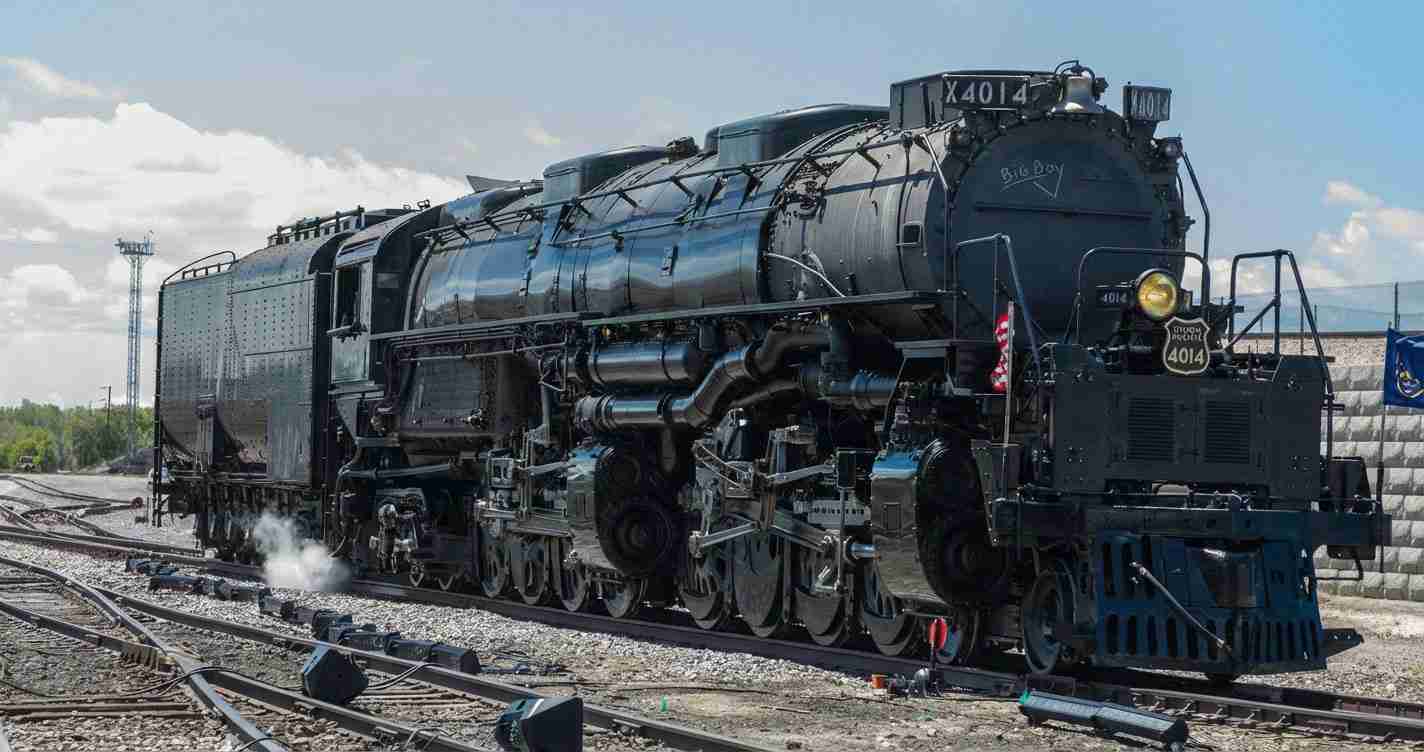
Big Boy No. 4014 is one of 25 Big Boy class locomotives built exclusively for Union Pacific beginning in 1941 to haul heavy wartime freight across steep grades. The class is notable for:
- Size: roughly 133 feet long and about 1.2 million pounds.
- Design: articulated frame (hinged) to negotiate curves; wheel arrangement described as 4-8-8-4 (four pilot, eight driving, eight driving, four trailing).
- Survival: only eight Big Boys survive; No. 4014 was restored to operating condition in 2019 for the 150th anniversary of the transcontinental railroad and remains the only operating Big Boy.
(Source: Union Pacific history and schedule.)
Statements, context and corporate framing
“We are proud to honor our nation’s great history and legacy of innovation with our heritage locomotives. For the first time, we will share the Big Boy with communities on the East Coast, operating it from ocean to ocean,” — Union Pacific CEO Jim Vena.
Union Pacific frames the tour as a celebration of heritage and service while promoting special commemorative equipment such as No. 1776 – America250, which displays the America250 Semiquincentennial Commission emblem. The company emphasizes themes of unity, history, and rail innovation as part of the broader America 250 observance. (Sources: Union Pacific; Trains.)
Investigative note: timing amid merger talks
The tour coincides with Union Pacific’s pursuit of a major merger with Norfolk Southern — a proposed combination the company argues would improve service and competitiveness. Industry observers note the coast-to-coast Big Boy tour is a high-profile public event that may shape perceptions of Union Pacific’s national footprint while regulators and the public review the proposed $85 billion transaction. Analysts and community leaders view the tour variously as a goodwill gesture and as an illustration of the railroad’s scale during regulatory scrutiny. (Sources: Union Pacific materials; industry reporting and discussion, industry discussion.)
Public safety, access and virtual tracking
Union Pacific has published clear safety guidance for spectators: stay at least 25 feet away from tracks, do not fly drones near the train, and remember that railroad tracks are private property — do not trespass. Motorists are warned not to pace trains. Some display sites may have uneven surfaces that limit accessibility. For remote followers, Union Pacific offers a Steam Locomotive Tracker and the free Official Union Pacific Steam Club for updates and priority notices. (Source: Union Pacific schedule and steam pages.)
Why the tour matters to communities — implications for California
Economic impact
The Roseville display (April 10–11) is expected to draw railfans, families and tourists from across Northern California and nearby states. Local businesses — restaurants, hotels, gas stations and retailers — may see a short-term boost. While not a long-term economic driver, the event can support small vendors and cultural sites tied to rail history. Cities should coordinate with Union Pacific and local businesses to manage crowds and maximize benefits. (Source: Union Pacific schedule.)
Transportation and infrastructure
The tour highlights freight rail’s role in California supply chains. Union Pacific routes feed local industries and ports; public attention on a coast-to-coast steam tour may spur renewed interest in rail infrastructure investment, grade-crossing safety, and freight capacity that affects ports and trucking. Policymakers may leverage the event to emphasize long-term rail needs and economic resilience. (Source: Union Pacific materials.)
Public safety and community planning
California’s dense urban corridors require local planning for large gatherings at display sites. Authorities should prepare for traffic impacts, emergency access, crowd control, and clear messaging about the company’s safety rules — including the 25‑foot buffer and no trespassing — to reduce risks from spectators encroaching on track rights-of-way. Coordination between transportation agencies, law enforcement and Union Pacific can mitigate hazards. (Source: Union Pacific schedule.)
Cultural resonance and civic pride
For many Californians, the Big Boy symbolizes American ingenuity, westward expansion and commerce. Communities can harness the visit to promote local museums, STEM programs, and vocational training tied to rail trades and engineering. Civic leaders may frame the appearance as a celebration of jobs, industry and national unity tied to America’s 250th anniversary. (Source: Union Pacific history.)
Regulatory and political angle
The tour arrives while railroad consolidation and service levels are active regulatory issues. State and federal officials — including California delegations — may use the event to scrutinize how large railroads present themselves and to press for future service, capacity, and safety commitments tied to any potential merger. (Sources: Union Pacific schedule; industry discussion: YouTube.)
Logistics for California visitors
Roseville’s April 10–11 display will have a detailed local schedule published by Union Pacific before the event, covering expected arrival and public display times, parking, and site layout. Visitors should expect crowds, bring water, dress for weather, and follow posted safety instructions. Union Pacific’s Steam Locomotive Tracker will show approximate movements as the tour progresses. (Source: Union Pacific schedule.)
How to follow the tour
Union Pacific will publish a detailed schedule and route map prior to the March 29 start. For updates, safety guidance, and tracking, visit Union Pacific’s steam pages and the schedule. Fans may join the Official Union Pacific Steam Club for priority information.
Sources and further reading
- Union Pacific — Steam schedule and history pages.
- Trains magazine reporting on the 2026 tour announcement.
- Industry discussion and analysis (YouTube).