Mexico City anti-government protest erupts into National Palace clashes after Mayor Carlos Manzo assassination
Thousands, mainly Gen Z, marched on Mexico City’s National Palace on November 15, 2025, protesting cartel violence and the assassination of Mayor Carlos Manzo, prompting violent clashes with police, tear gas use and multiple reported injuries.
- Mass youth-led protest: Predominantly Generation Z demonstrators mobilized nationwide after the high-profile assassination.
- Escalation at the National Palace: Attempts to breach security barriers led to confrontations, tear gas deployment and multiple injuries.
- Political fallout: The assassination intensified scrutiny of President Claudia Sheinbaum’s security policies and prompted federal investigations.
- Cross-border implications: California stakeholders face potential trade, security and migration impacts tied to Mexico’s unrest.
What happened
Thousands of demonstrators gathered in central Mexico City on Saturday to demand action against growing cartel violence. The protest began as a march and rally calling for safer streets and for authorities to stop the killings of local leaders. Organizers and participants said the assassination of Uruapan Mayor Carlos Manzo, a vocal critic of President Claudia Sheinbaum’s security approach, was the immediate trigger for the demonstration.
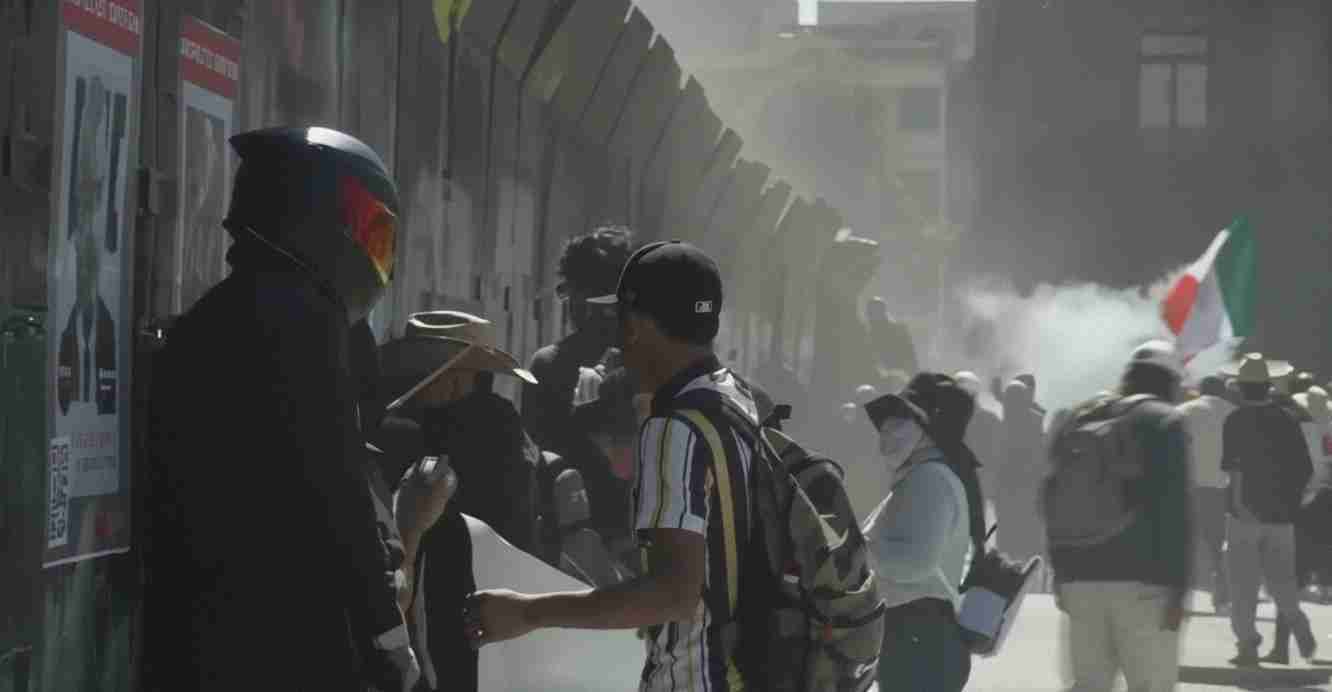
Videos and photos from the scene show dense crowds moving toward the plaza in front of the National Palace. Many protesters wore straw hats and carried flags and signs. Groups of young people were seen pushing against metal barriers set up to protect the palace. Authorities said some demonstrators attacked police officers. Riot police used tear gas to try to clear the area, leading to chaotic scenes and injuries on both sides.
Multiple news outlets reported heavy clashes and attempts to breach the security cordon around the National Palace. (See reporting from Fox News, Times of India, Times Now News, The Straits Times, The Indian Express and AOL.)
Who led the protest and what they demanded
The protest was largely led by youth groups often described as “Generation Z” activists. Organizers say their movement brings together young people from different cities who are fed up with chronic violence, disappearances and the killing of local officials. Demonstrators demanded a stronger government response to cartels, an end to political corruption, and a review of the current administration’s security policies.
A striking symbol at the march was the “One Piece” pirate flag, adopted by some young protesters as a sign of unity and resistance. Organizers used social media to call people into the streets. Authorities and independent observers said the movement has spread to other Mexican cities in recent weeks, driven by anger over several high-profile killings of public figures.
Violent escalation and National Palace clashes
What began as an organized rally turned violent when groups of protesters pushed police lines and tried to get past barricades protecting the National Palace. Police responded with force, including tear gas, to stop the breach. Footage circulated on social platforms showed clouds of gas, scuffles between demonstrators and riot officers, and protesters attempting to remove metal barriers. Officials reported injuries but did not immediately release a full toll. Some demonstrators attempted to reach the palace courtyard where symbolic acts of protest were planned.
“The scenes of tear gas and clashes underscore the depth of public frustration and the fragile state of security in parts of Mexico,” said one independent analyst.
Government response and political fallout
The federal government condemned the violence at the protest while saying it understands the public’s anger. President Sheinbaum’s administration has faced growing criticism over its handling of cartel-related crime. Her security policy, seen by some as an attempt to blend law enforcement with social programs and reduced military confrontation, has been called insufficient by critics who say cartels continue to gain power.
The assassination of Mayor Carlos Manzo intensified scrutiny. Manzo had publicly criticized federal policies and pressed for stronger action against criminal groups. His death became a focal point for protesters who see it as evidence of government failure to protect elected officials and ordinary citizens. Government spokespeople called for calm and announced investigations into the violence and into the mayor’s murder.
Media coverage and international reaction
International outlets covered the clashes with emphasis on both the scale of youth involvement and the security implications. Fox News highlighted the breach attempt and police response. The Times of India and The Indian Express emphasized the Gen Z-led nature of the movement and tied the protests to high-profile assassinations. The Straits Times and Times Now News documented the spread of similar protests across Mexico and the growing public anger over cartel violence. Tech platforms amplified video of the confrontations and the tear gas clouds.
Context: why this matters in Mexico now
Mexico has long struggled with powerful drug cartels that control territory and conduct high-profile attacks. Recent months have seen an uptick in high-profile killings of public figures and journalists. Young people, who make up much of the protest movement, say they have had enough of living with fear and weak responses from authorities. The assassination of a mayor who publicly criticized the president sharpened tensions and gave the protests a clear rallying point.
Security experts warn that unchecked cartel power undermines democratic institutions and erodes public trust in government. Some analysts say the clashes at the National Palace reveal a dangerous mix of political anger and social desperation. Others caution that violence during protests risks handing a propaganda victory to criminal groups and could further destabilize local politics.
Implications for California
Economic impact
- Trade and tourism: California is Mexico’s largest U.S. trading partner by value. Prolonged unrest in Mexico City could disrupt travel and business links and affect just-in-time supply chains in Southern California.
- Investment risk: Rising violence and political uncertainty can raise perceived risk for U.S. investors with operations in Mexico, potentially slowing investment flows benefiting California exporters and manufacturers.
Border and security concerns
- Cross-border crime and migration: Escalating cartel activity in Mexico can fuel migration and cross-border criminal operations, affecting California counties and state law enforcement.
- Law enforcement cooperation: The situation may prompt calls for renewed federal and state attention to cross-border coordination and information sharing on anti-cartel efforts.
Political consequences
Visible unrest in Mexico City could shape federal policy debates in Washington and influence California lawmakers who work on immigration, trade and border security. Local political messaging may emphasize rule of law and secure borders, and leaders may use events to press for firmer U.S.-Mexico cooperation.
Social and community effects
- Diaspora ties: California’s large Mexican diaspora will be closely watching developments; images from Mexico City may galvanize local advocacy and concern for relatives.
- Youth activism: The Gen Z-led protests in Mexico may echo in California’s youth movements, prompting solidarity rallies and campus discussions.
Practical applications for residents and officials in California
- Monitor travel advisories: Californians planning travel to Mexico City should follow U.S. State Department guidance and reliable local news.
- Support consular services: Communities with Mexican nationals should know how to contact Mexican consulates and U.S. consular services for family safety concerns.
- Review supply chains: Businesses should assess vulnerabilities tied to Mexico and consider contingency plans for transport delays and border disruptions.
- Engage policymakers: Local officials can press for stronger bilateral law enforcement cooperation and programs addressing root causes of cartel power.
Reporting sources and further reading
The National Palace clashes and the murder of Mayor Carlos Manzo mark a volatile moment in Mexico’s ongoing fight with cartel violence. For Californians, these events are not just headlines but potential risks to trade, security and communities with deep ties to Mexico.