Video shows Border Patrol agent striking restrained suspect as hostile crowd surrounds officers in Chicago suburb
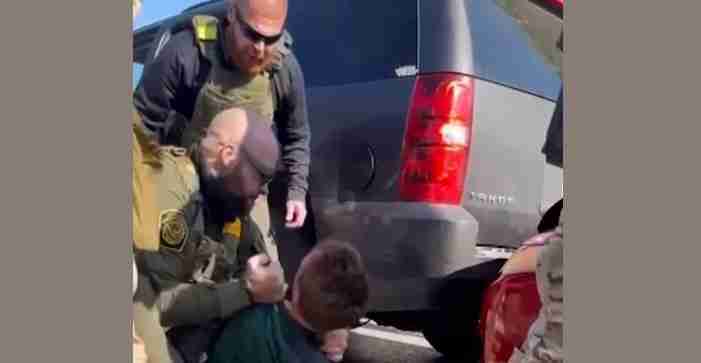
A verified video shows a U.S. Border Patrol agent repeatedly striking a restrained man after a car crash in an Evanston, Illinois, suburb as a hostile crowd gathers, raising urgent questions about federal agents’ use of force and jurisdiction.
- Verified footage shows an agent delivering multiple strikes to a restrained man after a crash; eyewitness clips have been reviewed by news organizations. (Source: witness video)
- Crowd dynamics created a volatile scene as bystanders closed in on officers, complicating the arrest.
- Official silence — at reporting time, federal or local agencies had not released detailed statements, identities, or injury/charge information.
What the video shows
Verified clips circulating online capture the moments after a crash involving a Border Patrol vehicle in a suburban area near Chicago. Agents exit the vehicle and move toward a man on the ground while a crowd forms. In multiple clips reviewed by reporters, one agent appears to deliver several defensive strikes — apparent punches — to the head of a man who is handcuffed or otherwise restrained and pinned to the pavement. (Source: witness video)
Crowd intervention and scene dynamics
The footage shows bystanders moving close to officers; some are shouting and gesturing. The crowd’s proximity appears to have made controlling the arrest more difficult, creating a complex threat environment. The video does not capture the full sequence of events leading up to the crash or any clear audio of commands, leaving gaps about why force was used. (Source: witness video)
Border Patrol use of force and jurisdiction questions
Key issues:
- Border Patrol agents are federal officers whose primary mission is at and near the U.S. border, but they sometimes operate inland with partners.
- The video has renewed debate about when and how agents operate in suburban and urban settings, and what rules govern their use of force.
- Observers and local leaders are calling for clarity on policy, training, and oversight when federal agents arrest people far from international borders.
What officials have said (and have not said)
As of this report, there were no widely available official statements from U.S. Customs and Border Protection (CBP), local police, or federal prosecutors detailing the crash circumstances, the officers’ identities, or the condition and legal status of the person struck in the footage. News organizations that reviewed the clips noted the lack of immediate public comment while the incident is under review. Community leaders and journalists are asking whether agents were wearing body cameras and whether internal or criminal investigations have been opened. (Source: witness video)
Legal and oversight considerations
The video raises standard legal and oversight questions following apparent use-of-force incidents, including:
- Were the strikes consistent with Border Patrol use-of-force policies and federal law?
- Was the suspect posing an ongoing threat when the blows were administered?
- Were officers using body-worn cameras or other recording devices?
- Will local or federal investigators open administrative or criminal inquiries?
Answers typically come from agency statements, internal reviews, independent investigations, or court filings; publicly shared evidence here remains limited to verified video and initial reporting. (Source: Associated Press verification and coverage of the footage.)
Public reaction and broader context
The footage has reignited debate over how federal immigration officers operate in communities away from the southwestern border. Critics call the video evidence of excessive force and argue it underscores the need for stronger oversight. Supporters of law enforcement emphasize quickly changing, dangerous situations that officers may face and caution that short video segments capture only parts of complex encounters. For many viewers, the visual of a restrained person receiving repeated strikes is alarming and has prompted calls for transparent explanations from authorities. (Source: witness video)
Implications for California
Economic impact
- Liability and legal costs: Investigations or lawsuits could lead to legal bills and payouts affecting federal and local budgets; California cities that partner with federal agencies could see fiscal impacts.
- Public spending and training: Calls for more oversight may push funding toward training, body cameras, and cooperative program adjustments.
Political consequences
- Local and state leaders, particularly in immigrant communities, may press for clearer rules about federal enforcement in cities and suburbs.
- The incident could feed debates on federal relations, oversight, and border policy among policymakers and constituents in California.
Social effects
- Community trust: Such incidents can deepen mistrust between immigrant communities and law enforcement, potentially affecting crime reporting and cooperation.
- Public demonstrations: The footage could spur protests, community meetings, and demands for accountability in cities with large immigrant populations.
Cultural relevance
For moderate conservative audiences in California, the episode raises questions about balancing law-and-order priorities with demands for transparent, accountable policing. Even supporters of strong border enforcement may seek clearer rules and public transparency when federal officers act in neighborhoods.
Practical applications for residents
- Know local policies: Learn how local police coordinate with federal agencies; local departments and city halls can explain cooperation policies.
- Demand transparency: Residents can request reports, use public records requests, and engage oversight boards to push for accountability.
- Safety and reporting: Local law enforcement should publish guidance so immigrant communities understand how to report crimes without fear of immigration consequences.
Sources and further reading
Witness video verified and reported in news coverage: witness video
Associated Press verification and reporting of the footage (as noted by news organizations reviewing the clips).
Quote: “The video has prompted community leaders and journalists to call for a full accounting of events, body-camera footage, and any investigations that are opened.” — Reporting based on verified footage and initial coverage.