No Evidence The New York Times Pre-Published a False Verdict in Ryan Routh Trial; Conviction and Courtroom Drama Confirmed
Claims that The New York Times pre-published the wrong verdict in Ryan Routh’s federal trial are false — no reputable reporting or official records support an NYT pre-publication error; this article summarizes the conviction and courtroom events.
- Federal jury convicted Ryan Routh on all charges, including attempted assassination and firearms offenses.
- No credible evidence or archived article shows The New York Times published an incorrect verdict before the official announcement.
- After the verdict, courtroom footage shows Routh attempting to harm himself and being restrained by U.S. Marshals.
- Major outlets and the Justice Department reported the guilty verdict and the post-verdict disturbance, but not an NYT pre-publication error.
What the evidence shows: the attack, the arrest and the charges
On Sept. 15, 2024, federal authorities say Ryan Routh attempted to assassinate then-presidential candidate Donald Trump during a visit to a West Palm Beach golf club. Law enforcement arrested Routh at the scene, and federal prosecutors brought multiple counts following the arrest.
For an official summary of counts and the outcome, see the Justice Department release. Contemporary reporting on the case is available in Fox News reporting.
Prosecutors presented digital and forensic evidence, including surveillance and communications, and detailed alleged “reconnaissance” trips to the golf club that they said showed intent. The charges included attempting to assassinate a major presidential candidate, assaulting a federal officer and multiple firearms offenses with penalties that can be severe, including potential life sentences.
The trial and guilty verdict
After a three-week federal trial, a jury found Routh guilty on all counts. Coverage by national outlets and the Department of Justice’s announcement confirm the verdict and outline the evidence relied upon by prosecutors — surveillance, communications, weapons and forensic analysis.
Reporting summarizes the prosecution’s case as built on a combination of physical evidence and witness testimony that the jury found persuasive. See the Fox News coverage and the Justice Department public release for contemporaneous summaries.
Courtroom disturbance after verdict
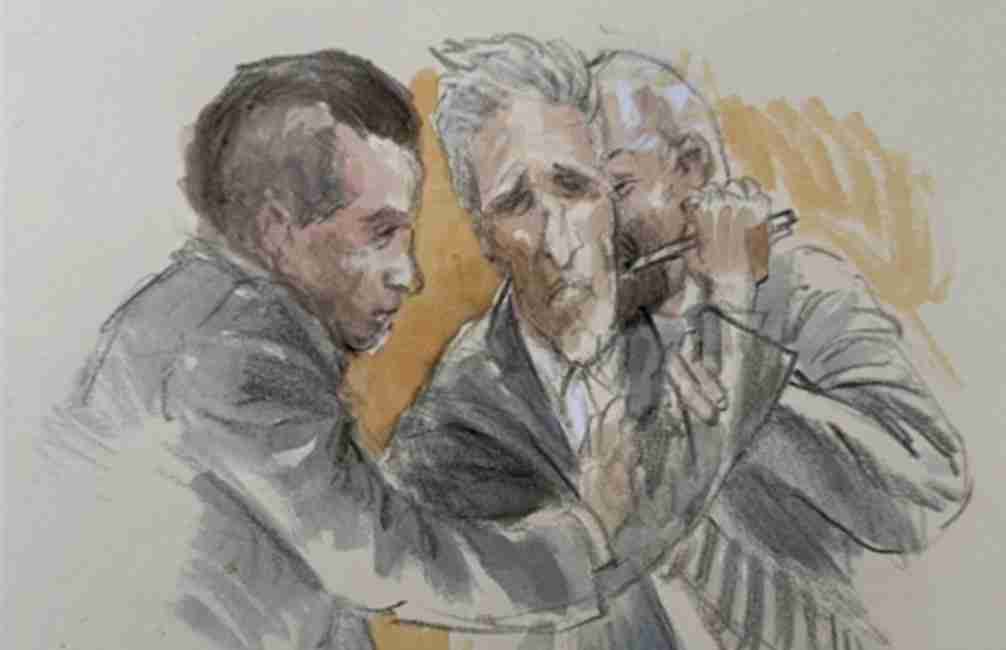
Immediately after the jury returned its guilty verdict, video and reporting show Routh attempted to stab himself in the neck with a pen while still in the courtroom. U.S. Marshals intervened and restrained him, creating a dramatic and unsettling coda to the proceedings.
Security footage and additional clips document the intervention; see the courtroom video and further footage at additional courtroom footage. Reporting on the courtroom disturbance is available in the Fox News story.
Why claims of a New York Times “wrong verdict” are false
Within hours of the verdict, social posts and fringe sites circulated a narrative claiming The New York Times had accidentally pre-published a story with an incorrect outcome. A review of primary sources and major outlets finds no evidence to support that claim.
Key reasons the claim fails basic verification checks:
- No archived or cached NYT article showing a premature or incorrect verdict has been identified by reputable monitoring services or the Times.
- The Justice Department’s official release confirms the guilty verdict and lists the charges and evidence without mentioning media errors.
- Major national and regional outlets reported the verdict and the post-verdict disturbance, but none reported an NYT pre-publication error (see Fox News coverage).
The spread of unverified claims in high-profile cases
High-profile cases tied to national politics often generate rapid sharing of unverified assertions on social media. False or misleading posts can gain traction before editors or fact-checkers can confirm details. This episode illustrates why media consumers should wait for confirmation from primary sources — court filings, official statements and reputable outlets — before accepting or re-sharing dramatic claims.
Sources and verification
This article is based on contemporaneous reporting and official records. Primary sources used for verification include:
- Fox News: “Ryan Routh found guilty on all charges in Trump assassination attempt trial”
- U.S. Department of Justice press release: “Jury Convicts Man Who Attempted Assassination of President Donald J. Trump and Assault of Federal Law”
- Courtroom video of post-verdict incident
- Additional courtroom footage
Implications for California
Public safety and election security: California hosts many high-profile political events. The Routh conviction and courtroom behavior underscore threats to security at candidate appearances. State and local agencies should review screening, emergency planning and coordination with federal partners to protect attendees and officials.
Media credibility and community trust: False narratives like an “NYT wrong verdict” can erode trust in media and institutions. California newsrooms — from major outlets to community papers — should prioritize verified sourcing and clear corrections when necessary to maintain reader confidence.
Courtroom proceedings and due process: The case highlights how federal prosecutors use digital and forensic evidence. California legal practitioners may watch for related procedural guidance on handling sensitive evidence and ensuring courtroom safety in high-profile matters.
Political discourse and civil stability: Incidents tied to national politics can inflame local tensions. Clear, restrained reporting and refusal to amplify unverified claims help prevent rumor-driven escalation in mixed communities across the state.
Practical effects on residents: Organizers of political events should consider enhanced screening and emergency plans; residents and readers are reminded to verify primary sources before sharing sensational posts online.