More Americans Falling Behind on Car Payments as Auto Loan Delinquencies Reach Decade High
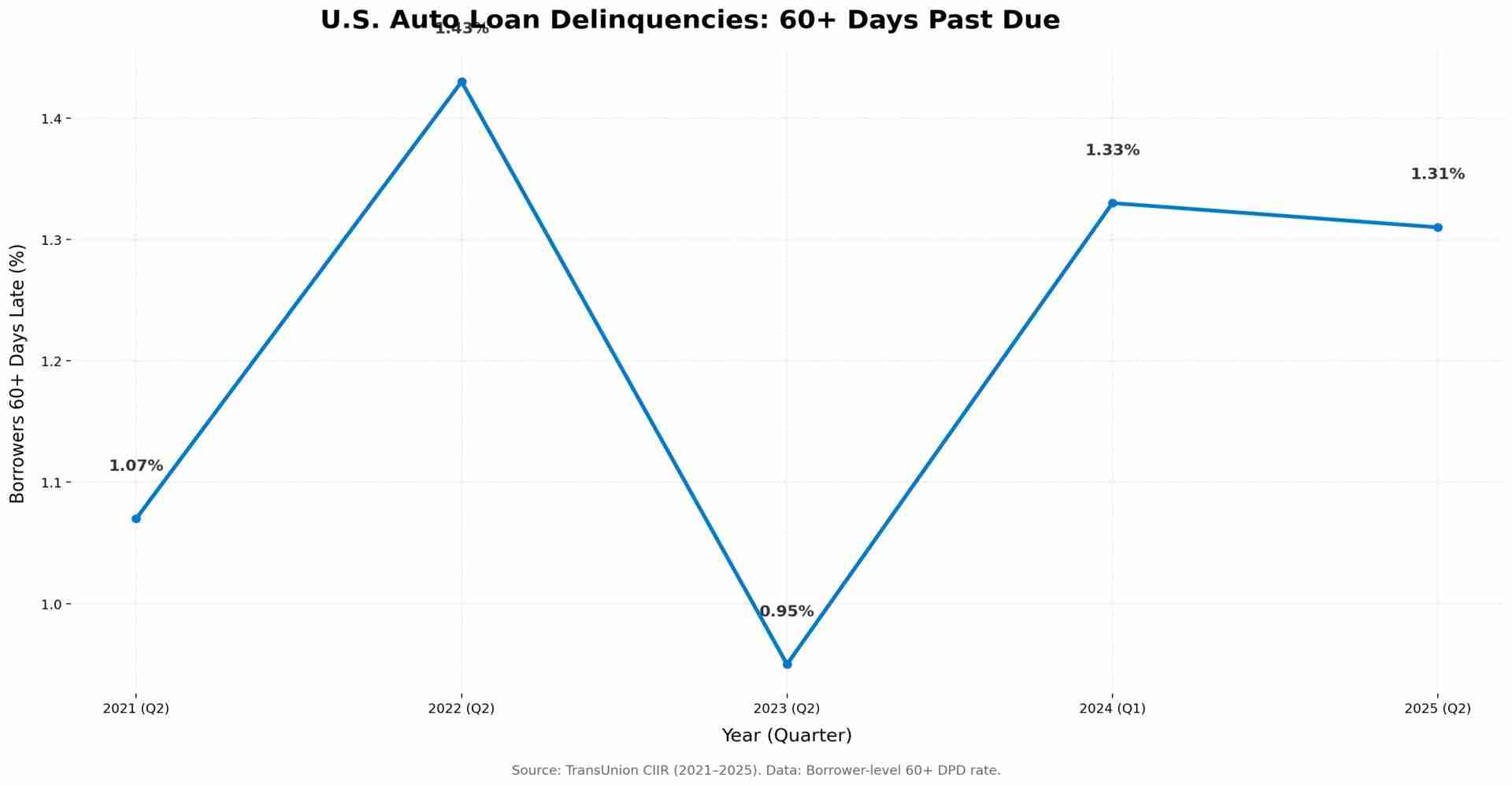
New data show auto loan delinquencies have surged to decade highs, straining households across income and credit tiers as sharply higher vehicle prices, elevated interest rates, and persistent inflation push monthly payments beyond many budgets.
Key takeaways
- Delinquencies climbed: ~3.8% were 30+ days past due in June 2024; by Q1 2025, 5.1% of auto-loan holders were delinquent on at least one account.
- Wider strain: Increases span prime and subprime borrowers, and younger buyers (Gen Z 7.5%, millennials 6.9%) show highest distress.
- Affordability squeeze: Average new car prices top $50,000 with typical loan rates ~7% (new) and ~11% (used), pushing many monthly payments well above household budgets.
Overview
New analyses from industry trackers show a notable rise in auto loan delinquencies across the United States. Auto-loan borrowers 30 or more days past due increased to about 3.8% in June 2024, a level not seen since 2010, according to VantageScore and reporting by CBS News. By Q1 2025, 5.1% of Americans with auto loans were delinquent on at least one account, per LendingTree.
Rising delinquencies across credit tiers
The spike in late car payments is not confined to subprime borrowers. Data show delinquencies are moving up for prime borrowers as well as lower-score cohorts, signaling broader pressure across income and credit levels. Analysts note lenders extended longer terms and higher rates to get buyers into cars, which can lower monthly payments initially but raises total interest and default risk if borrowers face income shocks.
Who is most affected
Age: Younger buyers carry the largest burden. Gen Z delinquency reached 7.5%, and millennials were at 6.9%, per LendingTree.
Region: The biggest regional problems concentrate in the South: Mississippi (9.8%), Louisiana (8.4%) and Georgia (7.8%) had the highest rates, while Alaska, Utah, Washington and New Hampshire were among the lowest (~3.2%).
Why delinquencies are rising
Three main forces are driving the climb in late car payments:
- Higher sticker prices: Average new-vehicle prices have been pushed above $50,000, forcing larger loans or longer terms (CBS News; Bloomberg).
- Elevated interest rates: Benchmark-rate increases pushed auto loan rates to about 7% for new cars and 11% for used cars, increasing monthly costs (CBS News).
- Stagnant wages and returning debts: Wage growth has not fully kept pace with inflation, and many borrowers resumed student loan repayments after pandemic pauses, squeezing household budgets (VantageScore; CBS News).
Late-stage delinquencies and warning signs
Beyond 30-day delinquencies, VantageScore reports sharper month-over-month increases in accounts >90 days past due, indicating some missed payments are becoming sustained problems. Late-stage delinquencies often presage repossessions and credit-score deterioration.
Economic ripple effects
Rising delinquencies can produce broader harms: increased repossessions that erode household mobility and job stability, especially where public transit is limited. Reduced mobility can harm employment prospects and raise turnover for employers who rely on commuter access (NBC Palm Springs).
Credit scores are also dipping as missed payments rise, which can raise future borrowing costs and limit access to credit when households need it most (VantageScore; CBS News).
Analysts sound the alarm
“Auto loan payments are almost always a high priority… When auto loan delinquencies are rising, it’s a likely sign that people are struggling,” said LendingTree’s chief consumer finance analyst, underscoring broader credit stress (LendingTree).
Bloomberg and others note total auto loan balances have begun to shrink, suggesting fewer or smaller new loans — a sign consumers and lenders are retrenching amid payment stress (Bloomberg; LendingTree; New York Fed).
Policy and market implications
The trend raises questions for regulators, lenders and consumers. Policymakers may face renewed calls to monitor auto lending, especially as longer terms and high rates shift risk to households. Lenders must balance growth with rising defaults; some may tighten underwriting or raise rates, making cars less affordable for marginal buyers (CBS News; Bloomberg).
Practical steps experts recommend include refinancing where possible, reducing loan terms, and building emergency savings — but access to those remedies is uneven for lower-credit or thin-savings borrowers (VantageScore; LendingTree).
Implications for California
Economic impact: California households face particular pressure because high living costs amplify rising monthly car payments. With average new-car prices above $50,000 and many long-distance commuters, residents may cut essential spending or delay purchases, rippling through local retail and services (CBS News).
Employment and mobility: Inland and suburban areas that lack frequent transit risk higher job access problems if vehicles are repossessed or unavailable, potentially increasing turnover and recruitment challenges for small businesses (NBC Palm Springs).
Regional credit effects: A broad rise in delinquencies can push down average credit scores, making it harder for Californians to qualify for mortgages, business loans, or other credit products, slowing homebuying and constraining small-business expansion in harder-hit communities (VantageScore; CBS News).
Practical local responses could include expanded borrower counseling, refinancing programs, and promoting carpooling, employer commute assistance, and transit expansion where feasible. Lenders and dealers in California may face greater scrutiny over long-term loans and add-ons that raise monthly costs (CBS News; LendingTree).