Trump administration withholds $40M from California over trucker English proficiency after fatal crash
The Trump administration will withhold $40,685,225 in federal highway safety funds from California, accusing the state of failing to enforce English Language Proficiency rules for commercial truck drivers after a fatal Florida crash involving a California‑licensed driver.
Key takeaways
- Immediate funding cut: The Department of Transportation is rescinding $40,685,225 from California’s Motor Carrier Safety Assistance Program (MCSAP) over alleged non‑enforcement of English Language Proficiency (ELP) rules.
- Triggering incident: The move followed a fatal Florida crash involving a California‑licensed trucker who later failed an English proficiency assessment, according to federal officials.
- Wider threat: Secretary Sean Duffy warned up to $160 million more could be at risk pending a broader audit of California’s commercial driver license (CDL) issuance.
- State pushback: California officials say statewide crash rates are lower than the national average and the Washington Examiner reports the CHP has said it will not enforce the federal ELP rule.
Federal action and the legal basis
The U.S. Department of Transportation, led by Transportation Secretary Sean Duffy, says California is the only state not enforcing the Trump administration’s ELP rule for commercial drivers. The DOT announced it will take $40,685,225 out of the state’s MCSAP grant money, which funds highway safety audits, roadside inspections and enforcement activities that target commercial vehicle safety. The DOT’s action is detailed in its briefing room statement.
The administration frames the rule as a safety measure: drivers must be able to read road signs, communicate with other drivers and speak with law enforcement. As Duffy put it in the DOT statement, “I put states on notice this summer: enforce the Trump Administration’s English language requirements or the checks stop coming.” (See the DOT statement for full text.)
The ELP requirement follows an April executive order and a DOT rule implemented in May that mandates English proficiency assessments for commercial drivers so they can perform safety‑critical tasks during normal operations and emergencies.
The crash that prompted the move
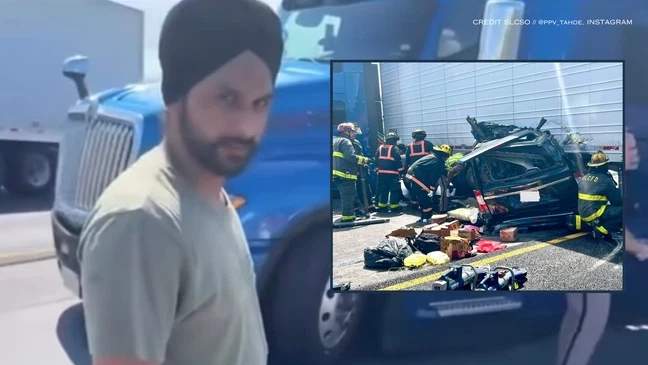
Federal officials pointed to a fatal crash in Florida as the immediate trigger. Investigators say the commercial trucker — licensed in California — made an illegal U‑turn that resulted in a fatality. After the collision, officials administered an English proficiency check and reported the driver failed, which the DOT cited as evidence of lax enforcement of federal ELP standards in California (coverage in the Washington Examiner).
California’s response
California officials pushed back, arguing that drivers licensed in the state have a lower crash rate than the national average and that the federal intervention is unwarranted. Governor Gavin Newsom’s office emphasized state safety records as a counterpoint to the DOT’s action.
The California Highway Patrol has stated it will not enforce the federal ELP regulation, setting up a direct clash with federal authorities and highlighting disputes over federal overreach into state licensing decisions.
What the funding supports — and what’s at stake
MCSAP funds support highway safety inspections, compliance reviews and public education campaigns. With $40.6 million rescinded, California could face cuts to roadside inspections, fewer safety audits and reduced support for local agencies that monitor truck safety. Those programs — often run at county and local levels — are designed to catch dangerous drivers and unsafe vehicles before crashes occur.
Secretary Duffy also warned that up to $160 million could be withheld pending a broader federal audit of California’s CDL issuance practices, especially concerning non‑domiciled drivers. Bloomberg Government has reported on the potential broader funding threat; see Bloomberg Government for additional coverage.
Enforcement, standards and roadside checks
The DOT says California must adopt and actively enforce ELP standards, including conducting spoken English assessments during roadside inspections and placing drivers who fail out of service until they can demonstrate proficiency. DOT officials argue that without enforcement, federal dollars intended to promote safety cannot be justified.
California officials counter that existing state checks and safety programs are effective, citing the state’s crash record. They raise legal and policy concerns about a blanket federal language requirement that could affect licensing decisions and labor considerations. The dispute highlights the tension between state public safety prerogatives and federal oversight aimed at a national standard.
Implications for California
Economic impact: The immediate cut of $40,685,225 will affect highway safety budgets relied upon by many California counties. Local sheriff’s offices and CHP units use MCSAP grants for inspections and enforcement; a reduction could mean fewer roadside inspections and less funding for safety campaigns, shifting costs to state and local budgets.
Political consequences: The standoff may become a political flashpoint. Some leaders will view the action as reasonable enforcement of federal conditions tied to federal money; others will decry it as federal overreach. The debate is likely to be significant for audiences concerned with rule of law, accountability and state autonomy.
Social and cultural effects: Reduced inspections could affect public confidence in road safety. The Florida fatality that helped trigger this action underscores how a single crash can prompt major policy fights. The dispute also touches on broader California tensions about immigration, language and workplace safety, with competing views on whether language requirements are necessary for public safety or unfairly target non‑English speakers.
Practical applications: If California enforces the ELP rule, funds could be restored and roadside checks would include spoken English assessments. If the state resists, local agencies may need contingency plans to fill gaps. Fleet operators should review driver training and testing to align with both state and federal expectations.
Reporting notes and sources
This article draws on the U.S. Department of Transportation briefing, reporting from the Washington Examiner, and coverage by Bloomberg Government. The article preserves official figures and accounts as presented in those sources.
End of article — substantive reporting concludes with implications for California.