Kim Jong Un Shows Off New ICBM at North Korea Military Parade as Foreign Leaders Watch, Signaling Stronger Diplomatic Ties
North Korea held a massive military parade in Pyongyang on October 10, 2025, where Kim Jong Un displayed a new intercontinental ballistic missile and other systems, with reportedly visiting foreign dignitaries present, drawing international attention and concern.
- Major parade: Large military procession on October 10, 2025 marking the 80th anniversary of the Workers’ Party of Korea.
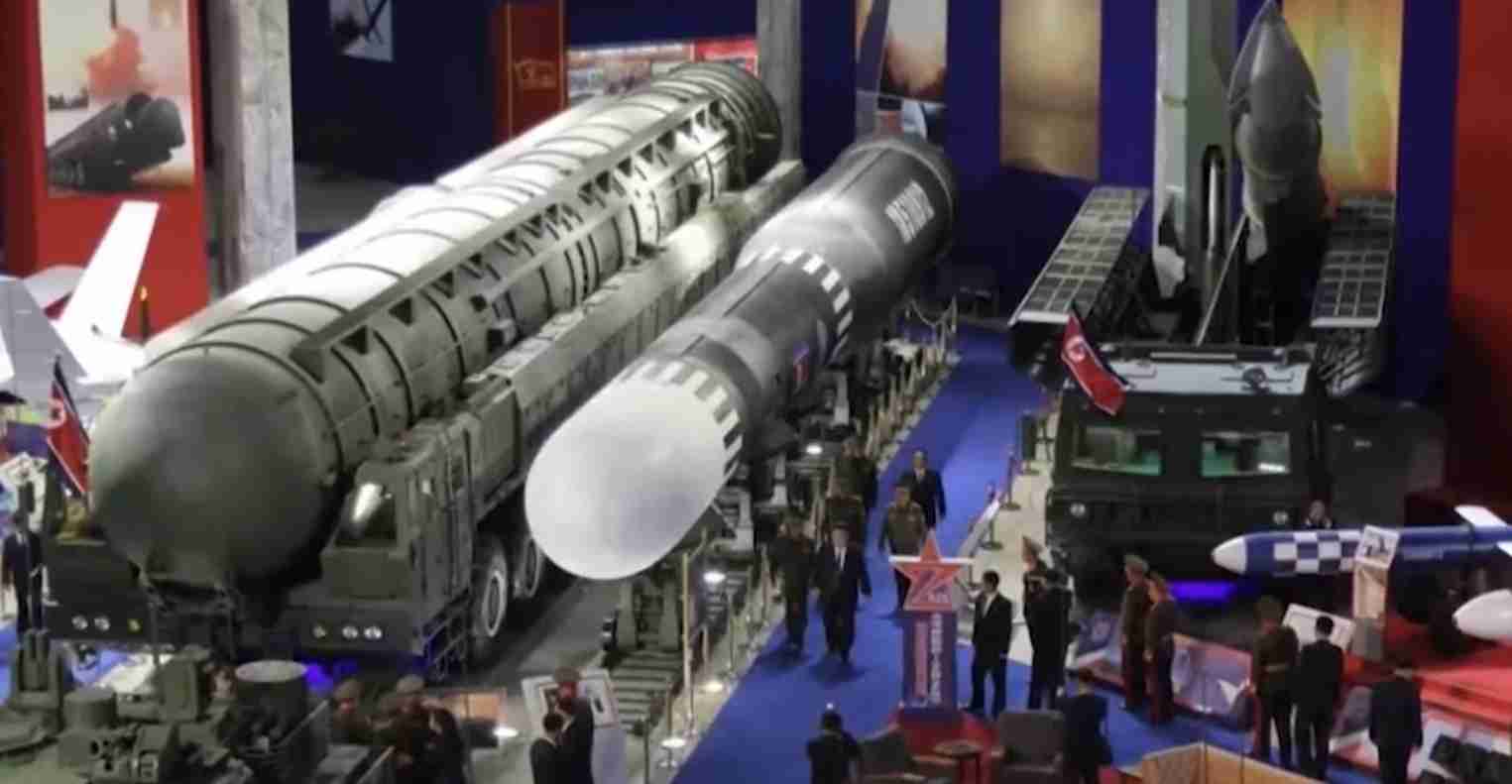
- New ICBM revealed: A long, road-mobile intercontinental ballistic missile on a multi-axle transporter was the parade centerpiece.
- Foreign optics: Reports of visiting dignitaries underscore diplomatic signaling, though open-source footage does not definitively identify specific attendees.
- Verification limits: Parade video suggests design trends but cannot confirm range, warhead capability, propulsion or reentry technology without further technical intelligence.
Overview
Event details: On October 10, 2025, Pyongyang staged a grand military parade to mark the 80th anniversary of the Workers’ Party of Korea. Supreme Leader Kim Jong Un personally oversaw the procession of troops, armored columns and strategic missile road-mobile launchers.
New ICBM on display
Parade imagery shows a long, road-mobile missile carried on a multi-axle transporter-erector-launcher. Officials in Pyongyang presented the system as evidence of advances in long-range strike capability and nuclear deterrence. Analysts note that the missile’s larger scale suggests possible work on range, payload capacity and launch survivability.
The public video and parade footage provide clear visual scale and launch vehicle configuration but do not allow confirmation of key technical parameters such as range envelopes, warhead capability, propulsion type, or hardened reentry technology. Independent technical verification would require satellite imagery, telemetry, or classified intelligence beyond open-source video (see video of the parade and parade footage).
Foreign dignitaries and North Korea diplomatic ties
The parade drew attention partly because reports indicated the presence of international dignitaries. Public footage reviewed for this report shows senior North Korean leadership and foreign guests in attendance, but it does not definitively identify specific visiting officials. Some social posts and reports named Chinese and Russian figures; however, open-source video lacks conclusive verification.
If leaders such as Chinese Premier Li Qiang or Russian Security Council Deputy Chairman Dmitry Medvedev were present, their attendance would signal a tolerance or tacit support of Pyongyang’s public display of military strength.
Because the available public footage does not clearly identify guests, independent confirmation is needed before treating specific attendee reports as verified (see parade footage and video of the parade).
Geopolitical ramifications
The timing and scale serve multiple goals: domestically to reinforce regime legitimacy and internationally to showcase strategic capabilities while highlighting diplomatic engagements. For Washington and allies, the display is a reminder of challenges in curbing Pyongyang’s missile and nuclear programs. For China and Russia, close optics with Pyongyang would complicate relations with the United States if verified.
Even absent definitive proof of specific dignitaries, the diplomatic gestures surrounding the anniversary indicate Pyongyang’s intent to portray itself as a strategic partner to major powers rather than solely an isolated state (video sources: parade footage; video of the parade).
Military and technical assessment limits
Open-source parade footage is valuable for identifying design trends, vehicle types and parade order, but it offers limited technical intelligence. Key performance metrics — maximum burnout velocity, reentry heat shielding, MIRV capability, precise range, and engine test data — cannot be derived reliably from parade video alone.
Historically, North Korea has sometimes displayed prototype systems in parades either before or after flight testing. A parade reveal can represent an operational system, a developmental prototype, or a political symbol; that ambiguity complicates outside assessments of operational readiness.
Sources and verification
This report relied on public parade footage and online postings of the October 10 event: parade footage and video of the parade. The videos show event scale, senior North Korean leadership presence, and the missile display but do not provide full confirmation of foreign attendance lists or technical specifications. Official statements from Pyongyang and independent satellite or intelligence assessments would be needed for full verification.
Implications for California
Economic and industrial ties: California’s defense and aerospace sectors could see renewed interest if U.S. policy shifts to bolster missile defense and surveillance. Companies in Silicon Valley and Southern California working on sensors, satellites, interceptors, and related technologies may be affected by funding and contract changes.
Political and security concerns: The parade reinforces arguments for a robust national defense posture and strengthened cooperation with Indo-Pacific allies. California leaders and federal representatives may push for continued support for U.S. Indo-Pacific Command and allied coordination.
Diplomatic and humanitarian angles: The event highlights the tension between security responses and humanitarian considerations; California advocacy groups may press for diplomacy paired with outreach while emphasizing the humanitarian costs of high military spending in North Korea.
Regional safety and markets: While the immediate practical risk to California remains strategic, public discussion about preparedness, supply-chain resilience and investor reassessments in defense and cybersecurity sectors is likely.
For more on the parade footage and related material see parade footage and video of the parade.