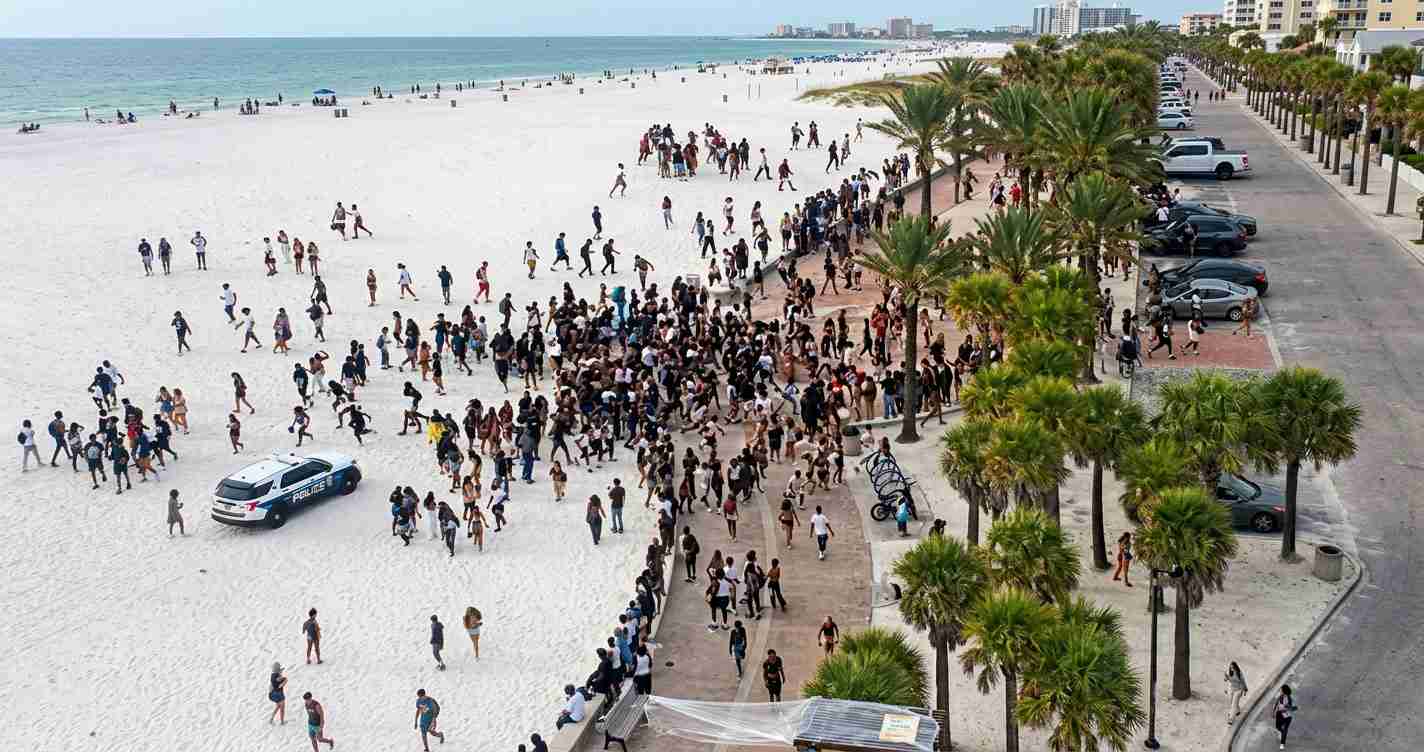
Florida police use social‑media monitoring to halt planned St. Augustine Beach teen takeover before it begins
St. Augustine Beach police, alerted by St. Johns County’s real‑time intelligence center ARTIC, flagged a viral takeover flyer as “Canceled”, pre‑deployed officers to the pier and prevented a large unsanctioned teen gathering; no arrests were made.
Key takeaways
- Event: Unsanctioned “teen takeover” advertised for 2 p.m. Thursday at the St. Augustine beach pier.
- Response: St. Augustine Beach Police, alerted by ARTIC, labeled the flyer “Canceled” publicly and pre‑deployed extra officers to deter the gathering.
- Outcome: The gathering did not escalate, the pier remained orderly and no charges were filed.
Main story
What happened at the St. Augustine Beach pier
In the days ahead of the scheduled Thursday meetup, a social‑media flyer urging teens to “Pull up. Turn up. Take over.” began circulating online. The St. Augustine Beach Police Department publicly shared the flyer with a bold “Canceled” banner after receiving a warning from county partners.
Chief Daniel Carswell told Fox News Digital that the department worked closely with county units to detect the plan before it could unfold and to craft messaging aimed at dissuading attendance.
The department issued repeated public warnings that the event was unsanctioned and that officers would have “zero tolerance” for anyone showing up to cause disruption. Officers were visibly pre‑deployed at the pier as a deterrent. Because the plan was identified early, the gathering never escalated and no arrests were made.
How law enforcement discovered the plan
St. Augustine Beach Police credited St. Johns County’s Real‑Time Intelligence Center, known as ARTIC, with spotting the post and notifying local officers. ARTIC continuously scans social media and other online sources for threats and planned events, and it flagged the takeover flyer several days before the scheduled date.
“They search the internet, they’re searching constantly for threats to our community and threats to the public. They came across this and sent it to us. Which was fortunate for us, because we had time to act,”
— Chief Daniel Carswell, St. Augustine Beach Police
The early alert gave the small department the window needed to post deterrent messaging and increase staffing at the pier, avoiding a late‑notice scramble that can strain limited resources.
Resource strain and safety concerns for a small department
St. Augustine Beach is served by roughly 25 officers. Carswell said that a sudden influx of hundreds of teens could quickly overwhelm a small force, forcing supervisors to call in off‑duty staff or request mutual aid — actions that can leave other neighborhoods less protected.
“We don’t know how many people could show up. It could be tens, it could be hundreds — we don’t know,” Carswell said, underscoring the unpredictability and potential danger for officers and residents if a crowd turns disorderly.
What “teen takeovers” are — and why police pay attention
Teen takeovers are informal, often viral gatherings organized through youth‑oriented social platforms. Flyers encourage participants to “bring your crew” and claim public spaces — beaches, parks or shopping districts — for spontaneous meetups. While many remain peaceful, some have been linked to fights, vandalism and weapons incidents.
Because promotion spreads quickly on platforms popular with teenagers, departments often learn of planned gatherings at short notice and must decide whether to pre‑deploy officers, prepare for arrests if violence occurs, or use public messaging to dissuade attendance. National reporting has traced these dynamics across multiple states; see reporting from ABC News for broader context.
National pattern: preemption, monitoring and outreach
The St. Augustine Beach response reflects tactics used in other cities: monitoring social media for early indicators, publicly labeling unsanctioned events to reduce turnout, and pre‑deploying officers as visible deterrence. In Tampa, social‑media monitoring preceded arrests after a takeover at a park escalated; authorities there also developed alternative youth events to provide supervised options (ABC News).
Other Florida communities have used large pre‑deployments of officers and patrol cars to deter incidents when hundreds of teens expected a takeover. Some cities have explored juvenile curfew zones and legal dispersal tools in heavily affected areas. Across the country, interagency intelligence sharing and social‑media monitoring are becoming standard practice for spotting takeover planning.
Tools and strategies used by police
- Real‑time intelligence centers and social‑media monitoring: Units like ARTIC continuously scan platforms and alert local agencies (Fox News Digital).
- Public deterrence messaging: Posting “Canceled” over circulated flyers and clearly labeling events “unsanctioned” aims to reduce attendance before a date arrives (Fox News Digital).
- Surge staffing and visible presence: Pre‑positioning officers and vehicles discourages large crowds and prepares for rapid response (example reporting: video coverage).
- Community alternatives: Some cities invest in supervised youth programs, sports and jobs to reduce the appeal of unsupervised takeovers (ABC News).
Debate: safety measures versus civil liberties
Law enforcement leaders cite recent incidents involving weapons and fights as justification for preemptive measures, particularly in small jurisdictions where sudden crowds can overwhelm resources. Civil‑liberties advocates caution that not every teen gathering poses a threat and warn that heavy monitoring or broad curfew rules can stigmatize youth and restrict lawful socializing.
Legal scholars and community groups call for balance: monitor and deter real threats while offering structured alternatives and clear channels for permitted events to avoid unnecessary curtailing of free expression.
Implications for California
Economic impact: California beach towns and tourist districts face similar risks during spring break and summer weekends — unsanctioned crowds can disrupt businesses, deter visitors and increase policing costs.
Political consequences: Local leaders may face pressure to expand monitoring, interagency coordination and surge staffing plans or consider curfew ordinances — all while balancing safety and civil‑liberties concerns.
Social effects & cultural relevance: California teens use the same platforms to organize. Communities should expect rapid spread of event flyers and plan outreach that communicates expectations to parents and teens; partnerships among schools, youth groups and law enforcement can help channel energy into supervised activities, preserving public access and family‑friendly spaces.
Practical applications: Jurisdictions can adopt ARTIC‑style monitoring partnerships, improve rapid public messaging about canceled events, invest in supervised youth programming and develop mutual‑aid agreements so small departments can tap regional resources without leaving other areas understaffed (Fox News Digital; ABC News).
Reporting sources and further reading
- Fox News Digital: “Cops halt planned teen takeover; officials brace for summer surge, chaos, arrests”
- ABC News: “Teen takeovers prompt police responses across the country”
- Video reporting of takeover responses in Florida communities (examples): Video 1 and Video 2
Reporter note: This article uses public statements by St. Augustine Beach Police Chief Daniel Carswell and reporting by local and national outlets to describe how real‑time electronic monitoring and interagency cooperation helped prevent disruption at the St. Augustine beach pier. Sources cited above provide additional detail.