Schlitz, “the beer that made Milwaukee famous,” brews final batch May 23 after 177 years as fans mourn — and debate the “Schlitz mistake”
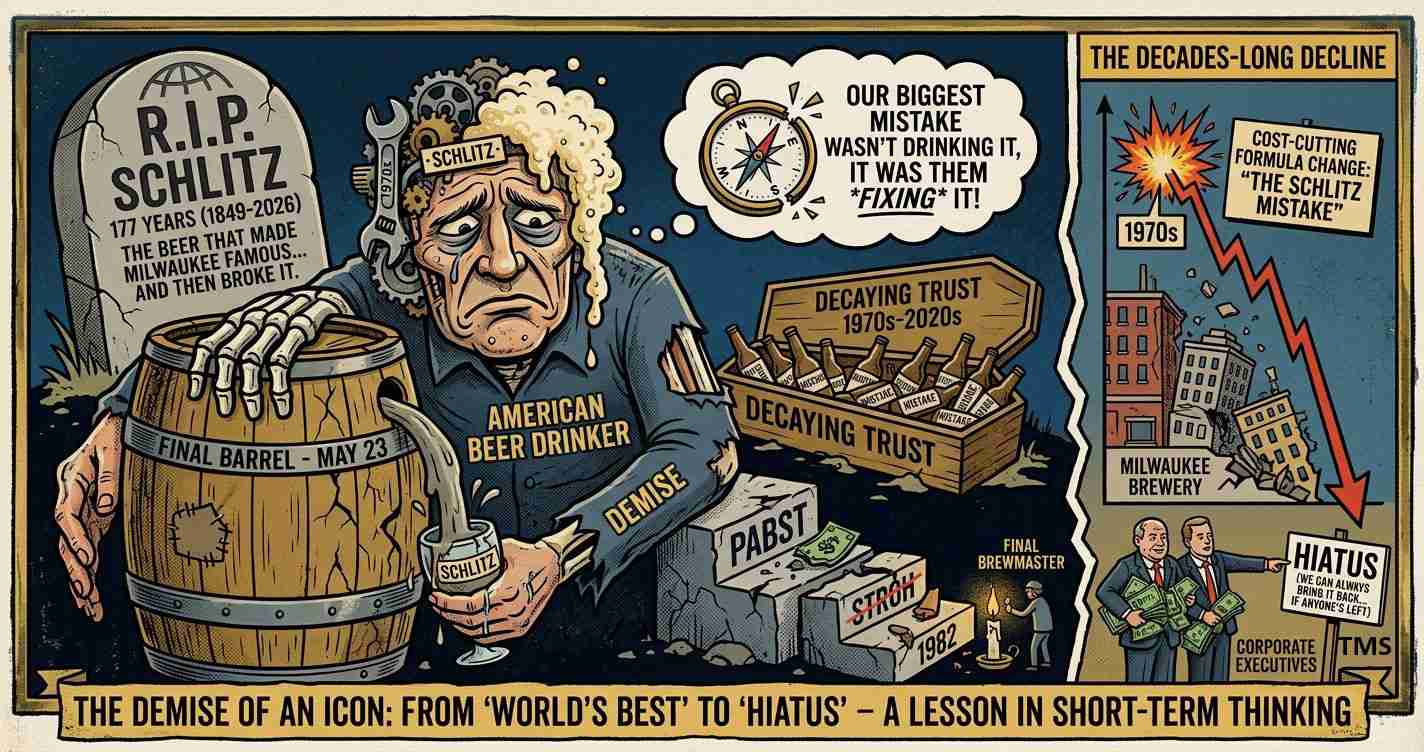
Schlitz, the iconic American beer once synonymous with Milwaukee, is reportedly brewing its final batch on May 23, ending 177 years of history amid economic pressures and ongoing debate over the controversial “Schlitz formula change.”
Key takeaways
- Final run: The last Schlitz batch is reportedly scheduled for May 23 after 177 years of brewing.
- Historical rise: Founded in 1849, Schlitz rose to national prominence in the late 19th and mid-20th centuries (Encyclopedia of Milwaukee).
- Quality vs. cost: The so-called “Schlitz mistake” — a formula and process change to cut costs — is widely cited as a turning point (AmericanCraftBeer.com).
- Business reasons: Pabst cited higher storage and shipping costs among the factors for retiring the brand (Milwaukee Magazine).
Why Schlitz mattered
Founded in 1849, Schlitz became a household name across the United States. Growth was driven by key events — notably the Great Chicago Fire of 1871, which opened markets for Milwaukee brewers — and by postwar distribution and advertising that made Schlitz part of many family and neighborhood memories. For an overview of the company’s origins and site history, see the Encyclopedia of Milwaukee.
The “Schlitz mistake” and its fallout
Industry historians and beer fans often point to a single turning point: a formula change intended to speed production and cut costs. That move — widely known as the “Schlitz mistake” — replaced traditional practices with faster techniques and altered ingredients to lower expenses. Many accounts trace a long decline in brand perception and sales to those choices (AmericanCraftBeer.com).
“Like many brands, Schlitz became a joke when the company cheapened the ingredients to save money, thinking nobody would notice.”
Competition and a shrinking market share
From the 1970s onward, Schlitz faced pressure from national rivals such as Budweiser, Miller and Pabst, which expanded distribution and advertising. After the formula change and subsequent sales declines, Schlitz found it difficult to match competitors’ marketing and logistics. Ownership shifts culminated with Pabst’s acquisition in 1999, after which Schlitz functioned largely as a legacy label.
The brewery site and Milwaukee beer history
The original Joseph Schlitz Brewing Co. complex has been preserved and repurposed as Schlitz Park, a historic mixed-use campus that now houses offices and cultural space — a tangible reminder of Milwaukee’s brewing heritage. For history and preservation details, consult the Encyclopedia of Milwaukee.
Reactions online and in communities
The news of a final production run prompted both nostalgia and scorn. People shared memories of family, college parties and local bars; others used the moment to criticize product changes. Comments on X ranged from sorrowful recollections to blunt assessments such as “original formula was decent” and later iterations becoming “swill.” These competing reactions reflect a broader debate about quality, cost-cutting and brand stewardship.
Official reason for retiring the beer
Pabst officials have emphasized business realities. Zac Nadile, Pabst’s head of brand strategy, told Milwaukee Magazine that rising storage and shipping costs were major factors in the decision to retire Schlitz. In a distribution environment where shelf space and turnover drive profitability, maintaining a low-volume legacy SKU is increasingly difficult.
Implications for California
Economic impact
- Retail and distribution: Direct economic impact in California is likely limited, but small retailers that stocked legacy labels may need to replace shelf space with higher-margin alternatives.
- Logistics and storage: The decision highlights how storage and shipping costs shape offerings; California distributors face similar warehouse and shelf-space tradeoffs that favor higher-turnover SKUs.
Political and regulatory considerations
State and local taxes, storage rules and labeling requirements contribute to product costs. Lawmakers backing local breweries may cite retirements like Schlitz’s as evidence that national legacy brands thin out while local craft producers gain room, shaping debates on incentives and support for small brewers.
Social and cultural effects
For many Californians and Midwestern transplants, Schlitz carries family memories. Its retirement may spur nostalgia events at local bars and community gatherings, offering small venues an opportunity for themed nights that celebrate brewing history and draw customers.
Practical effects for consumers
- Availability: Buyers seeking legacy American lagers may see fewer options in chain stores and turn to broader national brands or regional lagers.
- Prices and choice: Removing low-volume SKUs can push retailers toward fewer, more profitable brands, potentially reducing variety for consumers who value selection.
Cultural relevance for the target audience
For moderate-conservative readers in California, Schlitz’s story can be read as a lesson in business fundamentals: short-term cost cutting that harms product quality can damage long-term brand value, while efficient logistics and consistent products are rewarded by markets.
Source notes and reporting
This report draws on historical entries and industry reporting, including the Encyclopedia of Milwaukee overview of the Joseph Schlitz Brewing Company, coverage of the brand’s quality changes and industry reaction from AmericanCraftBeer.com, and reporting that quoted Pabst officials in Milwaukee Magazine. Additional contemporary reactions appeared on X, formerly Twitter.