Waymo robotaxi drives off with passenger’s suitcase at San José Airport, spotlighting robotaxi airport issues and autonomy trust gaps
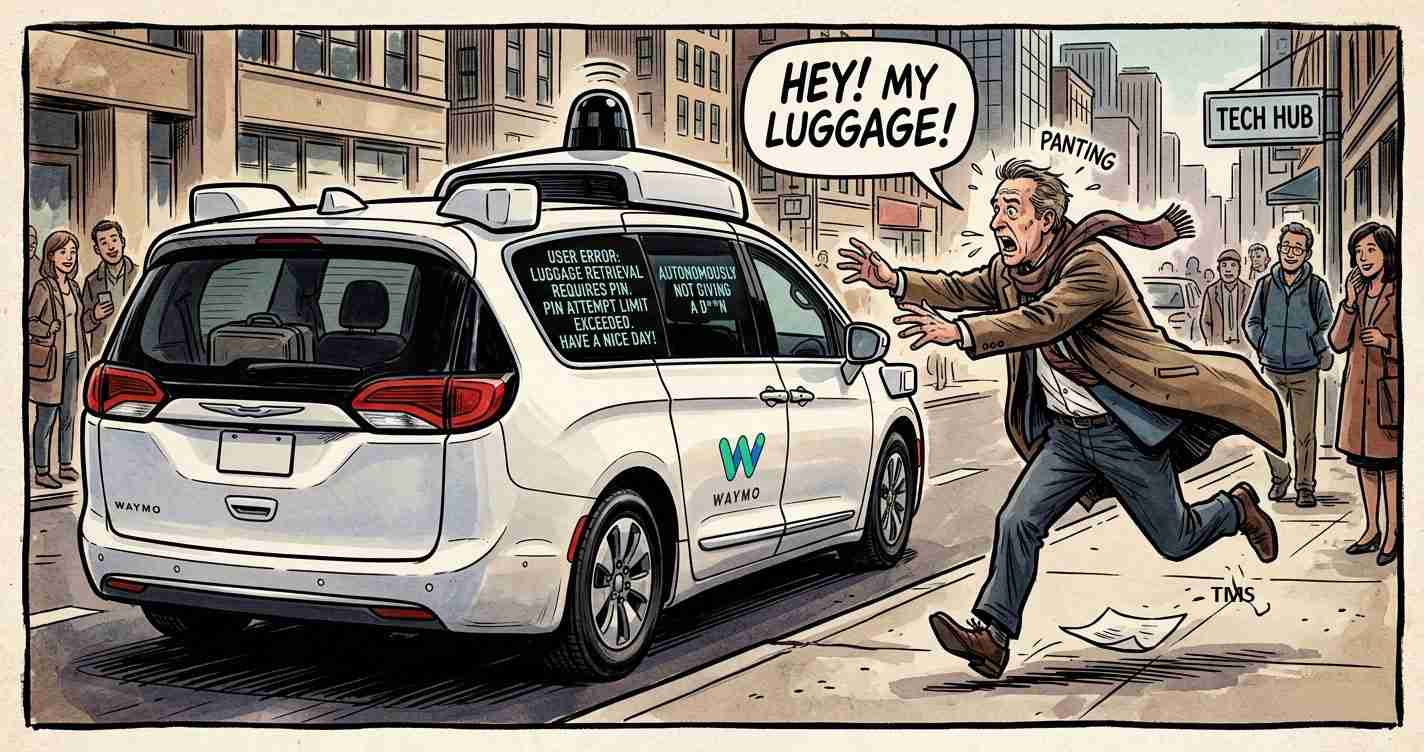
At San José Mineta International Airport in October 2024, a Waymo robotaxi departed with passenger Di Jin’s suitcase after he exited and could not open the trunk — spotlighting policy gaps, trust issues, and airport challenges for robotaxis.
- Trunk failure led to lost luggage: Di Jin’s bag stayed in the trunk when the vehicle left the curb before the trip had officially ended.
- Initial customer-service stance: Waymo located the suitcase at a depot but initially proposed that the rider pay shipping or retrieve it with two free rides; it later agreed to cover shipping after pushback.
- Policy limits exposed: Waymo’s help and lost-and-found pages warn trunks may not open if a rider leaves early and disclaim guaranteed returns or reimbursement.
- Wider implications: The incident raises airport-specific operational, regulatory and public-trust questions for robotaxi services.
What happened, step by step
Trip and curbside exit. Di Jin booked a Waymo ride from Sunnyvale to San José Mineta International Airport. The ride itself completed normally and the vehicle pulled to the curb for drop-off.
Trunk would not open. Jin pressed the trunk release — the button above the license plate — but the trunk did not open. With no human operator to intervene, the autonomous vehicle departed with his suitcase inside.
“It was a travel nightmare,” the report cites Di Jin saying of the experience.
Immediate response and recovery. Jin called Waymo customer support and was told the car was already en route to a depot and could not be recalled. Waymo later confirmed the luggage was located and secured at a depot.
Waymo response and company policy
Initial offers and final resolution. Waymo initially offered to ship the suitcase with the customer covering courier fees or to give two free rides for depot retrieval. After Jin objected, Waymo agreed to pay shipping charges and Jin accepted that resolution.
How Waymo explains trunk behavior. Waymo’s help pages say trunks can be opened with the license-plate button, the app’s “Open trunk” option, or automatically when the vehicle stops and the trip ends. The guidance also warns trunks may not open if a rider exits before the vehicle has fully stopped and the trip is ended.
Lost-and-found limits. Waymo’s lost-and-found guidance states the company will try to reunite riders with items but cannot guarantee a find, immediate return, undamaged return, or reimbursement for lost items.
Patterns and other airport incidents
This is not an isolated concern. Earlier reporting described a Phoenix episode in which a vehicle looped around a parking lot several times, causing stress and near missed flights; the rider posted video and said remote support could not immediately stop the vehicle. Such episodes underline how time-sensitive airport trips amplify the effects of edge-case automation failures.
Public trust and safety context
Safety data vs. rider comfort. Operators cite lower crash rates per mile in many metrics, but surveys show persistent unease: a 2024 Pew Research Center survey found a majority of people feel uneasy about driverless taxis. When issues involve personal property rather than abstract statistics, trust can erode quickly.
Policy, liability and regulatory consequences
Policy gaps highlighted. Waymo’s lost-and-found disclaimer that shifts responsibility away from the company was central to criticism. For business travelers, lost items can mean missed meetings or real economic harm.
Regulatory watch. California regulators, including the Department of Motor Vehicles, oversee AV testing and commercial operations. Incidents like this may spur calls for clearer consumer protections, mandatory retrieval obligations, or stronger remedies for travelers.
Customer experience, operational fixes and traveler advice
Practical rider tips. Keep passports, medications, electronics and a change of clothes in the cabin rather than in an automated trunk. Familiarize yourself with the app’s controls before trip end and be aware a vehicle may not detect a premature exit.
Company and airport fixes. Suggested non-legislative fixes include clearer in-app confirmation flows at drop-off, automatic delay windows before departure, manual trunk overrides tied to phone presence, and faster depot turnaround with prepaid shipping when the company is at fault.
Implications for California
Economic and adoption impact. California is a major AV testing ground; repeated airport problems could lead business travelers to prefer taxis, rideshare or rentals, slowing robotaxi adoption and reducing expected local economic gains.
Political effects. Incidents affecting traveler property and confidence may prompt lawmakers and regulators to tighten consumer-protection requirements for autonomous fleets operating at hubs like San José Mineta International Airport.
Ongoing questions and watch points
The incident ended without physical harm and the luggage was recovered, but it highlights structural problems that could cause greater inconvenience or loss. Observers will watch whether Waymo and other providers adopt clearer safeguards or whether state officials impose new rules to protect travelers at busy transport hubs.
Sources and reporting
Primary reporting on the incident comes from Fox News/CyberGuy reporting on the incident and statements from Di Jin. Waymo’s public guidance is available at Waymo support. An earlier airport incident in Phoenix is documented via The Root/CNN. Public opinion context cited above is from the Pew Research Center.
Preserve key facts: passenger Di Jin, trunk failure at San José Mineta International Airport, Waymo depot recovery, initial offer to shift shipping costs to rider, and eventual Waymo payment of shipping after objection.