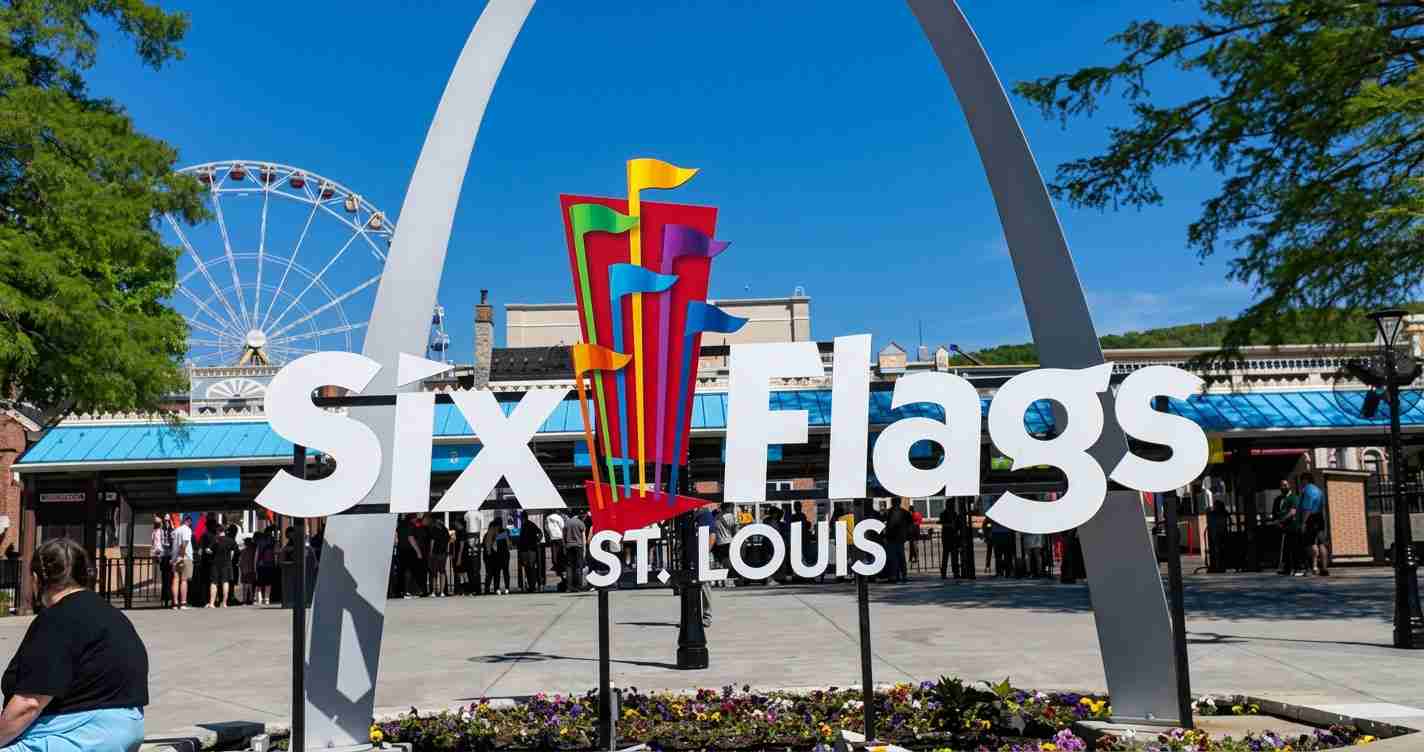
Six Flags St. Louis opening day cut short after mass juvenile brawls; police disperse as many as 100 teens
Six Flags St. Louis closed early Saturday after multiple coordinated brawls involving up to 100 juveniles disrupted opening-day operations; Eureka police dispersed crowds, detained several youths and the park shut down rides and concessions as a de‑escalation measure.
- Multiple large youth fights forced rides and concessions to close early. Park staff and police moved guests out to restore safety.
- Eureka police detained about six juveniles and reported no injuries or property damage, saying officers “responded quickly and dispersed the crowd.”
- Park officials cited de‑escalation as the reason for the early shutdown and asked guests to leave while officers cleared the grounds.
- Ownership claims referencing Enchanted Parks could not be independently verified. See the contemporaneous account from Hoodline: Teen brawls turn Six Flags St. Louis opening day into early exit.
What happened on opening day
Scheduled hours showed an 11 a.m.–8 p.m. opening for the season, but operations — including rides, live performances and food stands — shut down well before the advertised closing time after multiple large groups of teens began confronting one another across the park. Witnesses described groups gathering in separate areas before confrontations escalated and park staff, aided by law enforcement, directed visitors to exit.
“We asked guests to leave while law enforcement moved through the park to separate groups and restore order,” park organizers told local reporters.
Police response and detentions
Eureka Police Chief Michael Werges said officers “responded quickly and dispersed the crowd.” Local reporting indicates roughly six juveniles were detained in connection with the disturbances. Authorities emphasized there were no reported injuries and no reported damage to park facilities; after the grounds were cleared operations were able to return to normal. (Source reporting: Hoodline.)
Park officials and de‑escalation
Management elected to close early as an explicit de‑escalation strategy. Closing allowed staff and law enforcement to move guests out of the venue and limit further contact between groups. Families and other visitors were directed off the property while officers separated groups and identified those involved.
Park spokespeople and authorities characterized the shutdown as preventative — intended to avoid escalation into greater violence or property damage. In this instance, those measures appear to have prevented injuries and park damage.
Ownership questions and verification
After the incident, social posts and local commentary referenced a reported sale of several Six Flags properties to Enchanted Parks. At the time of this report, that ownership claim could not be independently verified through public filings or other reporting. Times Media Service reached out to Six Flags corporate communications and to Enchanted Parks for comment; no confirmation was available at press time.
Note: Because ownership and management affect policies, staffing and local security decisions, confirmation is important. Expect follow‑up reporting if company statements or filings provide verification. Primary contemporaneous coverage: Hoodline coverage of the incident.
Context: youth fights at large events
Large teen gatherings at entertainment venues sometimes heighten the risk of group fights. Contributing factors include:
- Social media coordination and peer pressure
- Crowding, long waits and environmental stressors like heat
- Possible alcohol or substance use among older teens
Park operators and local authorities commonly plan for crowd control on peak days using increased security, clear guest messaging, controlled entry/exit points and close cooperation with law enforcement. In this incident, those systems appear to have helped prevent serious harm.
Why officials closed early
Local officials described the early closure as a practical step to restore order. Closing allowed staff and police to separate groups and clear the grounds without escalating to mass arrests or physical confrontations. Authorities said the approach reduced the chance of injuries and preserved park property.
Closing on opening day is a significant operational decision — it affects guests, employees and revenue, and signals that park leadership prioritized safety over continuing normal operations under risky conditions.
Questions still open
- What triggered the initial confrontations — coordinated planning or spontaneous incidents?
- Were security levels and staffing adequate for the expected crowd on opening day?
- If ownership changed, did it affect security policies or staffing decisions?
- What follow‑up measures will be implemented to prevent similar incidents?
Local authorities and park management have opened inquiries. Parents and community leaders are seeking clear answers about how and why the disturbance unfolded and what steps will be taken moving forward.
Implications for California
Though the incident occurred in Missouri, the lessons transfer to California parks and local economies. Below are practical takeaways and potential political, social and economic impacts.
Economic impact
Opening‑day disturbances can lead to lost ticket sales, refund obligations, overtime pay and reputational harm. California operators will watch the Six Flags response for lessons on staffing, crowd control and early‑season security investments.
Political consequences
For a politically moderate conservative audience, the incident underscores themes of public safety, law enforcement cooperation with private operators, and management accountability. Local officials may face pressure to ensure safety without imposing unduly burdensome regulations on businesses.
Social effects
The juvenile nature of participants highlights concerns about youth supervision and peer‑group behavior. Schools, youth programs and law enforcement in California may use this incident to advocate for parental engagement, expanded youth services and targeted outreach to deter organized fights.
Cultural relevance
Theme parks are family cultural touchstones. Visible, proportionate responses to episodic disorder help maintain public trust that parks remain safe venues for children and families.
Practical applications for park operators and patrons
- Operators: Increase visible security, coordinate with local police for peak days, and communicate clear crowd rules and de‑escalation protocols.
- Parents: Monitor teen plans for group outings and set expectations for behavior in public spaces.
- Local governments: Review emergency plans for large venues and ensure rapid law enforcement support during large crowds.
- Ticketing policies: Maintain transparent refund and communication policies when safety closures occur.
Source links and reporting
Primary contemporaneous coverage: Hoodline: Teen brawls turn Six Flags St. Louis opening day into early exit.
(Reporting by Times Media Service; additional local statements cited from Hoodline.)