FTC Junk Fees Rule Takes Effect; Live-Event Tickets and Short-Term Lodging Must Show Total Price Up Front
The FTC’s Junk Fees Rule took effect May 12, 2025, requiring sellers of live-event tickets and short-term lodging to display the full, mandatory price up front — ending drip pricing and requiring conspicuous total-cost disclosure before checkout.
- Total-price disclosure required: Sellers must show the full cost, including mandatory fees, as the primary advertised price before checkout.
- Scope and limits: The rule covers live-event tickets and short-term lodging; it does not ban fees or dynamic pricing outright.
- Enforcement begun: The FTC has opened enforcement actions and filed a complaint and proposed settlement in the Southern District of New York.
- California impact: Consumers, venues and promoters in California may see clearer pricing and increased regulatory scrutiny at state and local levels.
What the Junk Fees Rule requires
The rule, finalized in late 2024 and effective May 12, 2025, requires businesses selling live-event tickets (concerts, sporting events, theater) and short-term lodging to display the total price — inclusive of all mandatory service, processing or convenience fees — more prominently than any itemized charges. Companies may still show optional fees separately, but the advertised price consumers see first must reflect the full mandatory cost so shoppers can compare offers fairly.
The rule is narrow in scope compared with earlier proposals: it targets timing and prominence of disclosure rather than banning fees or dynamic pricing. The FTC also prohibits misrepresentations about a fee’s nature, purpose, amount, or whether it is refundable — aiming to reduce surprise charges at checkout that harm consumers and distort competition. (Sources: InsideClassActions, Foley & Lardner LLP.)
Enforcement, warning letters and the agency’s approach
When the rule took effect the FTC moved to active enforcement. Agency materials and legal commentary explain the FTC can use Section 5 of the FTC Act to pursue deceptive or unfair practices tied to price disclosures, and the agency sent warning communications to platforms during the transition to compliance. Legal analyses highlight the agency’s emphasis on clear, up-front price presentation as a central enforcement priority. (See: Perkins Coie, InsideClassActions.)
A court filing and company reaction — what is public
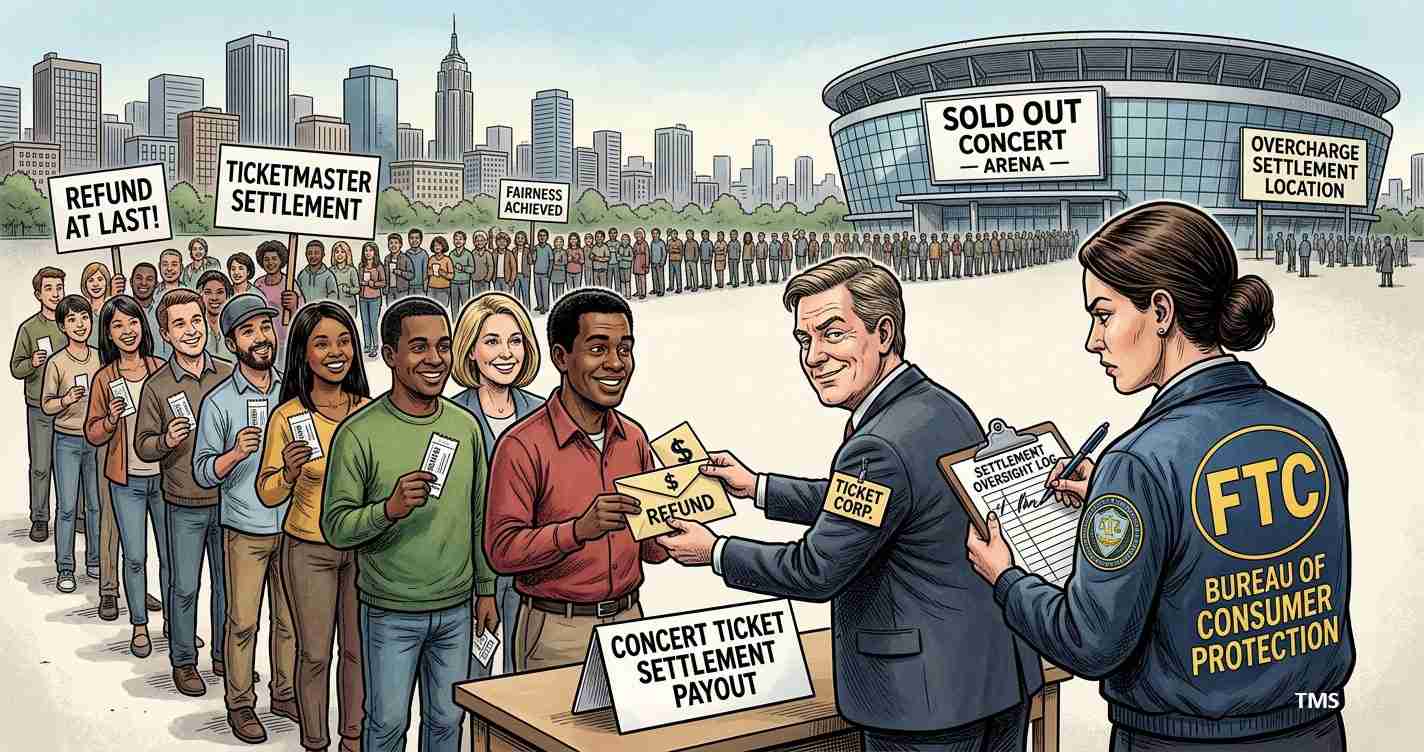
The FTC filed a complaint and proposed settlement in the U.S. District Court for the Southern District of New York alleging that during a three-day stretch in May 2025 some ticket listings displayed prices excluding mandatory fees. The agency said the settlement would require refunds to eligible buyers and improvements to on-site disclosures, and that it had sent a warning letter to the ticketing platform before pursuing the case.
“The Fees Rule makes it very clear that the total price of live-event tickets must be disclosed up-front to enable consumers to make fully informed purchasing decisions,” — Christopher Mufarrige, Bureau of Consumer Protection Director (quoted in the FTC filing).
The platform named in the filing disputed the agency’s view of events during that period but stated it would refund a portion of affected buyers’ fees to address the agency’s concerns; the company characterized the settlement as covering a limited number of transactions over three days in May where some listings “may have displayed ticket prices exclusive of fees.”
Important caveat: Times Media Service’s review of publicly available reporting and legal summaries did not independently corroborate certain specifics tied to the filing — for example, references to a $10 million redress pool or a direct link to a presidential executive order were not found in the independent sources reviewed. Primary summaries are available at InsideClassActions, Brushfire, Foley & Lardner LLP, and Perkins Coie.
Why the rule matters to consumers and competition
Supporters say upfront total-price disclosure restores fair comparison shopping across ticket sellers and short-term lodging platforms. By making the total price the prominent figure, consumers avoid surprise charges at checkout, and honest competitors are no longer undercut by platforms that hide fees until late in the buying process.
Legal analysts describe the rule as an attempt to curtail rent-seeking behaviors in the ticketing market — situations where intermediaries benefit from opaque fee structures rather than competing on price and service.
Implications for California
Economic impact
California — with major venues in Los Angeles, the Bay Area and beyond — is a significant market for live events and short-term lodging. Clear total-price disclosure could help Californian consumers avoid surprise charges, shift competitive dynamics among sellers and platforms, and benefit small, independent venues and promoters that rely on transparent pricing to attract buyers.
Political consequences
State lawmakers and consumer advocates in California may view the FTC action as impetus to tighten state rules or harmonize enforcement. For constituents who favor limited yet effective regulation, the rule can be framed as restoring honest marketplace rules rather than imposing price controls — it mandates transparency, not price setting. (See: Perkins Coie.)
Social and cultural effects
Concertgoers, sports fans and tourists in California who use secondary markets should see fewer surprise costs at checkout, improving confidence and participation in live entertainment. The debate ties to broader concerns about fairness in the entertainment marketplace and the cultural economy that is central to California’s identity.
Practical applications for Californians
If the platform named in the FTC filing follows the settlement and updates its displays, Californians should see the full ticket price early in the browsing process. Shoppers should still compare final totals across sellers and read descriptions for optional charges. Event organizers and local promoters should review listings and policies to confirm compliance with total-price disclosure rules, given the FTC’s enforcement emphasis. (Guidance: Foley & Lardner LLP, Brushfire.)
Sources and further reading
- InsideClassActions: “Hidden No More: FTC Finalizes Rule Restricting Hidden Fees for Live Event Tickets and Short-Term Lodging”
- Brushfire analysis: “Breaking: FTC Bans Hidden Ticket Fees”
- Foley & Lardner LLP insight: “FTC Final Junk Fees Rule — Live Event Tickets & Short-Term Lodging”
- Perkins Coie alert: “FTC Junk Fee Rule Here Along with Wave of State Laws”
- FTC-related video overview
Additional reporting by Times Media Service staff; sources listed above. The Times Media Service team reviewed FTC materials and legal commentary available at the time of publication. Some details referenced in agency filings were not confirmed in independent reporting available to Times Media Service.