Federal judge in Portland blocks Trump administration’s National Guard deployment, citing limits on presidential authority
A federal judge in Portland issued a temporary restraining order blocking the Trump administration’s plan to federalize 200 Oregon National Guard troops, citing possible overreach of presidential authority as Oregon officials challenge the deployment amid protests.
- Temporary order halts deployment: U.S. District Judge Karin Immergut issued a temporary restraining order pausing the transfer and federalization of 200 Oregon National Guard members while the lawsuit proceeds — India Today.
- State sues over Title 10: Oregon Attorney General Dan Rayfield asked the court to declare the federalization illegal and prevent use of Title 10 to place state guard troops under federal control for domestic law-enforcement — OPB (Sept. 28).
- DoD authorization contested: The Department of Defense had authorized a 60-day deployment of 200 Guard members, citing protection of federal property amid protests at an ICE facility — OPB (Sept. 29).
Federal judge Portland: the ruling and its scope
U.S. District Judge Karin Immergut entered a temporary restraining order that stops the immediate transfer and federalization of Oregon National Guard troops ordered by the administration. The order is procedural and limited: it preserves the status quo while the court considers Oregon’s claims that the administration exceeded its authority. The ruling does not adjudicate the merits; it pauses the deployment pending further proceedings (India Today).
Why Oregon sued: state claims and legal arguments
Oregon’s lawsuit, filed by Attorney General Dan Rayfield, asks the federal court to block the use of Title 10 powers to federalize the Oregon National Guard for domestic law-enforcement tasks. State lawyers argue Title 10 was improperly invoked and that federalizing the Guard would place military authority over civilian policing, raising constitutional and statutory concerns. The filing also asserts the deployment appeared aimed at punishing politically disfavored cities rather than addressing a bona fide safety emergency (OPB (Sept. 28)).
Deployment details and Trump administration Oregon messaging
A Department of Defense memo authorized 200 Guard members for a 60-day mission in Portland, justified as protection for federal property and personnel. The White House characterized Portland as a war-ravaged city
, language rejected by local officials. Governor Tina Kotek told the president there was no public safety threat that required military intervention in Portland
, and city leaders warned the move would escalate tensions (OPB (Sept. 29); OPB (Sept. 28)).
Protests, ICE facility tensions and local concerns
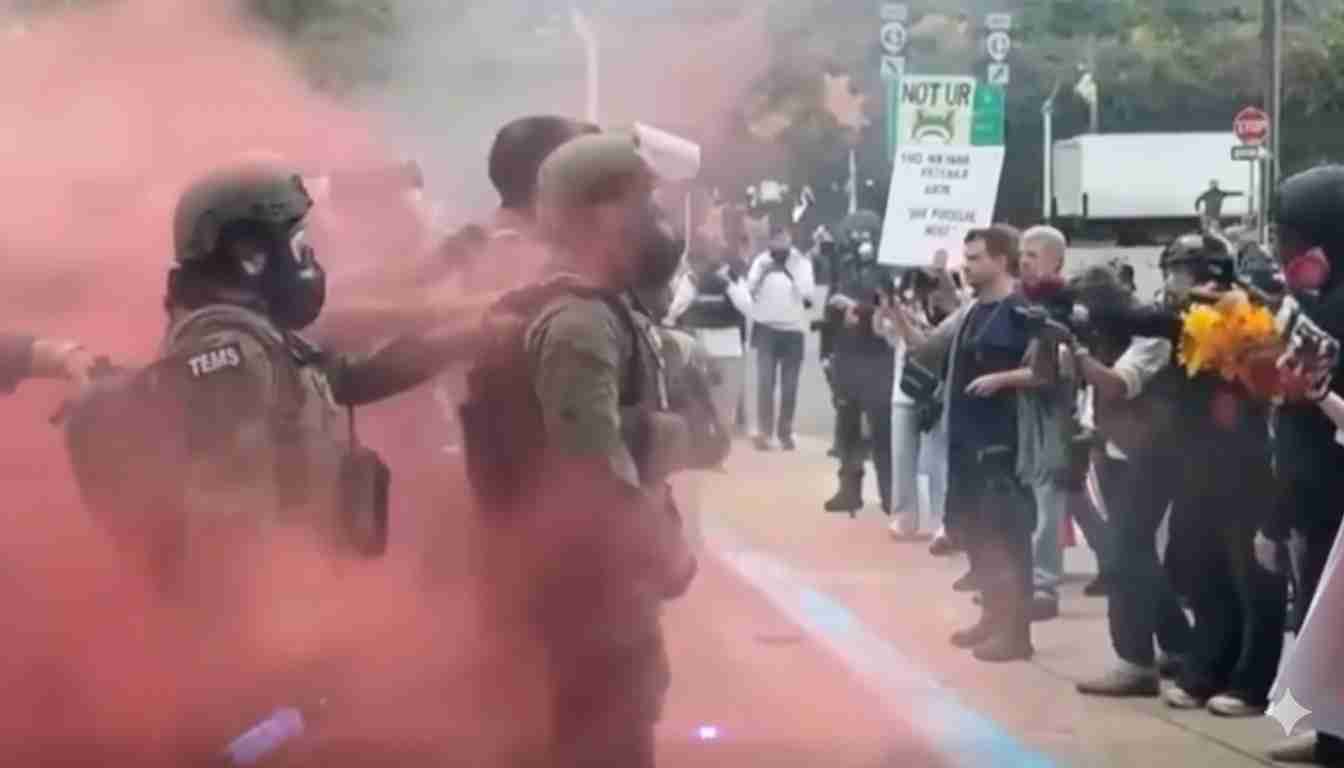
The proposed deployment coincided with renewed demonstrations at the federal Immigration and Customs Enforcement facility in Portland. Some protests included clashes with federal agents and arrests. City officials warned that additional federalized troops could inflame an already tense situation, undermine trust in public-safety efforts, and increase risk of civilian harm. Demonstrators and counter-protesters have continued to take to the streets, underscoring volatile public sentiment toward federal responses.
Federal vs. state authority: legal and constitutional stakes
Central to the dispute is when the president may federalize a state National Guard under Title 10 and deploy those forces domestically. Governors typically command their state guard unless units are federally activated for national defense or other clearly federal missions. Oregon contends this deployment stretches presidential power and risks blurring military and police roles. Legal scholars warn the case could set a precedent on federal reach into state-controlled forces during civil unrest (OPB (Sept. 28)).
Judge reassignment and procedural notes
The case was reassigned to Judge Immergut after the initial judge recused for health and conflict concerns, which delayed immediate hearings but did not alter Oregon’s substantive claims. The restraining order is temporary; the court will hold additional proceedings to determine whether a broader injunction should issue (India Today).
Public reaction and political backdrop
The federal move and the court’s intervention deepened partisan debate. President Trump has repeatedly labeled several Democratic-led cities, including Portland, as lawless and pushed for federal action. Local leaders contend that characterization is inaccurate and that federal intervention undermines public trust. Demonstrations both supporting and opposing the deployment have occurred in Portland, reflecting strong views on public safety and federal authority (India Today; OPB (Sept. 29)).
What the restraining order means practically
Practically, the order keeps Oregon National Guard troops under state control for now and prevents the federal government from immediately placing those units on active federal duty for domestic crowd-control or policing. That distinction affects command authority, rules of engagement, and legal accountability. The restraining order is a short-term check while courts evaluate whether to issue a longer injunction (India Today).
Sources and reporting notes
This article relies on court filings and reporting from public broadcasters and international outlets. Key sources include OPB (Sept. 29 authorization), OPB (Sept. 28 lawsuit coverage), and coverage of Judge Immergut’s order from India Today. Court documents and further filings will clarify details as the case moves forward.
Implications for California, USA
The Portland case could influence policy and politics in California across several dimensions:
- Economic impact: Short-term effects could include reduced business confidence in cities reliant on tourism and downtown commerce if federal-state tensions spread; some companies or events might pause or relocate.
- Political consequences: The ruling underscores limits on presidential power and may bolster California leaders who defend local control over policing and public safety.
- Social effects: Communities will watch for how the case shapes protest response, training, and the balance between order and civil liberties.
- Practical applications: State and local officials may review National Guard activation protocols, intergovernmental communication, and mutual-aid plans in light of the legal outcome.
Ongoing developments to watch
The temporary restraining order leaves many questions open. Watch for:
- Further court hearings on whether Oregon’s claims warrant a longer injunction.
- Additional filings from the Department of Defense and the Justice Department defending the federal decision.
- Reactions and statements from Oregon’s governor, city leaders, and other states that may face similar disputes.
“The case could set a precedent about federal reach into state-controlled forces during civil unrest.”