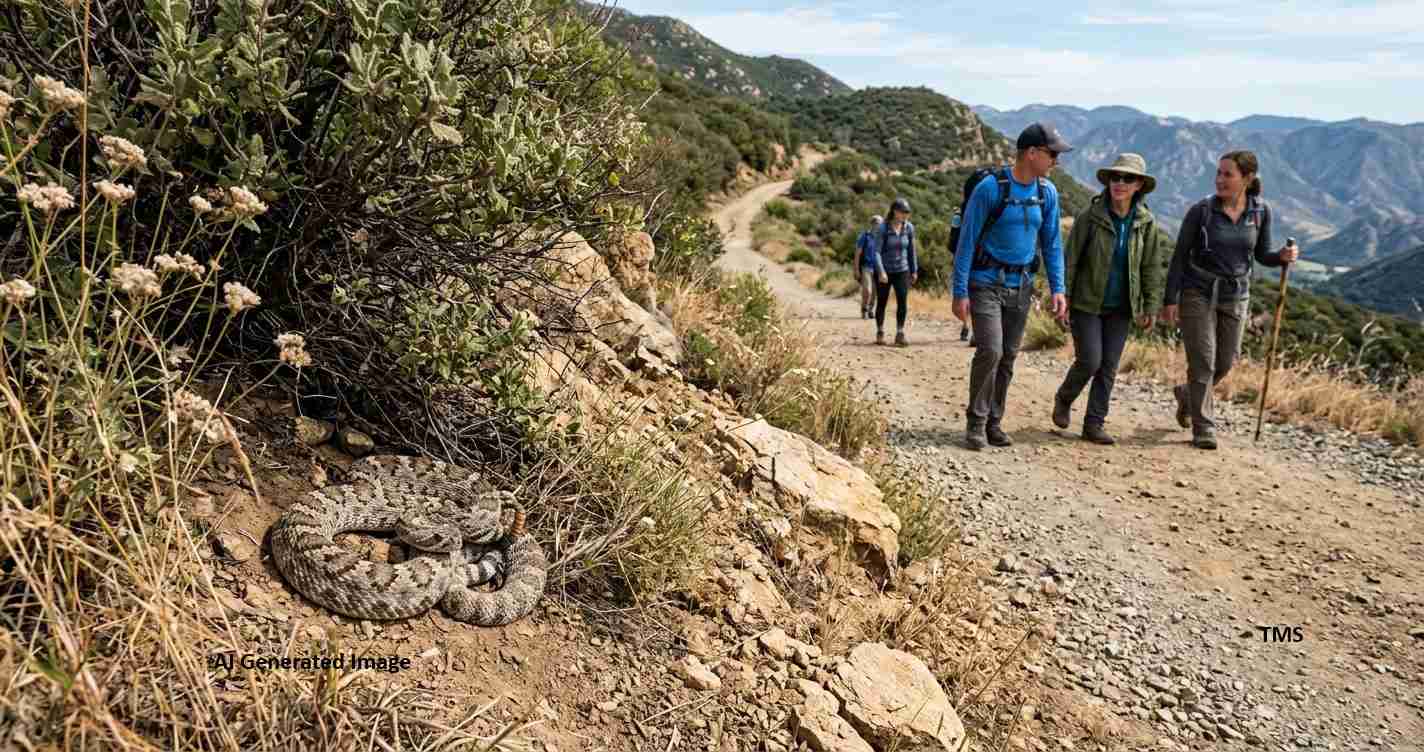
USFS Issues Southern California Rattlesnake Warning After Two Deadly Bites; San Bernardino National Forest Urges Hikers to Follow Rattlesnake Safety Tips
The U.S. Forest Service warns Southern California, especially San Bernardino National Forest visitors, after warmer weather prompted earlier rattlesnake activity and recent deadly bites in late March 2026; hikers and residents are urged to follow safety measures immediately.
- Increased activity: Warmer, sunnier conditions have pulled rattlesnakes from dormancy, raising sightings and encounters across Southern California.
- Recent incidents: March 2026 reports include a hospitalized hiker in Riverside County and fatal bites in Orange and Ventura counties.
- Safety guidance: The USFS urges people to stay alert, keep pets close, give snakes at least six feet of space, and call 911 for bites.
- Medical advice: Do not use tourniquets, cut, or suck wounds; immobilize the limb and seek emergency care immediately.
What the USFS said
In a social media post the San Bernardino National Forest rangers warned that “as temperatures rise, rattlesnakes become more active in the forest. Stay alert, watch where you step and keep pets close.” Rangers urged visitors to never touch or disturb wildlife and to give snakes plenty of space when encountered.
Recent Southern California encounters
Investigative reporting and incident reports show a cluster of dangerous encounters in March 2026, including:
- Riverside County: A hiker near a Moreno Valley trail was bitten and airlifted to a hospital; officials report the person survived after treatment.
- Orange County: A man was fatally bitten while mountain biking in Irvine; local authorities are investigating.
- Ventura County: A 46-year-old woman died from “rattlesnake venom toxicity in an accidental manner,” per a coroner’s report.
- Huntington Beach area: Sightings spiked earlier than usual, with video and local reports showing increased encounters along coastal and urban-wildland edges.
Why sightings are rising
USFS officials and local outlets point to warmer-than-normal temperatures and abnormally sunny conditions this late winter and early spring. The early warmth appears to have pulled rattlesnakes from winter dormancy sooner than usual, increasing the window of active behavior.
Rattlesnakes can strike up to their full body length. Species common in the region — including the Western diamondback and Southern Pacific rattlesnake — are found on trails, in tall grass, and sometimes in the urban interface. They may seek shade or water and have been known to swim.
Rattlesnake safety tips
The USFS posted clear guidance for visitors to forested and open-space areas; follow these measures and treat them as mandatory precautions when in rattlesnake country:
- Stay on marked trails and avoid tall grass, leaf piles, and rocky ledges where snakes hide.
- Watch where you step and where you place hands, especially when climbing or scrambling.
- Keep pets on short leashes and close to you. Do not let dogs sniff into brush.
- Wear long pants and sturdy boots when hiking.
- If you see a rattlesnake, give it at least six feet of space and calmly back away. Do not try to capture or kill it.
- Do not attempt to handle or move any wildlife.
Source guidance and safety posts: Local reporting from KESQ and the USFS advisory summarized earlier provide additional context and examples.
Bite-response advice and conflicting guidance
Medical responders stress calling 911 immediately for any bite. Standard first-aid recommended by the USFS and emergency professionals includes:
- Keep the victim calm and still — movement can spread venom.
- Immobilize the bitten limb and position it at or below heart level.
- Cover the bite with a clean, dry dressing and keep the person warm.
- Avoid giving the victim food, drink, alcohol, or caffeine.
- Do not use tourniquets, do not cut or suck the wound, and do not apply ice.
One local report suggested staying put and applying a tourniquet if help is delayed; that advice conflicts with USFS and mainstream medical guidance. When sources disagree, prioritize calling 911 and follow instructions from emergency responders, poison-control, or hospital staff. See the local coverage that noted the conflicting suggestion: KESQ report.
Rattlesnake identification
Common rattlesnakes in Southern California include the Western diamondback and the Southern Pacific rattlesnake. Look for a triangular head, a rattle on the tail, and patterned skin — but snakes do not always rattle before striking, so visual cues are not foolproof. For photos and additional ID guidance, consult the USFS informational page: USFS snake information and visitor guidance.
Investigative questions and public safety
The cluster of incidents raises operational and policy questions for parks managers, first responders, and policymakers: Are trail signs and warnings adequate where snake activity has increased? Are emergency response times in remote areas sufficient to handle venomous-bite cases? Should agencies expand outreach and post safety tips at trailheads and community parks?
For now, rangers recommend personal responsibility: plan hikes with a partner, carry a charged phone, know your route and nearest access point, and inform someone of your plans before heading into wildland areas.
Implications for California
Economic impact
Increased rattlesnake activity can affect recreation-based local economies. Fewer visitors or shorter visits could reduce revenue for trail towns, outfitters, guided-tour operators, and concessionaires. Medical centers may see higher demand for emergency care and antivenom, which is costly for providers and patients.
Political consequences
State and local leaders may face pressure to fund public-safety signage, hire more rangers, or invest in faster emergency response in wildland-urban interface areas. Officials will be asked to balance public safety with preserving access to public lands and property rights.
Social effects
Communities near trailheads will feel the threat acutely. Pet owners, parents, and outdoor workers need clear, practical guidance. Local groups can share USFS tips, organize volunteer trail checks, and promote leash use and staying on trails.
Cultural relevance and practical applications
Outdoor recreation is part of California’s lifestyle. Maintaining safe trails while respecting wildlife is a cultural priority. Practical steps for residents: check local trail reports, carry a charged phone and first-aid supplies, and choose protective footwear. Land managers should update trailhead signs, post maps of busy areas, and coordinate with county emergency services.
Where to find more information
- USFS San Bernardino National Forest advisories and social posts
- Local reporting from KESQ on the USFS warning and safety tips
- VVNG report on San Bernardino National Forest activity
- Video report showing sightings in Huntington Beach
- USFS snake information and visitor guidance
Rattlesnake Safety Tips (quick checklist)
- Stay on trails; avoid tall grass and leaf piles.
- Watch your step and where you place your hands.
- Keep pets close on a short leash.
- Wear long pants and sturdy boots.
- If bitten, call 911 immediately, keep the person calm, immobilize the limb, and do not apply tourniquets, ice, or attempt to suck out venom.
Stay informed, take sensible precautions, and respect wildlife while enjoying California’s open spaces.